 Bug FAQ
Red Postman
Heliconius erato · Order: Lepidoptera · Family: Nymphalidae
Also called: Common Patch Longwing, Crimson Patched Longwing, Erato Heliconian, Small Postman Butterfly
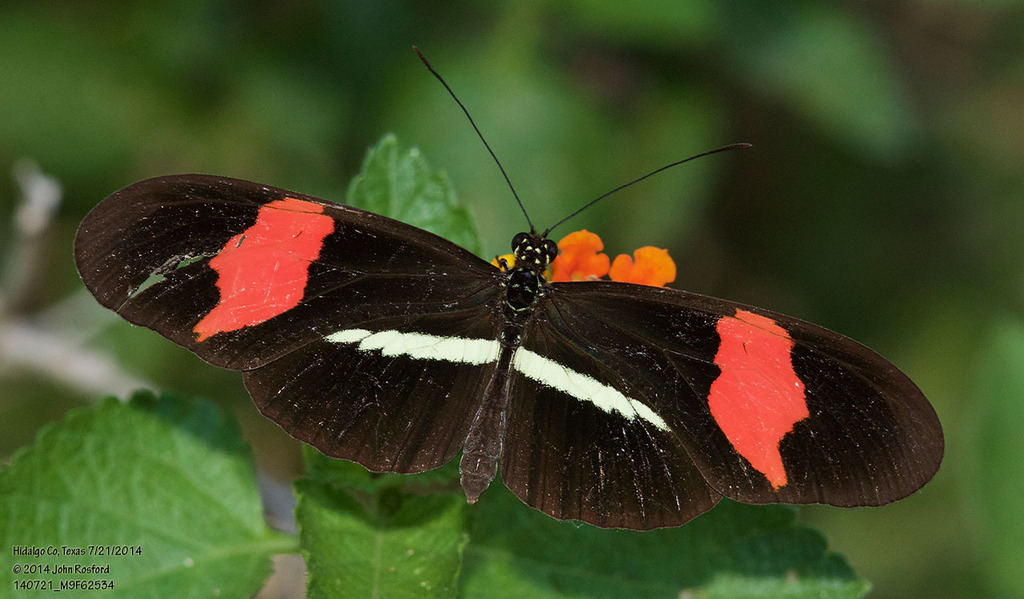
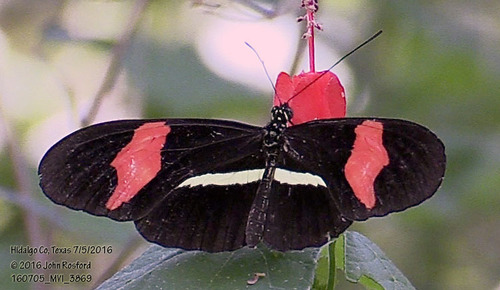
The red postman (Heliconius erato) is one of about 40 neotropical Heliconius species and gets its red wing color from the optix gene. Adults feed on pollen from Lantana camara, while larvae start by eating the terminal bud of their host plant. In the wild they live at least 20 days; in captivity they can survive over a month and up to 186 days. They share warning colors with other Heliconius butterflies such as H. melpomene in Müllerian mimicry.
Source: Wikipedia
How to recognize it
Red postman is a neotropical Heliconius species with red wing coloration controlled by the optix gene.
Source: Wikipedia
What it eats
Adults collect pollen from Lantana camara flowers; larvae begin feeding on the terminal bud of their host plant.
Source: Wikipedia
Life cycle
Wild individuals live at least 20 days; captive ones can live over a month and up to 186 days.
Source: Wikipedia
Where it comes from
Its range extends from southern Texas through Central America to northern Argentina and Paraguay.
Source: Wikipedia
Where it is found in the US
Recorded in 2 of 51 states and DC. Most records: Texas, California.
Darker = more records. Counts are museum and citizen-science records, not population size.
Source: GBIF
Status: native in North America. Source: iNaturalist
Months it is reported in the US
Source: GBIF
More photos
Questions people ask
What do red postman butterflies eat?
Adults feed on pollen from Lantana camara, while the caterpillars start by eating the terminal bud of their host plant.
Source: Wikipedia
How long do they live?
In the wild they survive at least 20 days; in captivity they can live more than a month and up to 186 days.
Source: Wikipedia
Where are they found?
They occur from southern Texas down to northern Argentina and Paraguay, usually on the edges of tropical rainforests.
Source: Wikipedia
Do they look like other butterflies?
Yes, they share warning colors with other Heliconius species such as H. melpomene in Müllerian mimicry.
Source: Wikipedia
Same family (Nymphalidae)






Sources
- Wikipedia: https://en.wikipedia.org/wiki/Heliconius_erato
Look it up elsewhere: GBIF · iNaturalist · BugGuide · ITIS · Wikipedia
Text written 2026-10-22 from the sources above and checked sentence by sentence against them. Data fetched 2026-10-22.