 Bug FAQ
Red-legged Ham Beetle
Necrobia rufipes · Order: Coleoptera · Family: Cleridae
Also called: Copra Beetle, Redlegged ham beetle, ham beetle, Red-Legged Copra Beetle
Source: Wikipedia
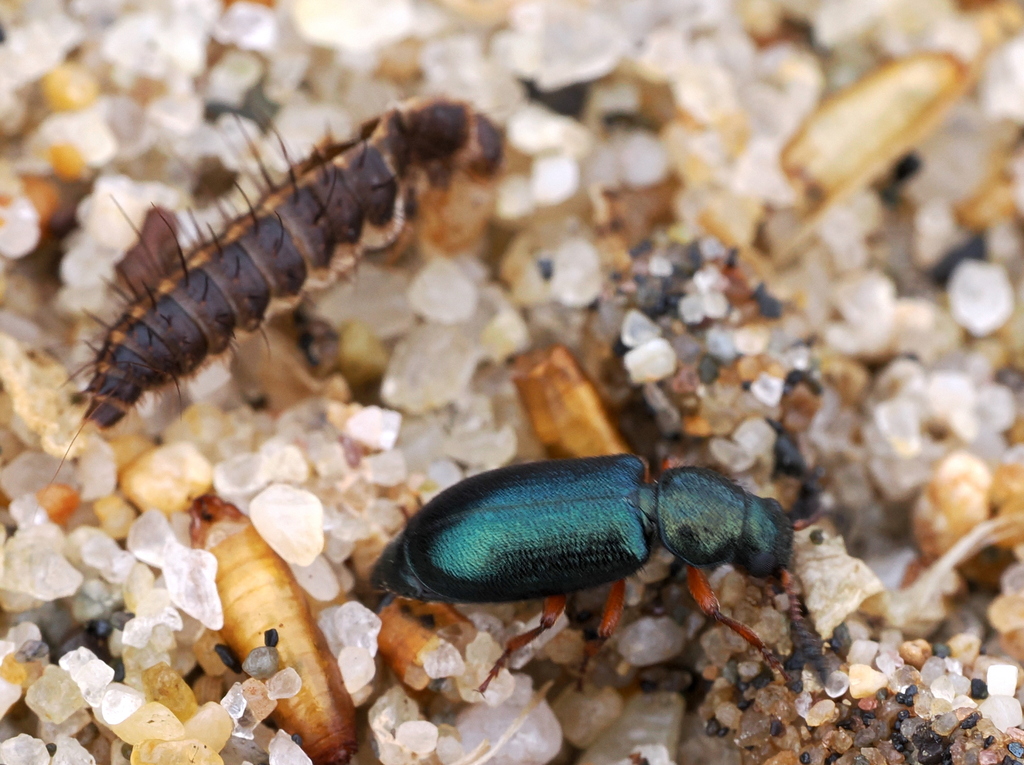
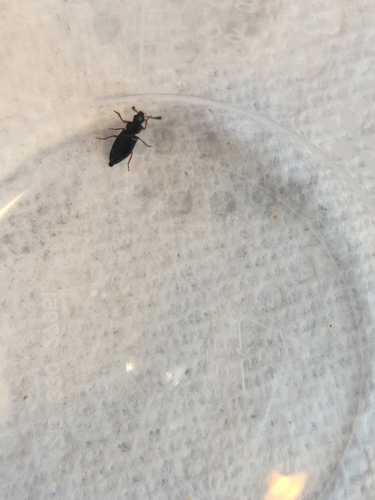
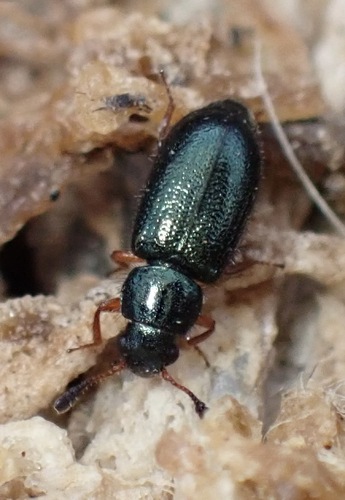
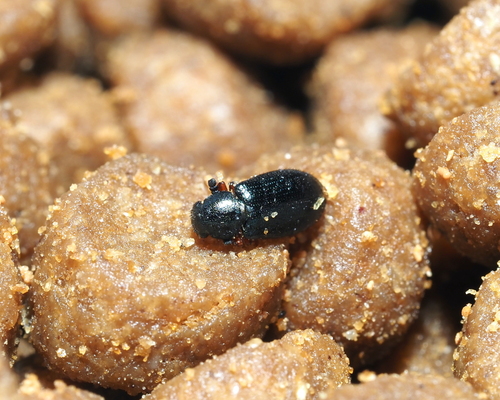
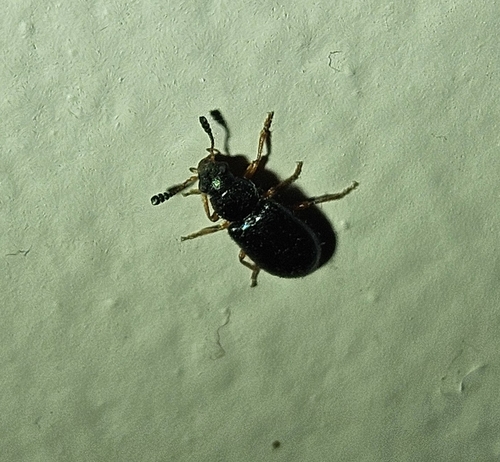
The adult red-legged ham beetle is a small, shiny beetle about 3.5 to 7 mm long with metallic green or blue bodies and bright red legs and antennae. It feeds on the larvae of other meat-infesting insects and also attacks dry meats, smoked products, dried fish, cheese, and other stored animal foods. Because it can infest pantry items, it is considered a significant stored-food pest worldwide.
Source: Wikipedia
How to recognize it
The beetle’s body shines metallic green or bluish-green, while its legs and antennae are red.
Source: Wikipedia
Size
Adults measure between 3.5 and 7 mm in length.
Source: Wikipedia
Is it a pest in the house?
Refrigeration has reduced their impact, but they remain a major pest of dried and salted fish like herring.
Source: Wikipedia
Where it comes from
The species occurs globally, not limited to a single region.
Source: Wikipedia
Lookalikes
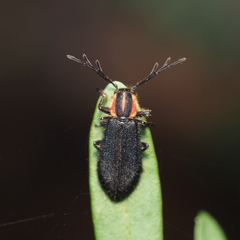
It should not be mixed up with Korynetes caeruleus, another blue-shining clerid beetle.
Source: Wikipedia
Where it is found in the US
Recorded in 40 of 51 states and DC. Most records: Texas, California, Arizona, Florida, Michigan, Ohio, North Carolina, Colorado.
Darker = more records. Counts are museum and citizen-science records, not population size.
Source: GBIF
Months it is reported in the US
Source: GBIF
More photos
Questions people ask
What does the red-legged ham beetle look like?
It is a tiny (3.5 to 7 mm) shiny beetle with a metallic green or bluish body and bright red legs and antennae.
Source: Wikipedia
Is the red-legged ham beetle a problem for stored food?
Yes, it is a known pest of dried meats, smoked products, and salted fish, damaging pantry items worldwide.
Source: Wikipedia
How can I tell it apart from similar beetles?
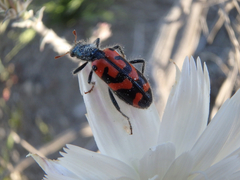
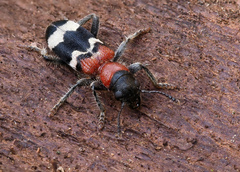
Unlike its cousin Necrobia violacea, which has all dark legs, the red-legged ham beetle has red legs; Necrobia ruficollis has lighter wing-cover shoulders, and Korynetes caeruleus is a different blue clerid species.
Source: Wikipedia
Same family (Cleridae)



Sources
- Wikipedia: https://en.wikipedia.org/wiki/Necrobia_rufipes
Look it up elsewhere: GBIF · iNaturalist · BugGuide · ITIS · Wikipedia
Text written 2026-10-26 from the sources above and checked sentence by sentence against them. Data fetched 2026-10-26.