 Bug FAQ
Bee-eating Beetle
Trichodes alvearius · Order: Coleoptera · Family: Cleridae
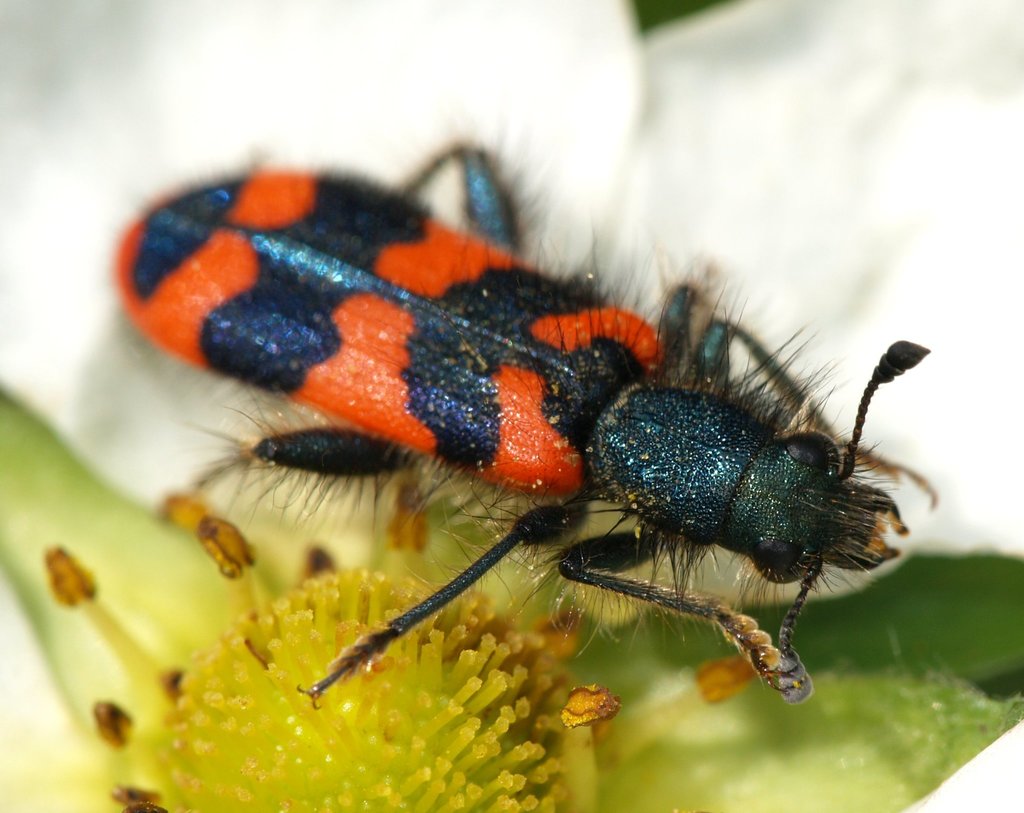
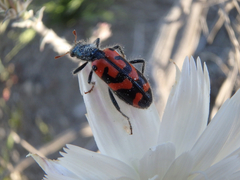
The bee-eating beetle is a very hairy insect with a black head and a black scutellum, and its long elytra are bright red with black bands and a distinctive black stripe down the middle ending in a red tip. Adults appear from May to August on flowers of Apiaceae, Asteraceae and Crataegus, where they eat pollen and hunt small insects, while their larvae parasitise bees and wasps by feeding on their brood.
Source: Wikipedia
How to recognize it
Very hairy beetle with a black head and scutellum; elytra are bright red with black bands and a central black stripe that stops before the red tip.
Source: Wikipedia
Where it lives
Seen on flowers of Apiaceae, Asteraceae and Crataegus from May through August.
Source: Wikipedia
What it eats
Adults feed on pollen and also hunt small insects such as Oedemera, Psilothrix, Stenopterus and Clytus species.
Source: Wikipedia
Life cycle
Larvae are parasites of bees and wasps, laying eggs near their nests and feeding on various stages of the hosts.
Source: Wikipedia
When you see it
Active from May to August.
Source: Wikipedia
Questions people ask
Are they a garden pest?
They feed on pollen and hunt small insects but are not reported to damage crops or garden plants.
Source: Wikipedia
Where can I see these beetles?
Look for them on flowers of Apiaceae, Asteraceae and Crataegus between May and August.
Source: Wikipedia
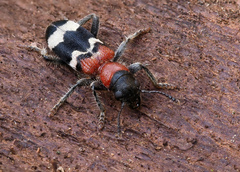
Same family (Cleridae)

Sources
- Wikipedia: https://en.wikipedia.org/wiki/Trichodes_alvearius
Look it up elsewhere: GBIF · iNaturalist · BugGuide · Wikipedia
Text written 2026-10-22 from the sources above and checked sentence by sentence against them. Data fetched 2026-10-22.