 Bug FAQ
Red-disked Alpine
Erebia discoidalis · Order: Lepidoptera · Family: Nymphalidae
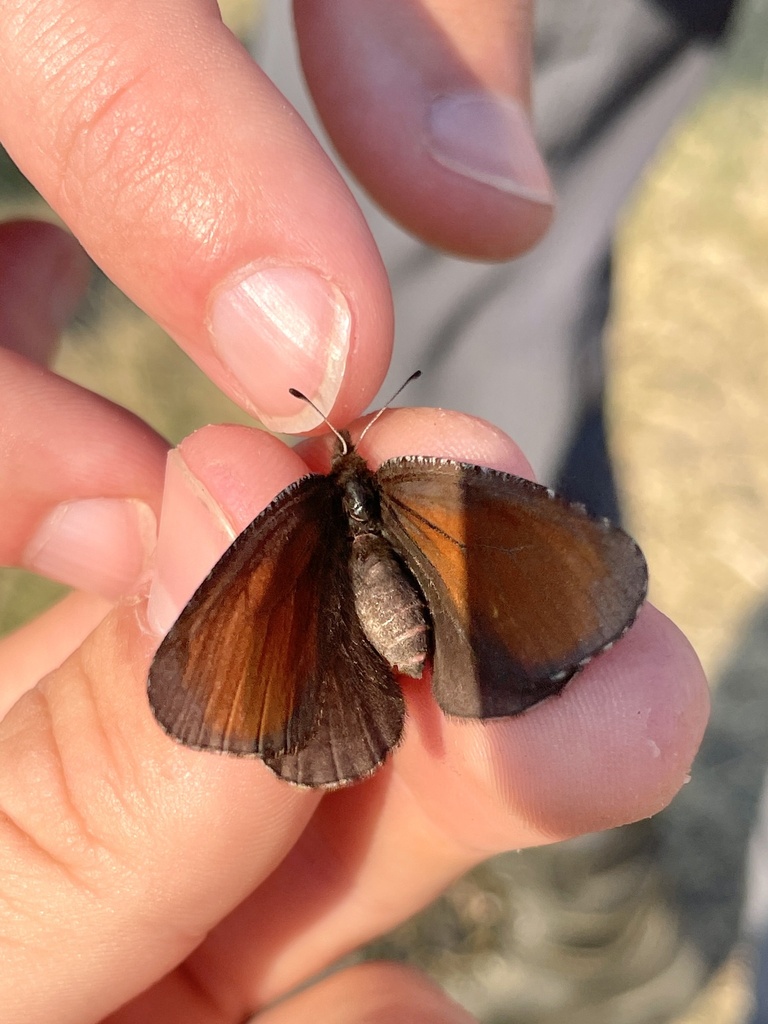
The red-disked alpine is a small butterfly with a wingspan of about 35 to 44 mm. It lives on large, open, acidic bogs and grassy areas across northern North America, from eastern Quebec to Alaska. Adults fly from May through late July, and the caterpillars feed on cotton-grass (Eriophorum) species.
Source: Wikipedia
How to recognize it
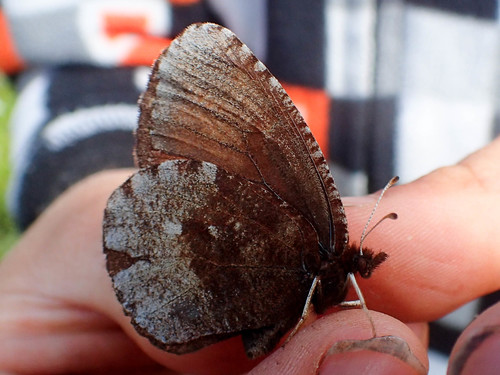
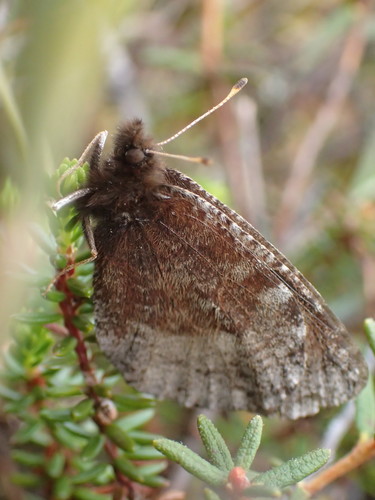
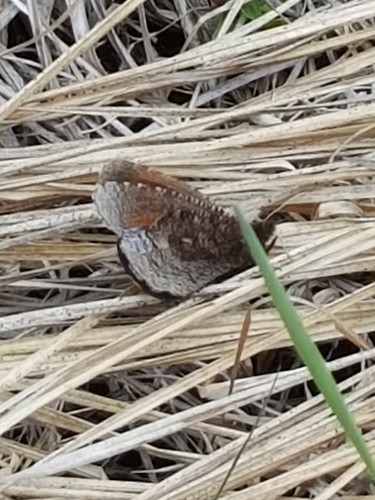
The forewing is narrow with a rounded tip; the front edge is brown-grey with whitish-grey and brown streaks. Near the wing tip there is an oval whitish-grey spot and two or three smaller spots along the front edge.
Source: Wikipedia
Size
Wingspan ranges from 35 to 44 mm.
Source: Wikipedia
Where it lives
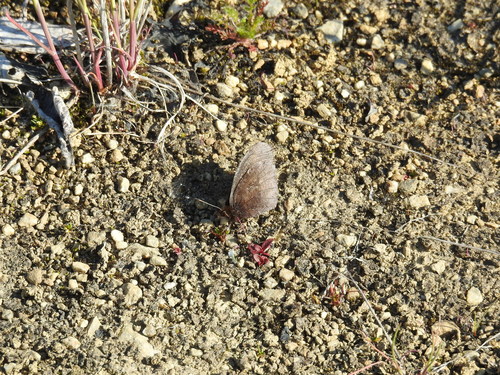
Found in large, open, grassy bogs and other acidic-soil areas.
Source: Wikipedia
What it eats
Larvae feed on species of cotton-grass (Eriophorum).
Source: Wikipedia
Life cycle
Specimens collected in June were worn, suggesting the butterfly may be more common earlier in the year.
Source: Wikipedia
Lookalikes
It can be confused with the banded alpine (E. fasciata).
Source: Wikipedia
Where it is found in the US
Recorded in 9 of 51 states and DC. Most records: Alaska, Michigan, Wisconsin, Minnesota, Kansas, Colorado, South Carolina, Montana.
Darker = more records. Counts are museum and citizen-science records, not population size.
Source: GBIF
Status: native in North America; native in Canada; native in United States. Source: iNaturalist
Months it is reported in the US
Source: GBIF
More photos
Questions people ask
When are red-disked alps active?
Adults fly from May through late July, varying by region.
Source: Wikipedia
Where can I find this butterfly?
It lives on large, open, acidic bogs and grassy areas across northern North America.
Source: Wikipedia
Same family (Nymphalidae)






Sources
- Wikipedia: https://en.wikipedia.org/wiki/Erebia_discoidalis
Look it up elsewhere: GBIF · iNaturalist · BugGuide · ITIS · Wikipedia
Text written 2026-10-24 from the sources above and checked sentence by sentence against them. Data fetched 2026-10-24.