 Bug FAQ
Codling Moth
Cydia pomonella · Order: Lepidoptera · Family: Tortricidae
Also called: Apple Codling Moth, Codlin Moth
Source: Wikipedia
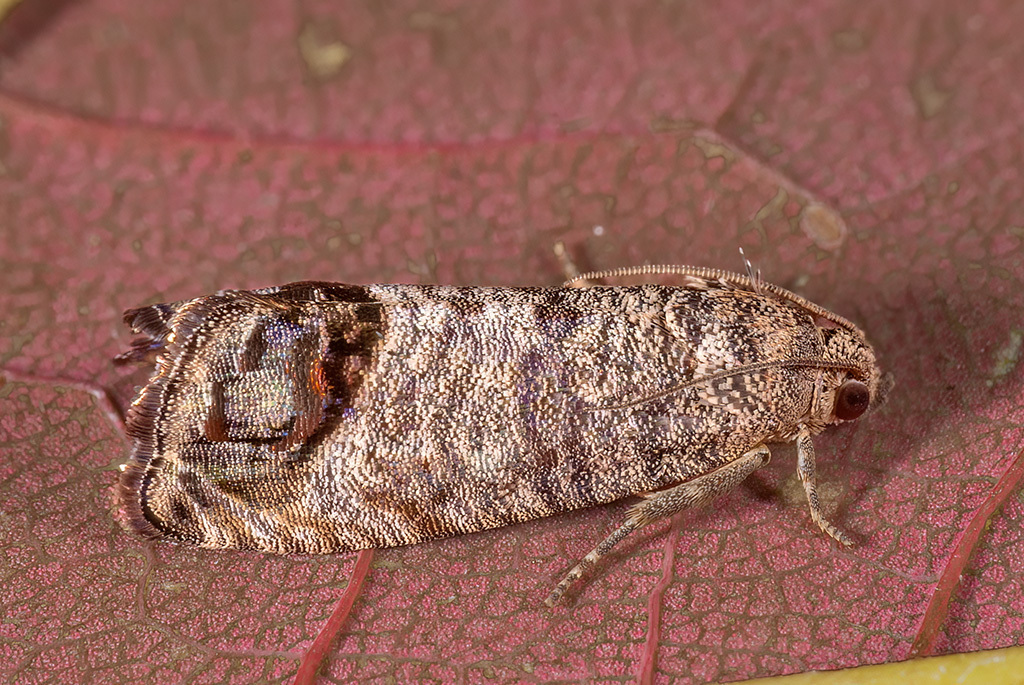
Adult codling moths are small, about 10 mm long with a 20 mm wingspan, and have distinctive brown spots surrounded by gold rings on their fore-wings. Their larvae feed inside fruits, stopping growth and leading to early ripening, which makes them a serious pest for orchards.
Source: Wikipedia
How to recognize it
The fore-wings show brown spots edged with golden rings, called “little mirrors.” The antennae are slender and curve slightly near the tip.
Source: Wikipedia
Size
Adults are about 10 mm long with a wingspan of roughly 20 mm.
Source: Wikipedia
Is it a pest in the house?
The caterpillars bore into fruit, stopping growth and causing early ripening, making the moth a major pest for fruit growers.
Source: Wikipedia
How to get rid of it
Control methods include chemical, biological, and preventive approaches; a caterpillar needs about 45 minutes to bore into fruit and 15 minutes to seal the entry.
Source: Wikipedia
Where it lives
Moth viability depends on humidity and climate, and all life stages are found on host plants where the larvae feed.
Source: Wikipedia
What it eats
Larvae cannot eat leaves; they rely on fruit, boring into it and causing premature ripening.
Source: Wikipedia
Life cycle
Second-generation adults emerge in spring, from late April to early June in the Northern Hemisphere, with timing linked to temperature.
Source: Wikipedia
When you see it
Adult flight starts in early May and ends by late August, with the two generations overlapping for 10 to 20 days.
Source: Wikipedia
Lookalikes
They are set apart from other Tortricidae moths by the unique fore-wing pattern of brown spots with golden rims.
Source: Wikipedia
Where it is found in the US
Recorded in 45 of 51 states and DC. Most records: Colorado, California, Massachusetts, Oregon, Washington, Ohio, New York, Michigan.
Darker = more records. Counts are museum and citizen-science records, not population size.
Source: GBIF
Status: introduced in North America. Source: iNaturalist
Months it is reported in the US
Source: GBIF
More photos


Questions people ask
What damage do codling moths cause?
Their larvae bore into fruit, halting growth and causing premature ripening, which can ruin crops.
Source: Wikipedia
How can I identify a codling moth?
Look for a small moth about 10 mm long with a 20 mm wingspan, brown spots surrounded by gold rings on the fore-wings, and slightly curved slender antennae.
Source: Wikipedia
When are codling moths active?
Adults fly from early May to late August, with two generations overlapping for a few weeks.
Source: Wikipedia
Same family (Tortricidae)
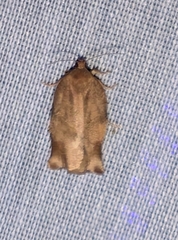 Oblique-banded Leafroller MothChoristoneura rosaceanaDamages trees, gardens or crops
 Garden TortrixClepsis peritanaDamages trees, gardens or crops
 Common MarbleSyricoris lacunanaDamages trees, gardens or crops
 Red-banded Leafroller MothArgyrotaenia velutinanaDamages trees, gardens or crops
 Light Brown Apple MothEpiphyas postvittanaDamages trees, gardens or crops
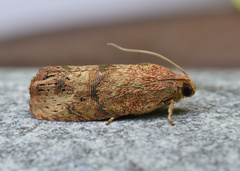 Filbertworm MothCydia latiferreanaDamages trees, gardens or crops
Sources
- Wikipedia: https://en.wikipedia.org/wiki/Codling_moth
Look it up elsewhere: GBIF · iNaturalist · BugGuide · Wikipedia
Text written 2026-10-22 from the sources above and checked sentence by sentence against them. Data fetched 2026-10-22.