 Bug FAQ
Range Crane Fly
Tipula simplex · Order: Diptera · Family: Tipulidae
Source: Wikipedia
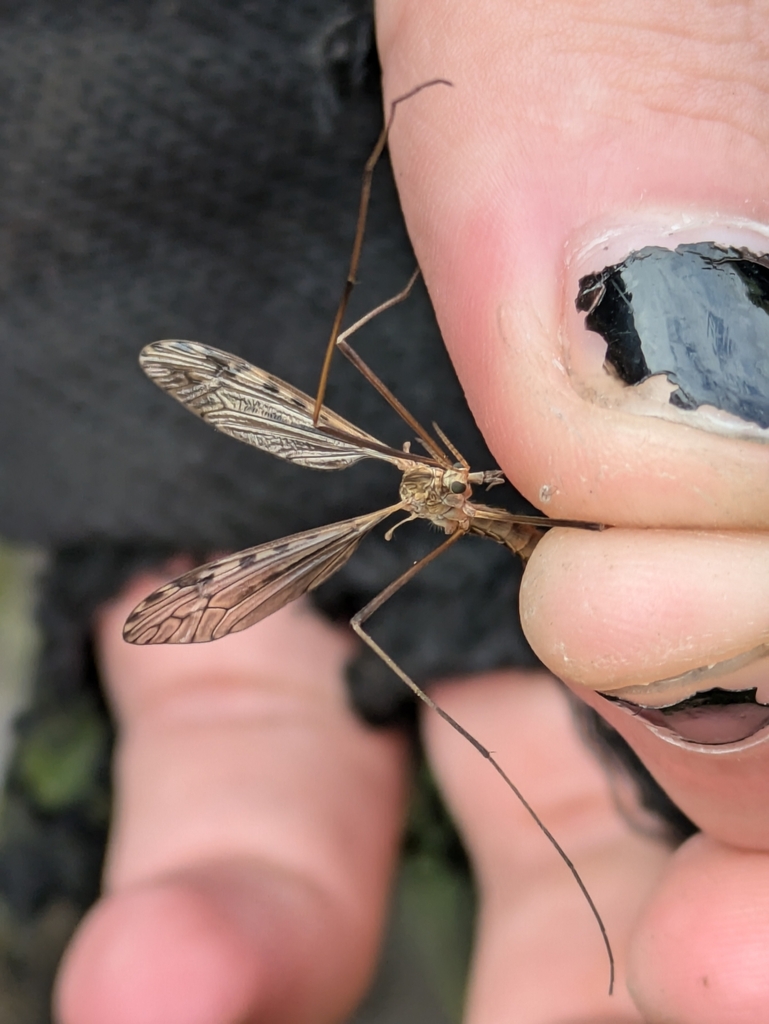
Every few years in Tulare County the larvae can wipe out all forage, strip hills bare and negatively affect the watershed.
Source: Wikipedia
How to recognize it
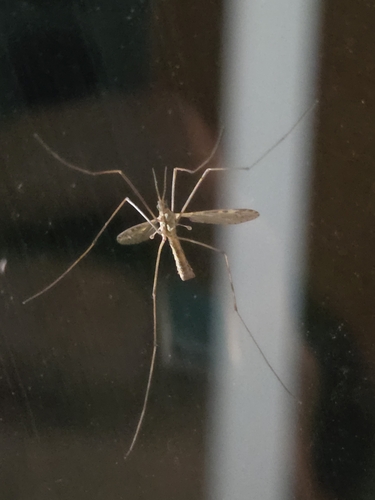
The wings have dark brown spots along the front (costal) and tip (apical) edges, spaced about 2 mm apart.
Source: Wikipedia
Size
Males have wings 11 to 12 mm long, while females are essentially wingless with only tiny wings the size of halteres.
Source: Wikipedia
Where it lives
It lives in unirrigated pastures of California’s Central Valley.
Source: Wikipedia
Life cycle
When larval numbers become high, they can cause harmful effects in the pastures they inhabit. In Tulare County, about once every six years, larval outbreaks can destroy all forage, leave hills bare and damage the watershed.
Source: Wikipedia
Lookalikes
It is the most well-researched crane fly within the Tipulidae family, making it a common reference point for identification.
Source: Wikipedia
Where it is found in the US
Recorded in 1 of 51 states and DC. Most records: California.
Darker = more records. Counts are museum and citizen-science records, not population size.
Source: GBIF
Months it is reported in the US
Source: GBIF
More photos
Questions people ask
What damage do Tipula simplex larvae cause?
Heavy larval populations can destroy pasture forage, strip hills bare and harm the watershed.
Source: Wikipedia
Where is Tipula simplex found?
It occurs in California from Santa Cruz north to Colusa and east to Mariposa counties.
Source: Wikipedia
How big are male and female Tipula simplex?
Males have wings 11 to 12 mm long; females are essentially wingless with only tiny reduced wings.
Source: Wikipedia
Same family (Tipulidae)




Sources
- Wikipedia: https://en.wikipedia.org/wiki/Tipula_simplex
Look it up elsewhere: GBIF · iNaturalist · BugGuide · ITIS · Wikipedia
Text written 2026-10-27 from the sources above and checked sentence by sentence against them. Data fetched 2026-10-27.