 Bug FAQ
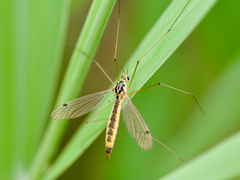
European Crane Fly
Tipula paludosa · Order: Diptera · Family: Tipulidae
Also called: European cranefly
Source: Wikipedia
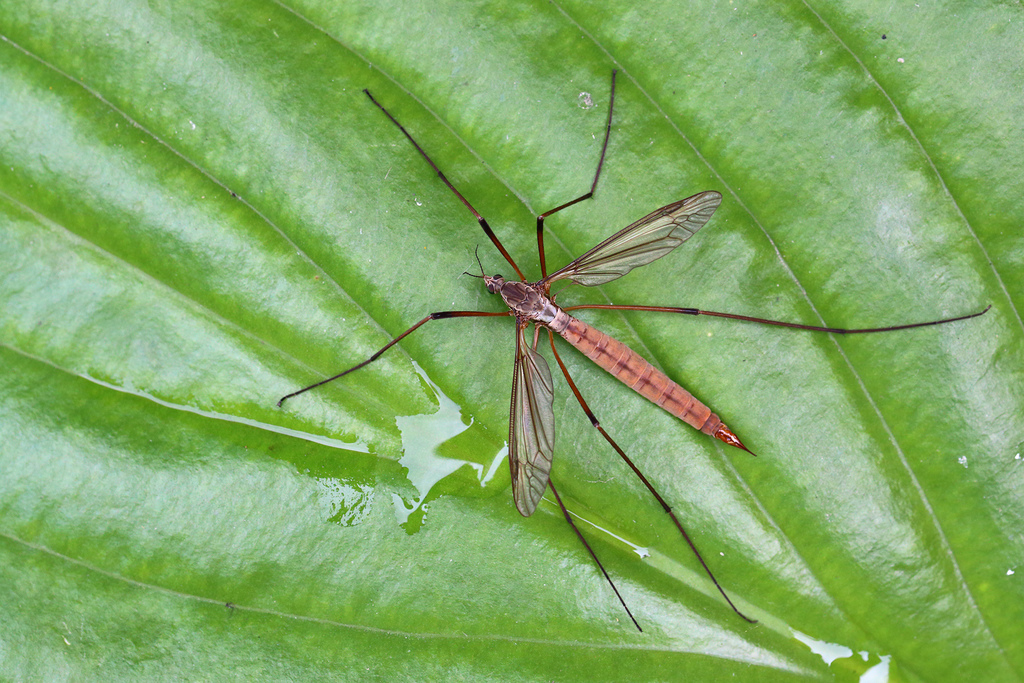
The larvae live in soil, feed on turf and forage grasses and cereal crops, and can cause serious damage to lawns and fields.
Source: Wikipedia
Size
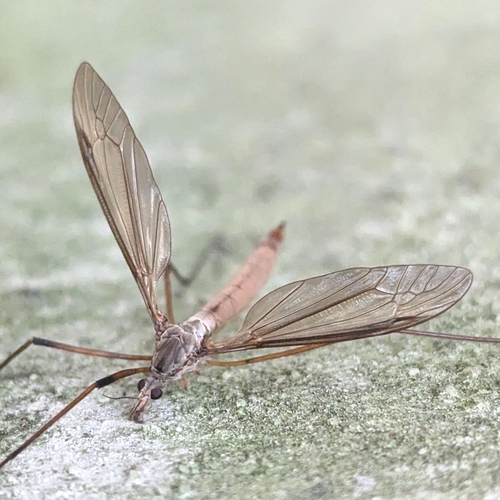
Adult bodies measure 1.5 to 2.5 cm; pupae are 3 to 4 cm long.
Source: Wikipedia
Where it lives
They are common in lawns, pastures and hayfields where the larvae damage plant roots, stems and leaves.
Source: Wikipedia
What it eats
Larvae feed on all turf and forage grasses and on cereal crops. Adult flies do not feed and live only about two weeks.
Source: Wikipedia
Life cycle
The species follows a seasonal life cycle, with larvae stopping feeding by mid-May and entering a non-feeding stage in June.
Source: Wikipedia
When you see it
Larvae pupate in late August and adults emerge soon after, mating immediately. Adults live only about two weeks and do not feed.
Source: Wikipedia
Where it comes from
Native to north-western Europe, including Britain and Ireland, and introduced to northern North America such as Canada.
Source: Wikipedia
Where it is found in the US
Recorded in 14 of 51 states and DC. Most records: New York, Washington, Vermont, Oregon, California, Maine, Michigan, Alaska.
Darker = more records. Counts are museum and citizen-science records, not population size.
Source: GBIF
Status: introduced in North America; introduced in United States; introduced in Canada. Source: iNaturalist
Months it is reported in the US
Source: GBIF
More photos
Questions people ask
How can I tell a male from a female?
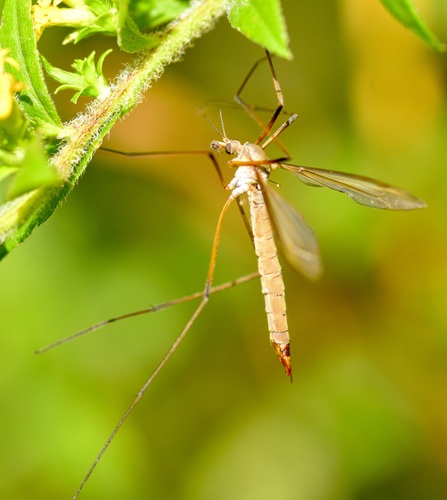
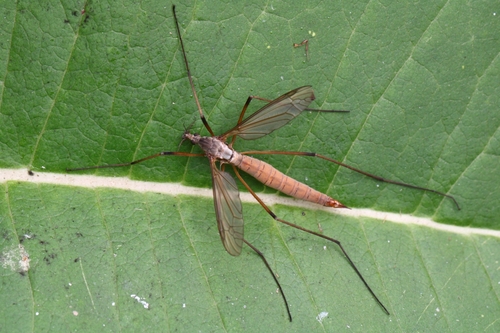
Males are smaller and have larger wings than females.
Source: Wikipedia
Same family (Tipulidae)


Sources
- Wikipedia: https://en.wikipedia.org/wiki/Tipula_paludosa
Look it up elsewhere: GBIF · iNaturalist · BugGuide · ITIS · Wikipedia
Text written 2026-10-22 from the sources above and checked sentence by sentence against them. Data fetched 2026-10-22.