 Bug FAQ
Marsh Crane Fly
Tipula oleracea · Order: Diptera · Family: Tipulidae
Source: Wikipedia
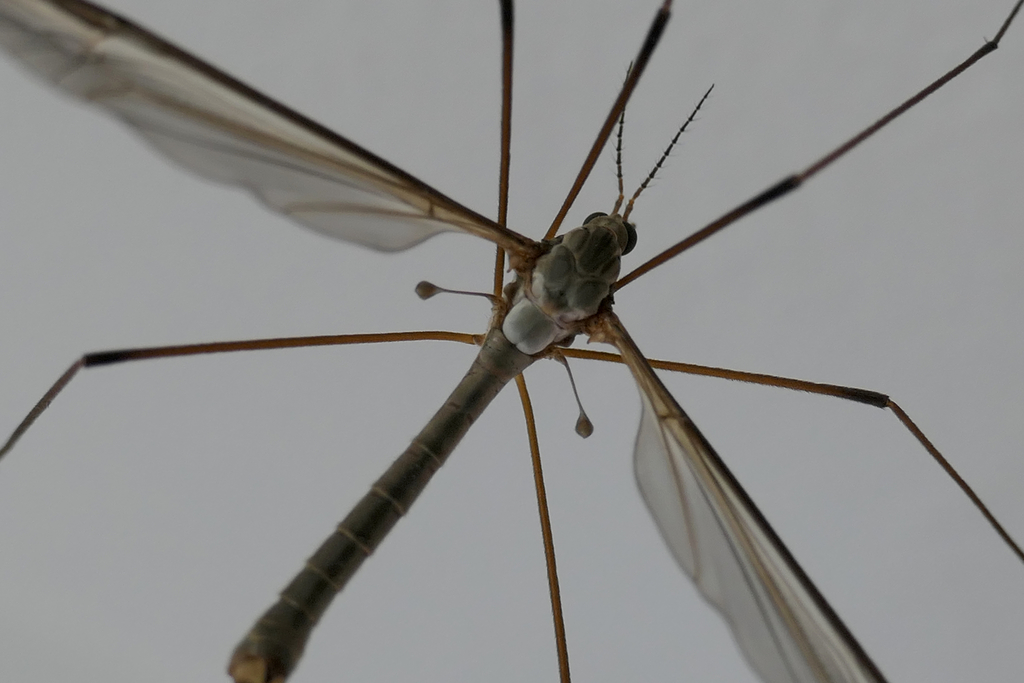
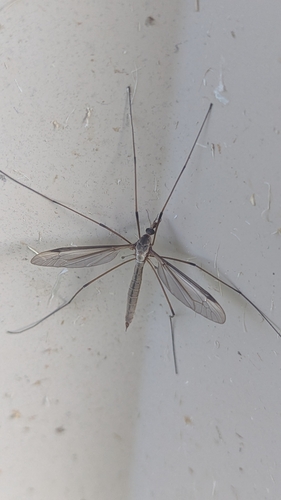
The marsh crane fly has wings 18 to 28 mm long and is usually greyish, sometimes with a reddish abdomen and dark longitudinal stripes. Adults fly from April to June and again from August to October, and the whole life cycle lasts up to eight months.
Source: Wikipedia
How to recognize it
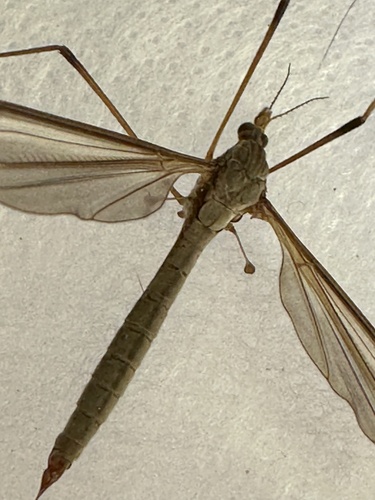
It is generally greyish, but the abdomen can be reddish and may show blackish median or side stripes.
Source: Wikipedia
Size
Wing length ranges from 18 to 28 mm.
Source: Wikipedia
Where it lives
It lives in wet meadows, gardens and cultivated areas where it can lay eggs. Its range extends south to North Africa, stopping at Algeria in the east.
Source: Wikipedia
What it eats
Adults feed only on liquid foods like nectar. Larvae eat decaying vegetable matter and delicate plant roots, which can harm crops.
Source: Wikipedia
Life cycle
The complete life cycle can take up to eight months. Larval development lasts about four months and includes four molts.
Source: Wikipedia
When you see it
Adults are active in early summer (April-June, peaking May-June) and again in late summer (August-October).
Source: Wikipedia
Where it comes from
The species is common throughout Europe. It is also found on some Greek islands such as Crete and on Malta.
Source: Wikipedia
Lookalikes
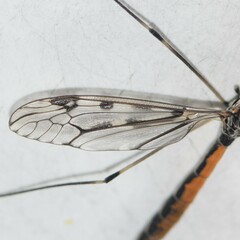
It can be confused with Tipula paludosa and Tipula czizeki.
Source: Wikipedia
Where it is found in the US
Recorded in 29 of 51 states and DC. Most records: California, Massachusetts, Oregon, New York, Washington, Utah, Idaho, Pennsylvania.
Darker = more records. Counts are museum and citizen-science records, not population size.
Source: GBIF
Status: introduced in North America; introduced in United States; introduced in Canada. Source: iNaturalist
Months it is reported in the US
Source: GBIF
More photos
Questions people ask
Can they damage my garden?
Yes, the larvae can feed on roots of garden plants and damage crops such as cabbage.
Source: Wikipedia
When are they most likely to appear?
Adults are most common from April to June and again from August to October.
Source: Wikipedia
Same family (Tipulidae)




Sources
- Wikipedia: https://en.wikipedia.org/wiki/Tipula_oleracea
Look it up elsewhere: GBIF · iNaturalist · BugGuide · Wikipedia
Text written 2026-10-22 from the sources above and checked sentence by sentence against them. Data fetched 2026-10-22.