 Bug FAQ
Ram's Horn Gall Wasp
Andricus aries · Order: Hymenoptera · Family: Cynipidae
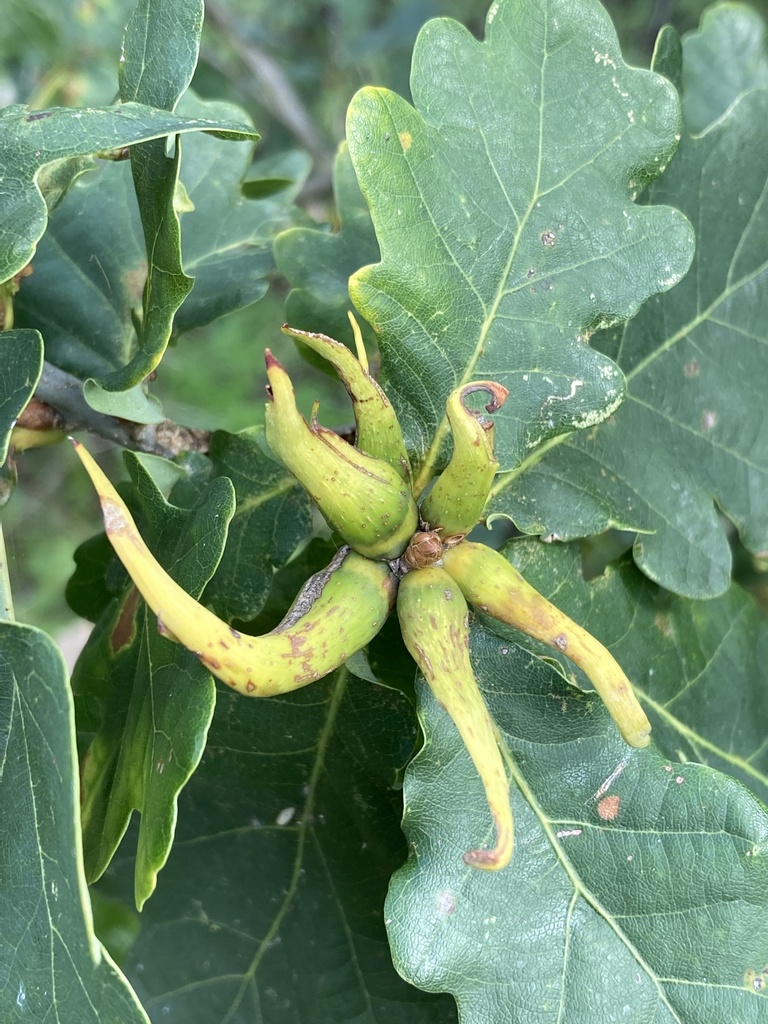
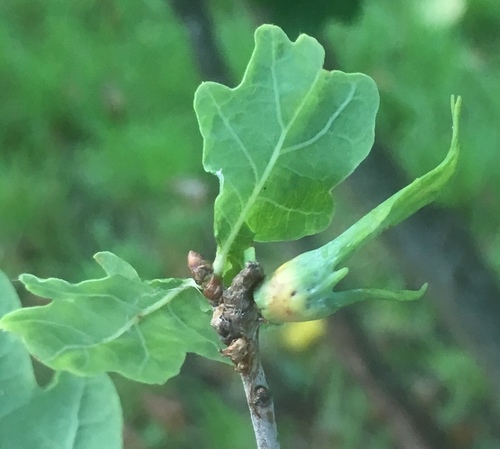
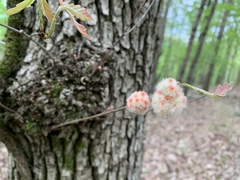
The ram's horn gall wasp makes green, strap-shaped galls that later harden brown and can be about 5 mm long.
Source: Wikipedia
How to recognize it
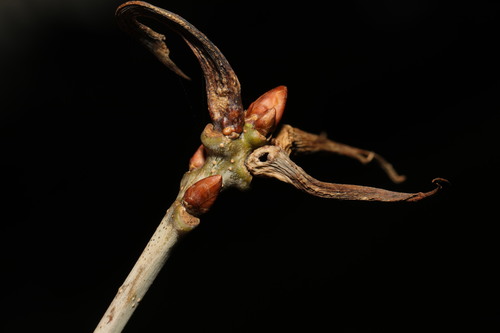
The larvae induce the tree to produce an elongated gall that looks like a ram's horn. The gall later hardens, turns brown and varies especially when other insects live inside it.
Source: Wikipedia
Size
Galls start green, may be reduced to a single strap, and can be up to about 5 mm long.
Source: Wikipedia
Is it a pest in the house?
It does not form galls on acorns but creates galls on leaf buds on twigs. The galls later harden, turn brown and become especially variable when occupied by inquiline wasps.
Source: Wikipedia
Where it lives
Galls form on leaf buds of twigs, not on acorns.
Source: Wikipedia
What it eats
The developing larvae cause the oak to produce the elongated gall.
Source: Wikipedia
Life cycle
In northwestern Europe the species reproduces only asexually. Newly emerged females lay eggs in the axillary buds of Q. cerris.
Source: Wikipedia
Where it comes from
Primarily found in eastern Europe, it has spread to western Europe and the United Kingdom in the 21st century.
Source: Wikipedia
Lookalikes
Native parasitoids in the British Isles have begun using this wasp, while its continental parasitoids have not crossed the English Channel.
Source: Wikipedia
Where it is found in the US
Recorded in 1 of 51 states and DC. Most records: Texas.
Darker = more records. Counts are museum and citizen-science records, not population size.
Source: GBIF
More photos
Questions people ask
What do the galls look like?
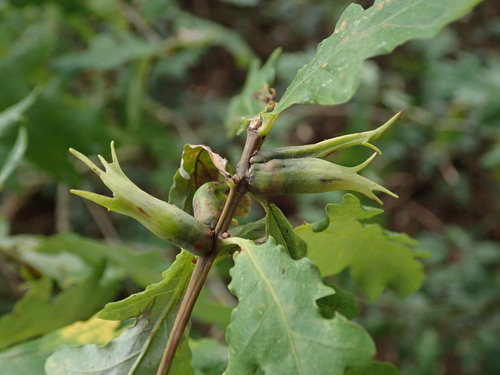
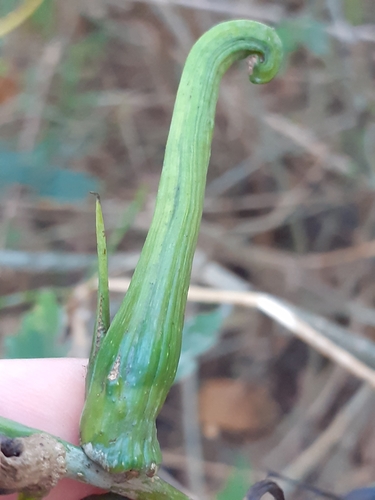
They start green, are elongated like a ram's horn, later harden brown and can be about 5 mm long.
Source: Wikipedia
Same family (Cynipidae)


Sources
- Wikipedia: https://en.wikipedia.org/wiki/Andricus_aries
Look it up elsewhere: GBIF · iNaturalist · BugGuide · Wikipedia
Text written 2026-10-23 from the sources above and checked sentence by sentence against them. Data fetched 2026-10-22.