 Bug FAQ
Rainforest Dancing Brown
Cassionympha cassius · Order: Lepidoptera · Family: Nymphalidae
Also called: Rainforest Brown

Males have a wingspan of about 34 to 38 mm and females 36 to 42 mm. It lives in cool, moist forests, coastal and riverine bush, and deep gorges called kloofs across the southern African coast. Adults are on the wing from September through May.
Source: Wikipedia
Size
Males have a wingspan of about 34 to 38 mm and females 36 to 42 mm.
Source: Wikipedia
Where it lives
It lives in cool, moist forests, coastal and riverine bush, and deep gorges called kloofs across the southern African coast.
Source: Wikipedia
What it eats
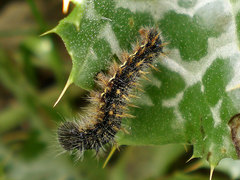
The caterpillars feed on grasses such as Pentaschistis capensis and Juncus capensis.
Source: Wikipedia
Life cycle
Larvae feed on grass species.
Source: Wikipedia
When you see it
Adults are active from September through May.
Source: Wikipedia
Where it comes from
The species is found in South Africa.
Source: Wikipedia
More photos


Questions people ask
How big are Rainforest Dancing Brown butterflies?
Males have a wingspan of about 34 to 38 mm and females 36 to 42 mm.
Source: Wikipedia
What do the caterpillars eat?
They feed on grass species such as Pentaschistis capensis and Juncus capensis.
Source: Wikipedia
Same family (Nymphalidae)






Sources
- Wikipedia: https://en.wikipedia.org/wiki/Cassionympha_cassius
Look it up elsewhere: GBIF · iNaturalist · BugGuide · Wikipedia
Text written 2026-10-23 from the sources above and checked sentence by sentence against them. Data fetched 2026-10-23.