 Bug FAQ
Queen of Spain Fritillary
Issoria lathonia · Order: Lepidoptera · Family: Nymphalidae
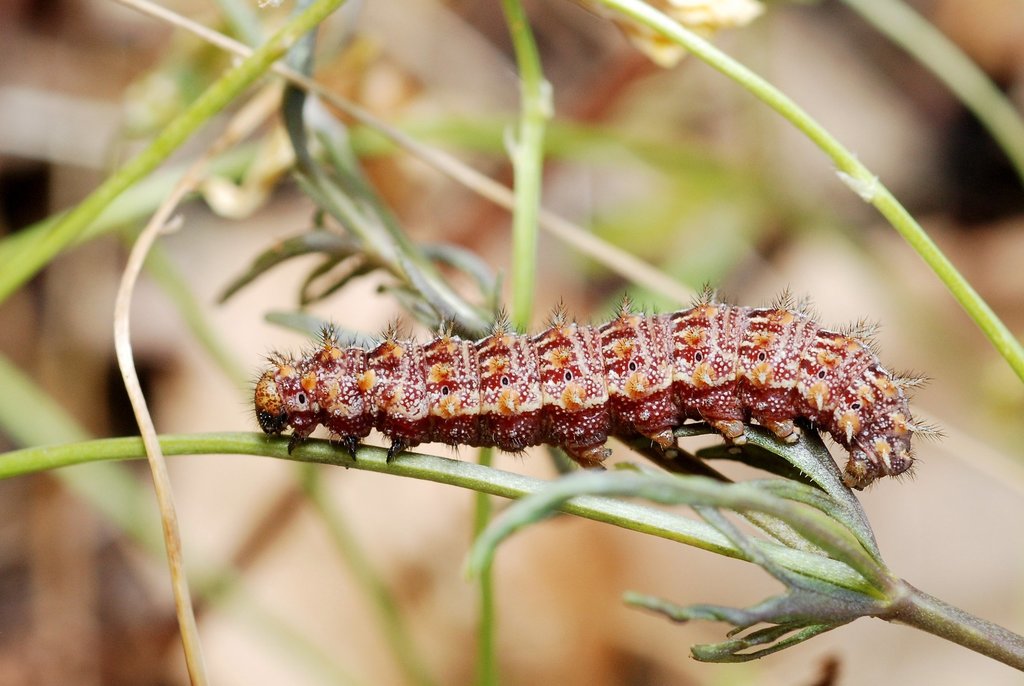
It lives in open, dry habitats from sea level up to 2700 m and is found across most of Europe, North Africa, the Canary Islands, and parts of Central and East Asia. Adults fly strongly from March to October, producing three or four generations per year, while the caterpillars feed on various Viola species and other herbaceous plants.
Source: Wikipedia
How to recognize it
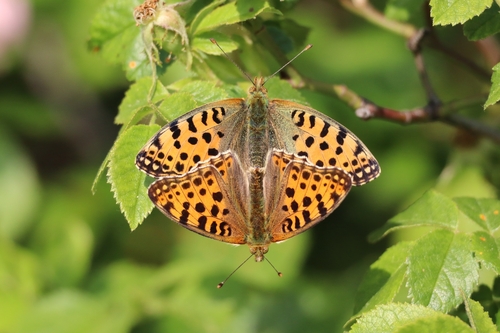
The upper wings are a deep orange-violet with rounded black spots in regular rows; females have a greenish-gray tint. The underside of the hindwings shows large pearly spots and a row of black eyespots with pearly pupils.
Source: Wikipedia
Size
Wingspan ranges from 38 to 46 mm (about 1.5 to 1.8 in).
Source: Wikipedia
Where it lives
Found in open areas such as dry lawns, agricultural wastelands, and extensive crops.
Source: Wikipedia
What it eats
Caterpillars feed on several Viola species, lucerne, borage, Anchusa, Rubus and Onobrychis.
Source: Wikipedia
Life cycle
There are three to four successive generations each year, and the larval stage is unusually short.
Source: Wikipedia
When you see it
Adults are active and fly from March through October.
Source: Wikipedia
Where it comes from
Widespread in most of Europe, North Africa, the Canary Islands, and the eastern Palearctic region.
Source: Wikipedia
Where it is found in the US
Recorded in 1 of 51 states and DC. Most records: Colorado.
Darker = more records. Counts are museum and citizen-science records, not population size.
Source: GBIF
More photos
Questions people ask
Are they a garden pest?
They feed on wild violets and some herbaceous plants, but there is no information that they cause significant damage to crops or gardens.
Source: Wikipedia
Same family (Nymphalidae)






Sources
- Wikipedia: https://en.wikipedia.org/wiki/Queen_of_Spain_fritillary
Look it up elsewhere: GBIF · iNaturalist · BugGuide · Wikipedia
Text written 2026-10-22 from the sources above and checked sentence by sentence against them. Data fetched 2026-10-22.