 Bug FAQ
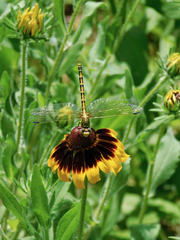
Pygmy Snaketail
Ophiogomphus howei · Order: Odonata · Family: Gomphidae
Also called: Howe's midget snaketail dragonfly
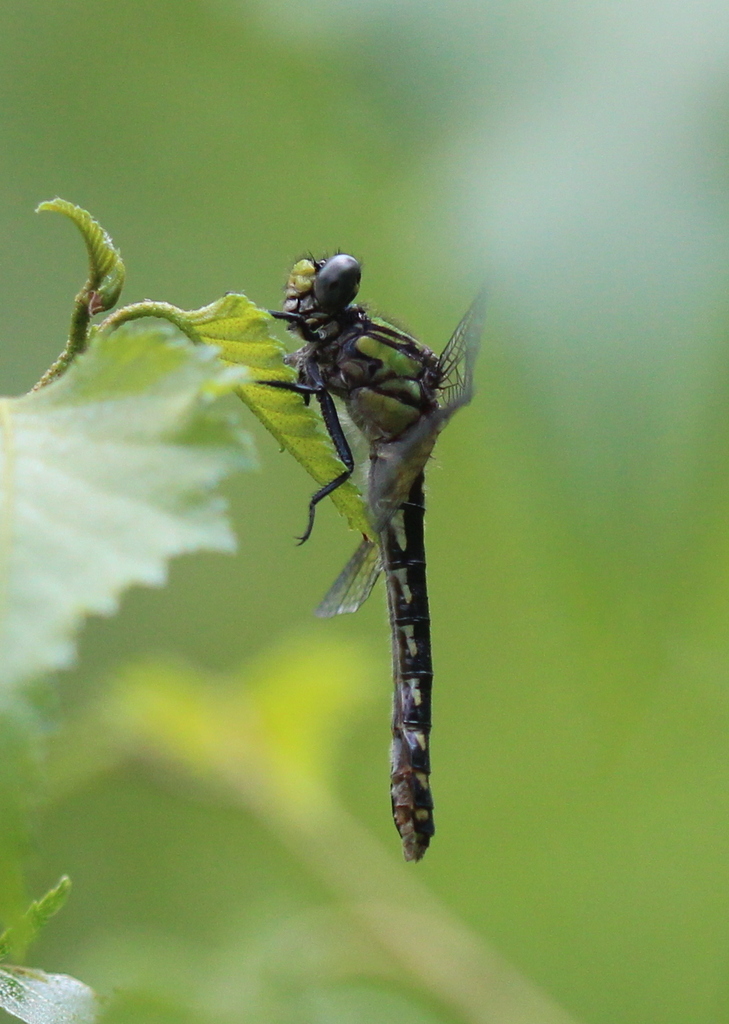
The pygmy snaketail is the smallest North-American Ophiogomphus, with an abdomen about 35 mm long and hindwing about 22 mm long. Nymphs burrow into the stream substrate, the species breeds in streams and rivers, and the immature insects emerge over a period of four to six days.
Source: Wikipedia
How to recognize it
Adults are the smallest Ophiogomphus, with an abdomen about 35 mm and hindwing about 22 mm.
Source: Wikipedia
Size
Adults have an abdomen about 35 mm long and hindwings about 22 mm long, making them the smallest Ophiogomphus in North America.
Source: Wikipedia
Where it lives
The surrounding landscape is typically undisturbed forest with little agriculture.
Source: Wikipedia
What it eats
Nymphs live in flowing water and burrow into the substrate, a habit common to Gomphidae.
Source: Wikipedia
Life cycle
Breeding occurs in streams and rivers. Nymphs emerge over a four- to six-day period.
Source: Wikipedia
Where it comes from
The species is endemic to the United States. One population lives in the Great Lakes region of northern Wisconsin, while another ranges from New Brunswick down to South Carolina and west to Kentucky.
Source: Wikipedia
Where it is found in the US
Recorded in 13 of 51 states and DC. Most records: Michigan, Wisconsin, Virginia, Minnesota, Maine, New York, Georgia, Maryland.
Darker = more records. Counts are museum and citizen-science records, not population size.
Source: GBIF
Status: native in North America; native in Canada; native in United States. Source: iNaturalist
Months it is reported in the US
Source: GBIF
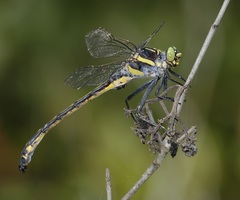
Same family (Gomphidae)


Sources
- Wikipedia: https://en.wikipedia.org/wiki/Ophiogomphus_howei
Look it up elsewhere: GBIF · iNaturalist · BugGuide · ITIS · Wikipedia
Text written 2026-10-27 from the sources above and checked sentence by sentence against them. Data fetched 2026-10-27.