 Bug FAQ
Puncture-headed harp ground beetle
Ophonus puncticeps · Order: Coleoptera · Family: Carabidae
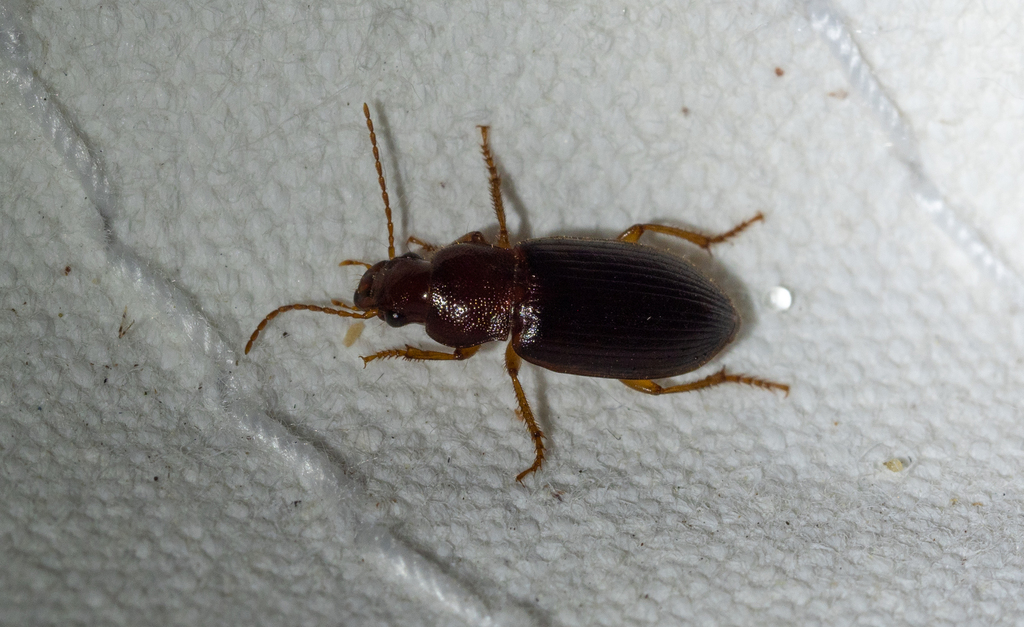
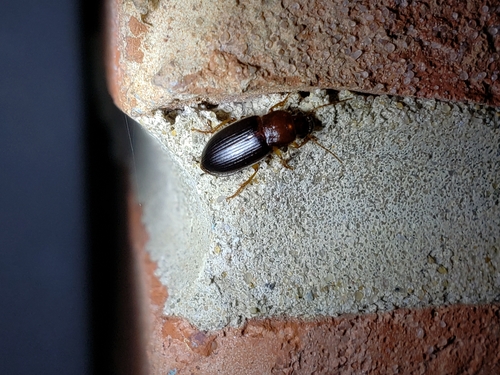
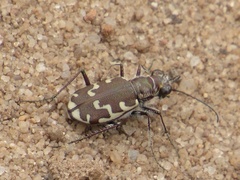
Ophonus puncticeps is a black ground beetle with brownish legs and antennae. It feeds on plant material. The species is native to the Palearctic region, including Europe and the Near East.
Source: Wikipedia
How to recognize it
The beetle is black in colour with brownish legs and antennae.
Source: Wikipedia
What it eats
Ophonus puncticeps is phytophagous, feeding on plants.
Source: Wikipedia
Where it comes from
It is native to the Palearctic realm, covering Europe and the Near East.
Source: Wikipedia
Where it is found in the US
Recorded in 15 of 51 states and DC. Most records: Massachusetts, Arizona, Vermont, Ohio, Iowa, Pennsylvania, Michigan, Illinois.
Darker = more records. Counts are museum and citizen-science records, not population size.
Source: GBIF
Status: introduced in North America; introduced in Canada; introduced in United States. Source: iNaturalist
Months it is reported in the US
Source: GBIF
More photos
Questions people ask
What does Ophonus puncticeps look like?
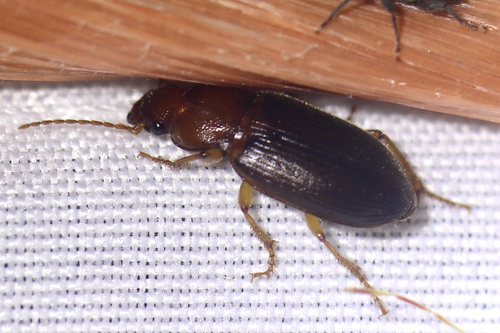
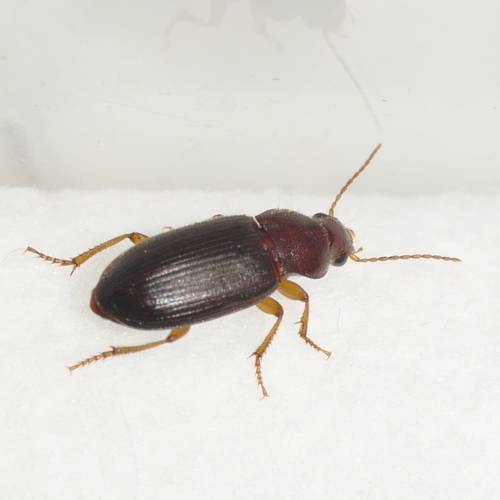
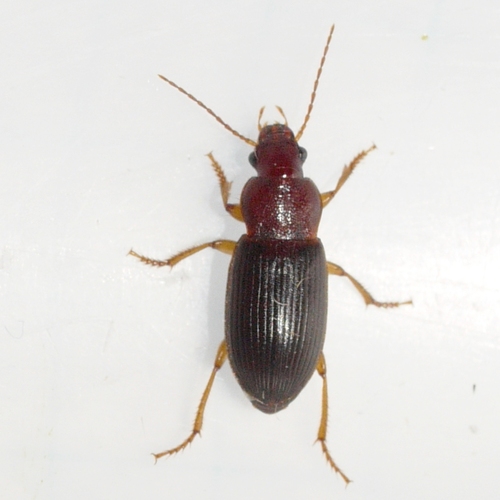
It is black with brownish legs and antennae.
Source: Wikipedia
Where is Ophonus puncticeps found?
It is native to the Palearctic region, including Europe and the Near East.
Source: Wikipedia
What other beetles can it be mistaken for?
It was initially mistaken for Harpalus puncticollis but is actually Ophonus rufibarbis.
Source: Wikipedia
Same family (Carabidae)


Sources
- Wikipedia: https://en.wikipedia.org/wiki/Ophonus_puncticeps
Look it up elsewhere: GBIF · iNaturalist · BugGuide · ITIS · Wikipedia
Text written 2026-10-28 from the sources above and checked sentence by sentence against them. Data fetched 2026-10-28.