 Bug FAQ
Punctate Snail-eating Beetle
Scaphinotus punctatus · Order: Coleoptera · Family: Carabidae
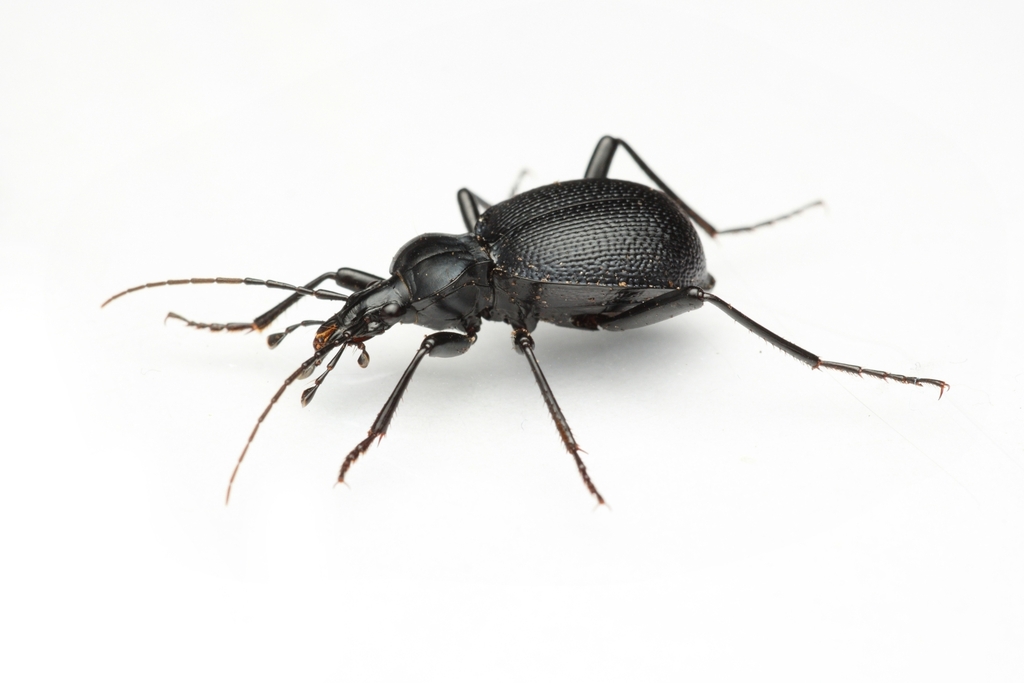
Adults have short wings and are active at night. They live in forests, along lake shores and streams, and also in dry fields. Their diet includes snails, caterpillars, berries and other beetles.
Source: Wikipedia
How to recognize it
Adults are brachypterous and nocturnal.
Source: Wikipedia
Size
Adults have reduced wings and are active at night.
Source: Wikipedia
Where it lives
They are found in forested areas. They also occur along lake shores, streams and in dry fields.
Source: Wikipedia
What it eats
They feed on snails, both live and dead caterpillars, berries and other beetles.
Source: Wikipedia
Where it comes from
Their range includes Central America and parts of North America such as Baja California and California.
Source: Wikipedia
Where it is found in the US
Recorded in 2 of 51 states and DC. Most records: California, Oregon.
Darker = more records. Counts are museum and citizen-science records, not population size.
Source: GBIF
Months it is reported in the US
Source: GBIF
More photos

Questions people ask
What does the punctate snail-eating beetle eat?
It eats snails, caterpillars (alive or dead), berries and other beetles.
Source: Wikipedia
Same family (Carabidae)


Sources
- Wikipedia: https://en.wikipedia.org/wiki/Scaphinotus_punctatus
Look it up elsewhere: GBIF · iNaturalist · BugGuide · ITIS · Wikipedia
Text written 2026-10-27 from the sources above and checked sentence by sentence against them. Data fetched 2026-10-27.