 Bug FAQ
Pubescent Carpenter Bee
Xylocopa pubescens · Order: Hymenoptera · Family: Apidae
Source: Wikipedia
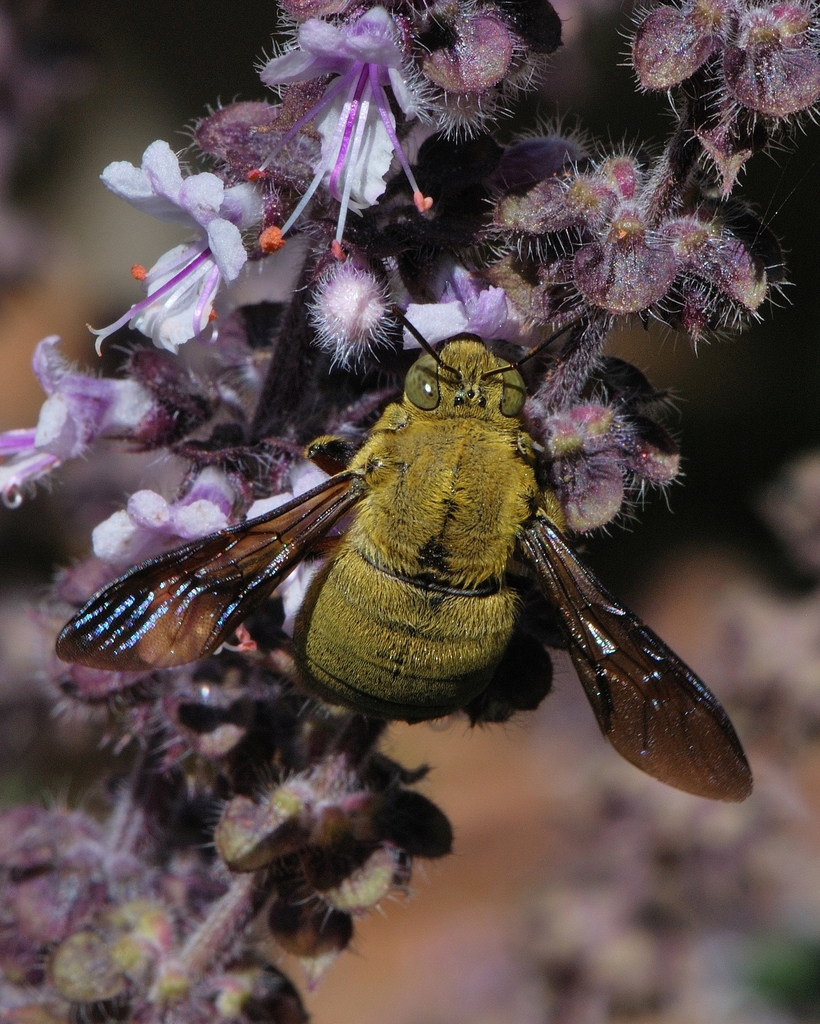
Females are large, shiny, black with yellow head markings, while males are smaller with narrow heads and yellow hair covering their bodies. They build nests in dead or soft wood, including timber in buildings, which can harm wooden structures. Their range spans the Eastern Mediterranean, North Africa, the Middle East, Cape Verde to South Asia, and they forage on many plants for nectar and pollen.
Source: Wikipedia
How to recognize it
Females have black bodies with yellow markings on the head. Males have a narrow head and are covered in yellow hair.
Source: Wikipedia
Size
Females are larger than males.
Source: Wikipedia
Is it a pest in the house?
Nests are made in dead or soft wood, including wood used in buildings, which can damage structures.
Source: Wikipedia
What it eats
They collect nectar for bee bread and pollen to feed their offspring, visiting many plant species.
Source: Wikipedia
Life cycle
Colonies can start from early March to early November, with new adults emerging from May through November.
Source: Wikipedia
When you see it
Breeding runs from early March to early November, with most mating in spring and some in fall.
Source: Wikipedia
Same family (Apidae)


Sources
- Wikipedia: https://en.wikipedia.org/wiki/Xylocopa_pubescens
Look it up elsewhere: GBIF · iNaturalist · BugGuide · ITIS · Wikipedia
Text written 2026-10-23 from the sources above and checked sentence by sentence against them. Data fetched 2026-10-22.