 Bug FAQ
Pseudischyrus extricatus
Pseudischyrus extricatus · Order: Coleoptera · Family: Erotylidae
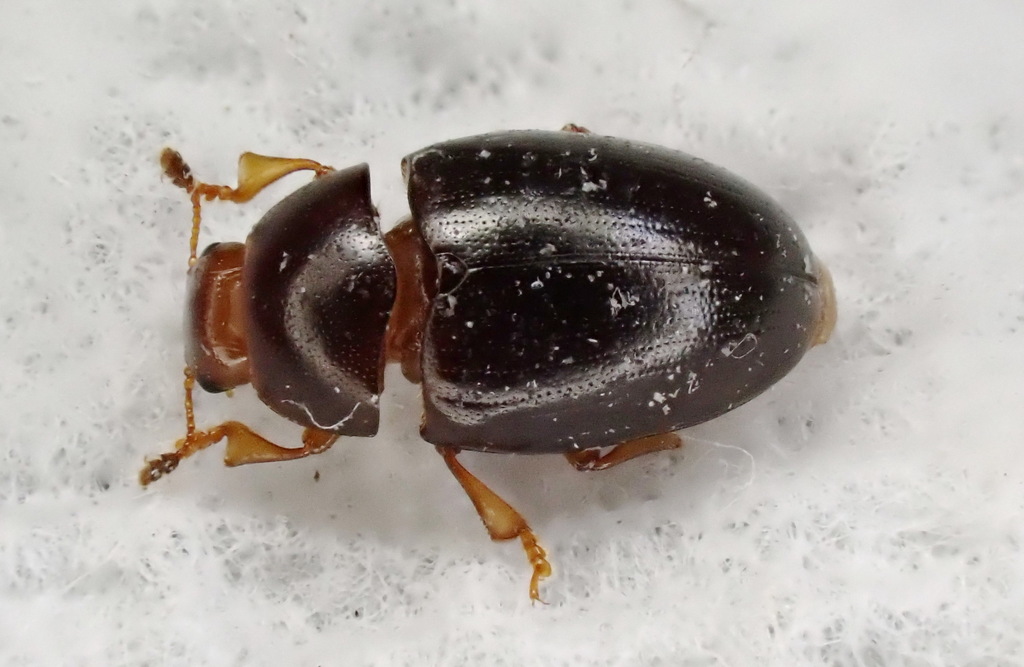
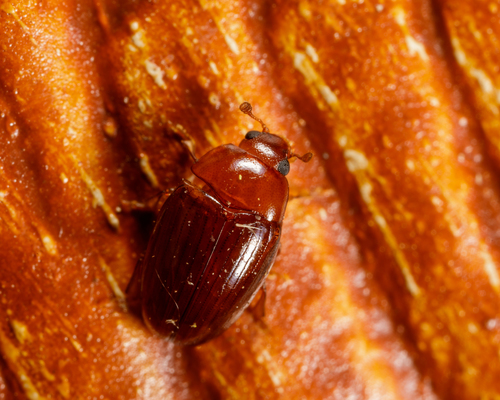
When it first emerges it is light reddish-brown but quickly darkens to a blackish-brown shade. It is native to the United States and its western range likely stops near the 100th meridian.
Source: Wikipedia
How to recognize it
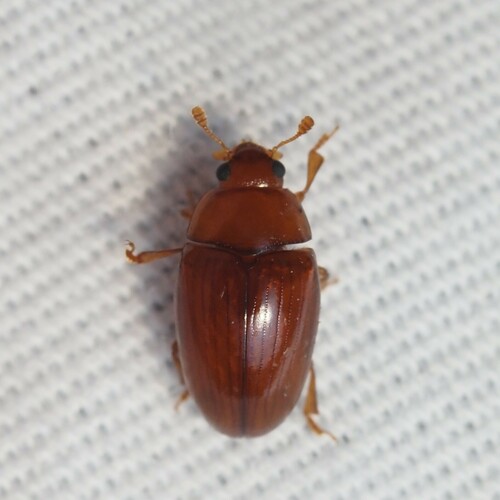
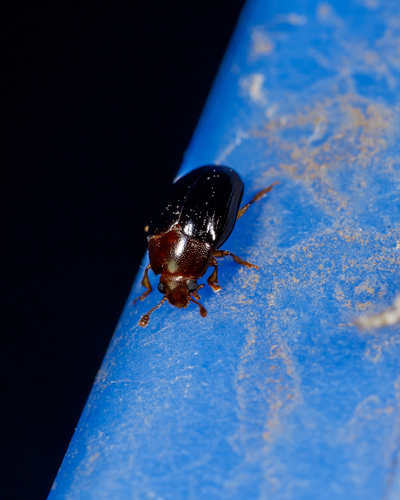
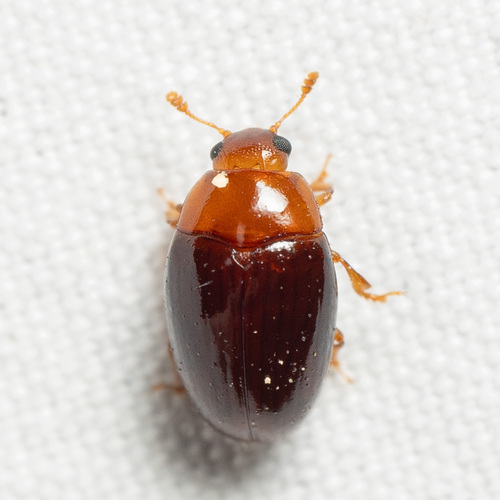
Adults are light reddish-brown at emergence and turn blackish-brown as they age.
Source: Wikipedia
Size
They measure at most a quarter of an inch long and a tenth of an inch wide, usually 3 to 5 mm by 1.6 to 2.75 mm.
Source: Wikipedia
Where it comes from
Pseudischyrus extricatus is endemic to the United States.
Source: Wikipedia
Lookalikes
It looks very similar to the related beetle Tritoma angulata, whose range overlaps. A reliable way to tell them apart is the size of the compound eye ommatidia: P. extricatus has huge ommatidia, while T. angulata’s are much smaller.
Source: Wikipedia
Where it is found in the US
Recorded in 5 of 51 states and DC. Most records: Florida, Texas, Kansas, Georgia, North Carolina.
Darker = more records. Counts are museum and citizen-science records, not population size.
Source: GBIF
Status: native in North America; native in United States. Source: iNaturalist
Months it is reported in the US
Source: GBIF
More photos
Questions people ask
How can I tell Pseudischyrus extricatus apart from similar beetles?
Look at the compound eyes with a strong magnifier; P. extricatus has very large ommatidia, whereas the look-alike Tritoma angulata has much smaller ones.
Source: Wikipedia
Where is Pseudischyrus extricatus found?
It is native to the United States and its western range likely ends near the 100th meridian west.
Source: Wikipedia
Same family (Erotylidae)
 Blue Fungus BeetleGibbifer californicus
 Pleasing Fungus BeetleMegalodacne heros
 Red-banded Fungus BeetleMegalodacne fasciata
 Four-spotted Fungus BeetleIschyrus quadripunctatus
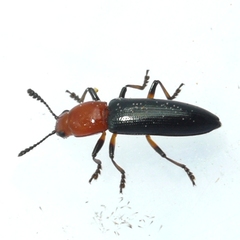 Clover Stem BorerLanguria mozardiDamages trees, gardens or crops
 Slender Lizard BeetleAcropteroxys gracilisDamages trees, gardens or crops
Sources
- Wikipedia: https://en.wikipedia.org/wiki/Pseudischyrus_extricatus
Look it up elsewhere: GBIF · iNaturalist · BugGuide · ITIS · Wikipedia
Text written 2026-10-27 from the sources above and checked sentence by sentence against them. Data fetched 2026-10-27.