 Bug FAQ
Pruinose Squash Bee
Peponapis pruinosa · Order: Hymenoptera · Family: Apidae
Also called: Eastern Cucurbit Bee
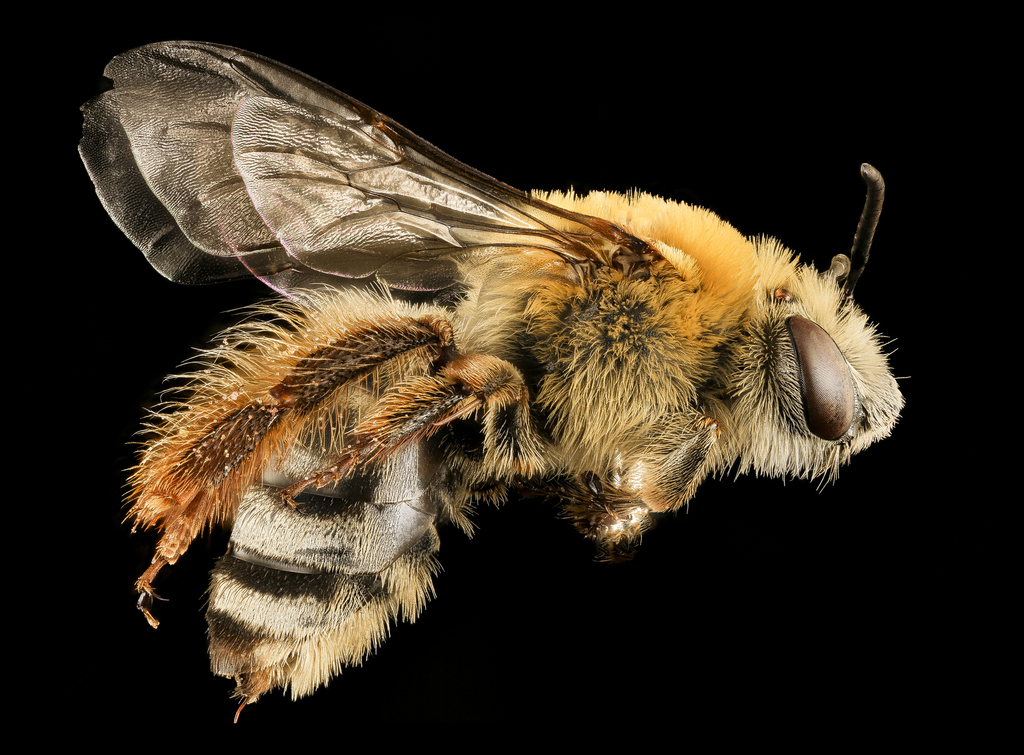
The squash bee is a small, black bee with whitish bands on its abdomen and a covering of yellowish hairs. It nests in the ground of irrigated fields or lawns, often near squash plants, and females dig nests up to about 46 cm deep. Females collect only squash (Cucurbita) pollen to feed their larvae, while males do not gather pollen.
Source: Wikipedia
How to recognize it
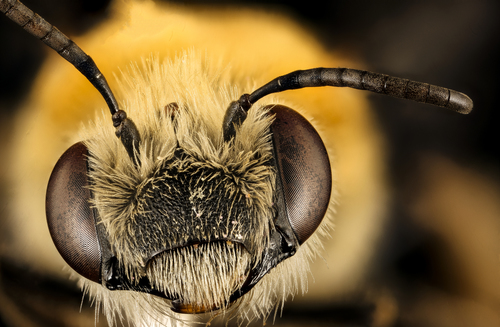
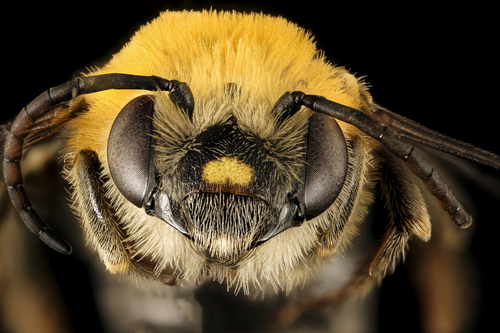
The bee is black with whitish abdominal bands and is covered in yellowish hairs. Females have branched hairs on their hind legs to carry coarse squash pollen; males lack these hairs.
Source: Wikipedia
Size
Adults are 11 to 14 mm long and 4 to 5.5 mm wide at the abdomen.
Source: Wikipedia
Where it lives
It nests in the ground of irrigated crop fields and can also nest in lawns. The bee prefers irrigated soils and soils that have been cleared by fire.
Source: Wikipedia
What it eats
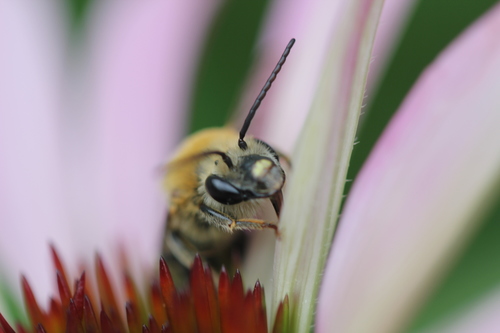
Females gather only squash pollen to provision their young, though they may sip nectar from other plants occasionally. Their foraging activity matches the early-morning opening of squash flowers, which close before noon.
Source: Wikipedia
Life cycle
The young pupate in late June to early July.
Source: Wikipedia
When you see it
Nest building usually happens later in the day after morning foraging.
Source: Wikipedia
Where it comes from
It occurs across North America from the US East Coast to the West Coast and into Mexico.
Source: Wikipedia
Lookalikes
Other species in the genus Peponapis and the genus Xenoglossa are also called squash bees.
Source: Wikipedia
Where it is found in the US
Recorded in 48 of 51 states and DC. Most records: Pennsylvania, California, Vermont, New York, Massachusetts, Delaware, Maryland, Colorado.
Darker = more records. Counts are museum and citizen-science records, not population size.
Source: GBIF
Months it is reported in the US
Source: GBIF
More photos
Questions people ask
How can I identify a squash bee?
Look for a small black bee with whitish bands on the abdomen and a coating of yellowish hairs; females have branched hairs on their hind legs for pollen transport.
Source: Wikipedia
Where does the squash bee nest?
It nests in the ground of irrigated fields or lawns, often digging tunnels up to about 46 cm deep near squash plants.
Source: Wikipedia
What plants does the squash bee rely on?
Females collect only squash (Cucurbita) pollen to feed their larvae, and they time their foraging to the early-morning opening of squash flowers.
Source: Wikipedia
Same family (Apidae)


Sources
- Wikipedia: https://en.wikipedia.org/wiki/Peponapis_pruinosa
Look it up elsewhere: GBIF · iNaturalist · BugGuide · ITIS · Wikipedia
Text written 2026-10-23 from the sources above and checked sentence by sentence against them. Data fetched 2026-10-23.