 Bug FAQ
Protaetia aurichalcea
Protaetia aurichalcea · Order: Coleoptera · Family: Scarabaeidae
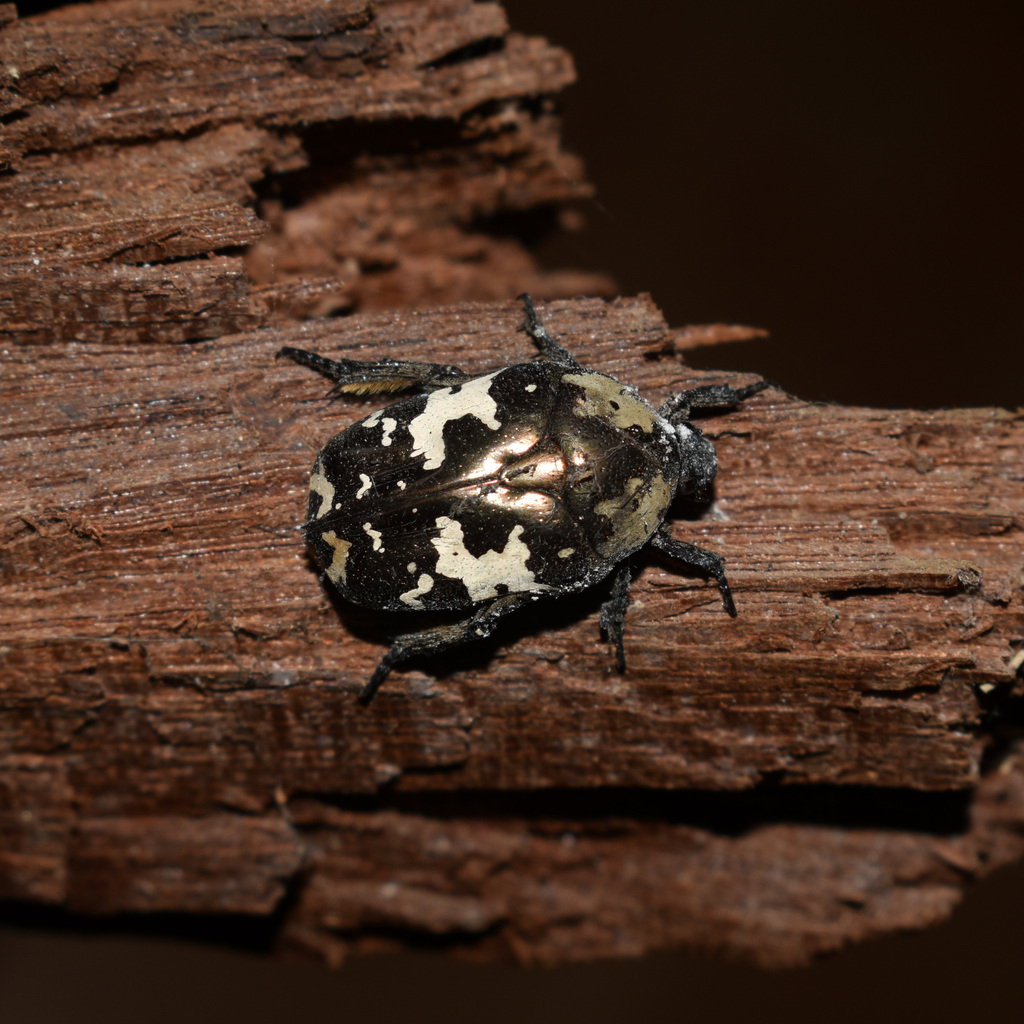
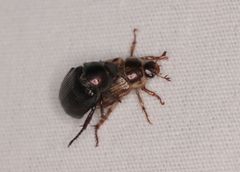
The beetle has a bronze body with white spots on its wing covers, and males show a raised ridge along the wing-cover seam caused by spiny tips. Adults visit flowers and sometimes honey-bee hives for pollen and honey, and they can gather in large numbers on maize and sorghum heads. It is native to Asia.
Source: Wikipedia
How to recognize it
Males have spiny tips at the elytral ends that form a raised ridge along the suture.
Source: Wikipedia
Where it lives
Adults visit flowers like other flower-beetles. They are known to form large groups on maize and sorghum earheads.
Source: Wikipedia
What it eats
Adults feed on flower resources and will also enter beehives to take honey and pollen.
Source: Wikipedia
Life cycle
A nematode called Teratorhabditis andrassyi can hitch a ride on the beetle’s surface.
Source: Wikipedia
Where it comes from
Protaetia aurichalcea occurs in Asia.
Source: Wikipedia
More photos
Questions people ask
What does Protaetia aurichalcea look like?
It is bronze-coloured with white spots on the wing covers, and males have a raised ridge along the wing-cover seam caused by spiny tips.
Source: Wikipedia
What do these beetles eat?
Adults visit flowers for pollen and also go into beehives to feed on honey and pollen.
Source: Wikipedia
Do they gather on crops?
Yes, they can form large groups on maize and sorghum earheads.
Source: Wikipedia
Same family (Scarabaeidae)
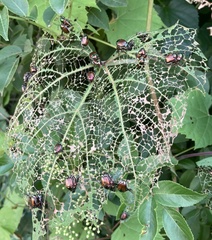 Japanese BeetlePopillia japonicaDamages trees, gardens or crops
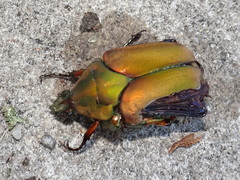 Common Green June BeetleCotinis nitidaDamages trees, gardens or crops
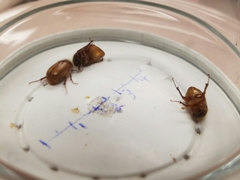 Phyllophaga crinitaPhyllophaga crinitaDamages trees, gardens or crops
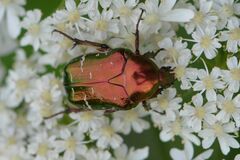 European Rose ChaferCetonia aurata
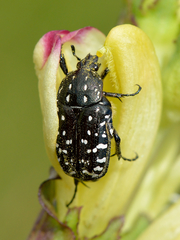 Mediterranean Spotted ChaferOxythyrea funestaDamages trees, gardens or crops
 Oriental BeetleExomala orientalisDamages trees, gardens or crops
Sources
- Wikipedia: https://en.wikipedia.org/wiki/Protaetia_aurichalcea
Look it up elsewhere: GBIF · iNaturalist · BugGuide · Wikipedia
Text written 2026-10-23 from the sources above and checked sentence by sentence against them. Data fetched 2026-10-23.