 Bug FAQ
Pronghorn Clubtail
Phanogomphus graslinellus · Order: Odonata · Family: Gomphidae
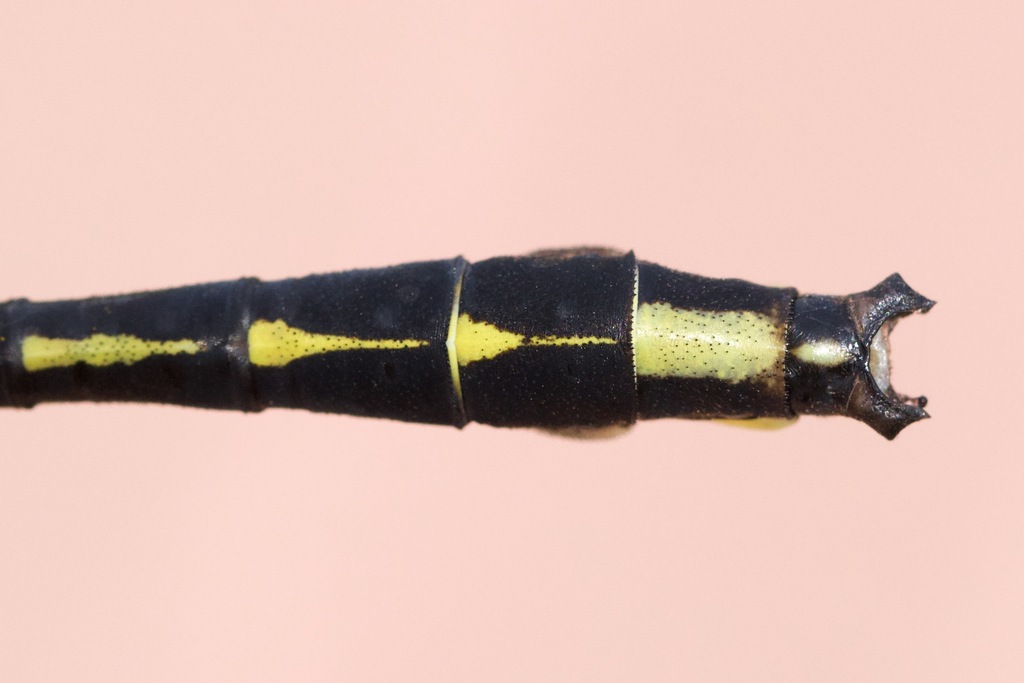
It lives near lakes, ponds, and slow-moving streams across many U.S. states and Canadian provinces. Adults are active from early June through August, while nymphs grow in water and emerge just before sunrise.
Source: Wikipedia
How to recognize it
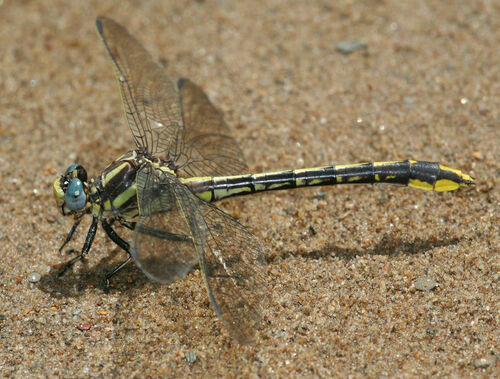
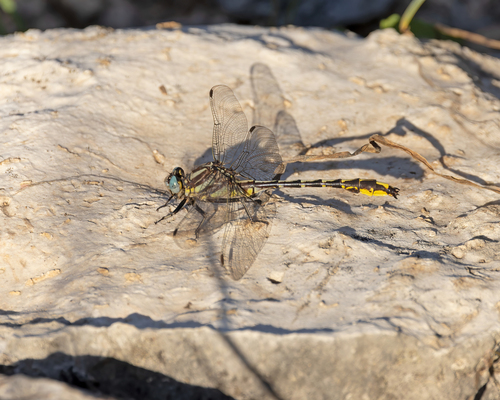
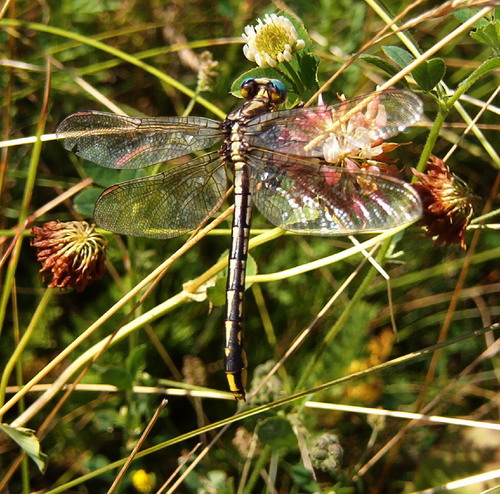
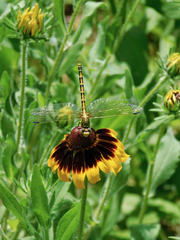
The face and thorax are olive green with dark brown stripes on the thorax. The abdomen is dark brown to black with a dorsal line of elongated triangular marks that can be greenish or yellow.
Source: Wikipedia
Size
Adults measure about 1 ⅞ to 2 ⅛ inches (47 to 54 mm) in length. Nymphs are about 1 ⅛ inches (29 mm) long.
Source: Wikipedia
Where it lives
They are found near lakes, ponds, and slow streams. Nymphs are selective, often occurring only in particular stretches of a water body.
Source: Wikipedia
What it eats
Adults eat soft-bodied flying insects like mosquitoes, flies, and mayflies. Nymphs feed on aquatic insects, mosquito larvae, mayfly larvae, and freshwater shrimp.
Source: Wikipedia
Life cycle
Nymphs leave the water and become adults just before sunrise. After mating, females lay eggs by dipping the abdomen tip into water while hovering.
Source: Wikipedia
When you see it
Adults are most active from early June through August. In Iowa the flight season runs from late May to August.
Source: Wikipedia
Where it comes from
They are native to many U.S. states including Arkansas, Colorado, Iowa, and others. In Canada they occur in provinces such as Alberta, British Columbia, and Ontario.
Source: Wikipedia
Lookalikes
The plains clubtail looks similar and can be hard to separate. The Ozark clubtail can be distinguished by a mostly black ninth abdominal segment, sometimes with a small pale spot.
Source: Wikipedia
Where it is found in the US
Recorded in 22 of 51 states and DC. Most records: Ohio, Texas, Arkansas, Minnesota, Illinois, Indiana, Kansas, Oklahoma.
Darker = more records. Counts are museum and citizen-science records, not population size.
Source: GBIF
Status: native in North America; native in Canada; native in United States. Source: iNaturalist
Months it is reported in the US
Source: GBIF
More photos
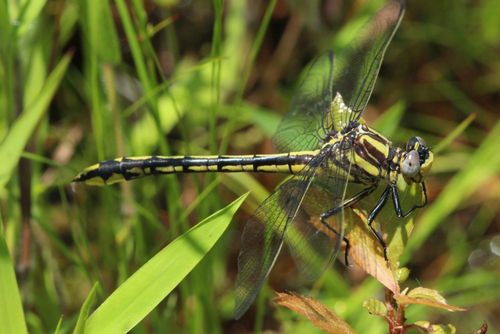
Questions people ask
When are pronghorn clubtails active?
They are most active from early June through August, with a slightly earlier start in some areas like Iowa (late May).
Source: Wikipedia
Where can I find pronghorn clubtails?
They live near lakes, ponds, and slow-moving streams across many U.S. states and Canadian provinces.
Source: Wikipedia
How can I tell a pronghorn clubtail apart from similar species?
Look for the olive-green face and thorax with dark brown stripes, and a dark abdomen with a line of triangular greenish-to-yellow marks; compare with the plains clubtail and Ozark clubtail which have different abdominal patterns.
Source: Wikipedia
Same family (Gomphidae)

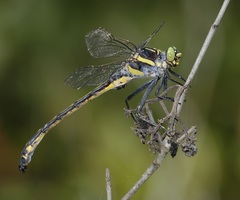
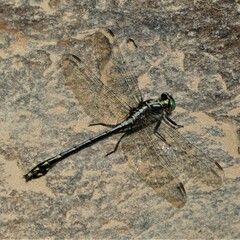
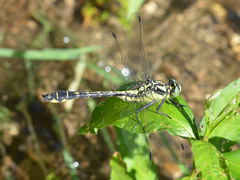

Sources
- Wikipedia: https://en.wikipedia.org/wiki/Phanogomphus_graslinellus
Look it up elsewhere: GBIF · iNaturalist · BugGuide · ITIS · Wikipedia
Text written 2026-10-23 from the sources above and checked sentence by sentence against them. Data fetched 2026-10-23.