 Bug FAQ
Predatory bug
Campyloneura virgula · Order: Hemiptera · Family: Miridae
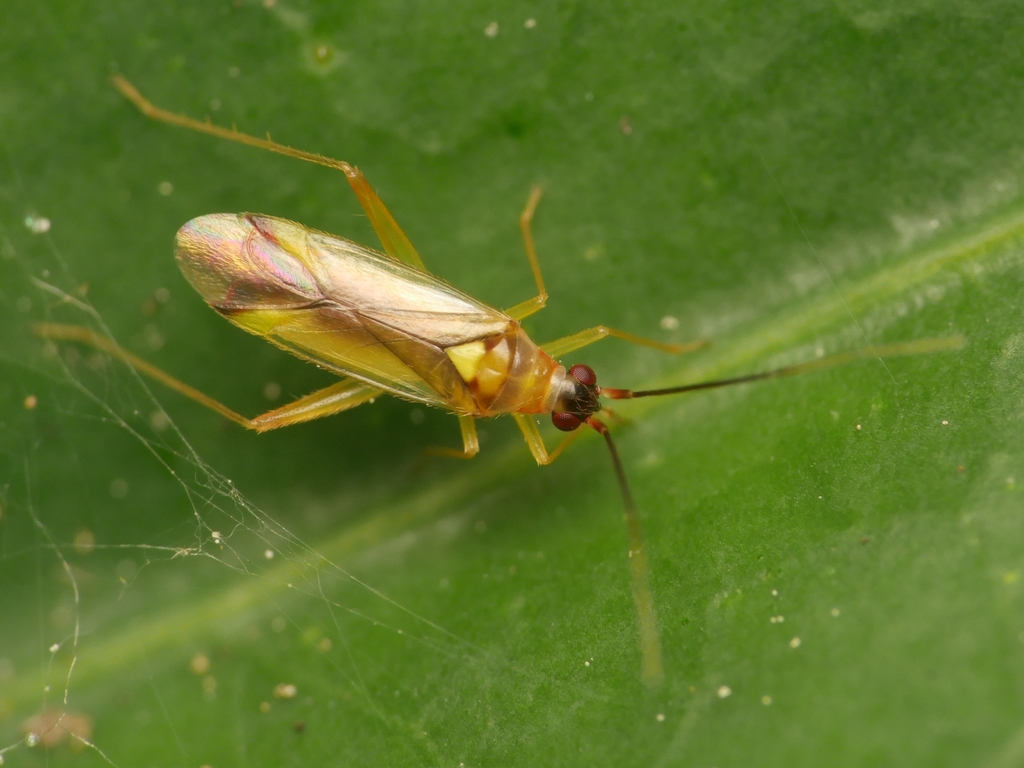
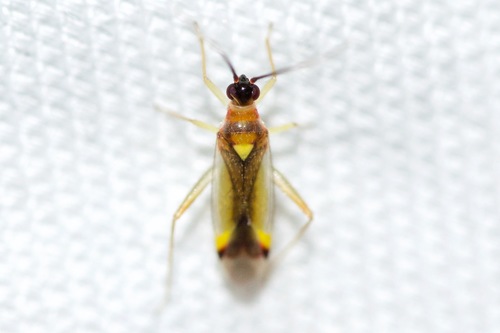
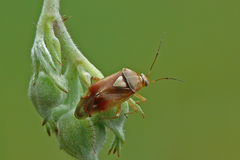
Campyloneura virgula is a small true bug about 4 to 5 mm long, with pale translucent wings, a red stripe on a pale green pronotum, yellow legs and a bright yellow cuneus tipped in dark red. Adults are active from June to October on many deciduous trees such as hazel, hawthorn and oak, and they hunt small insects like aphids and red mites.
Source: Wikipedia
Size
They reach a length of 4 to 5 mm (0.16 to 0.20 in).
Source: Wikipedia
Where it lives
Adults can be found from June to October on many deciduous trees, including hazel, hawthorn and oak.
Source: Wikipedia
What it eats
It is a predatory bug that hunts small insects such as aphids and red mites.
Source: Wikipedia
Life cycle
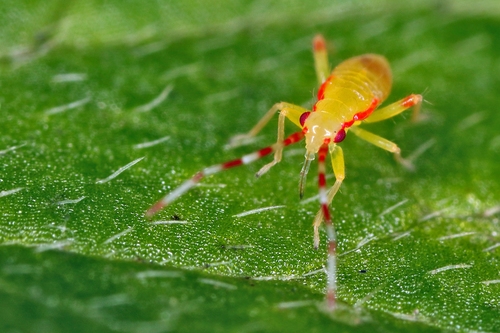
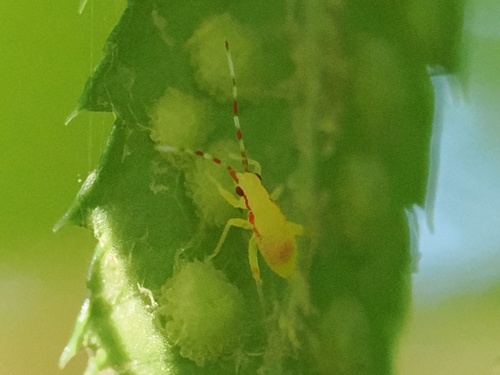
Adults overwinter and nymphs appear in May. In Sicily and North Africa males are common and the species reproduces sexually.
Source: Wikipedia
When you see it
Adults are on the wing from June through October.
Source: Wikipedia
Where it comes from
The species is widespread in the Nearctic realm, Europe and the Mediterranean area up to Turkestan.
Source: Wikipedia
Where it is found in the US
Recorded in 18 of 51 states and DC. Most records: California, Washington, Oregon, New York, Massachusetts, Virginia, Pennsylvania, Maryland.
Darker = more records. Counts are museum and citizen-science records, not population size.
Source: GBIF
Status: introduced in United States; introduced in Canada. Source: iNaturalist
Months it is reported in the US
Source: GBIF
More photos
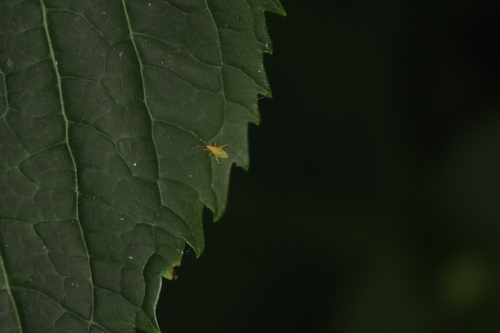
Questions people ask
What does Campyloneura virgula eat?
It preys on small insects such as aphids and red mites.
Source: Wikipedia
Same family (Miridae)
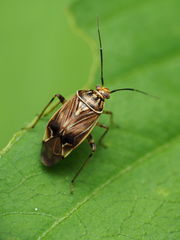 North American Tarnished Plant BugLygus lineolarisDamages trees, gardens or crops
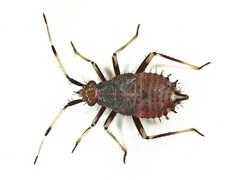 Red-spotted Plant BugDeraeocoris ruber
 Alfalfa Plant BugAdelphocoris lineolatusDamages trees, gardens or crops
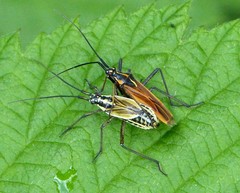 Meadow Plant BugLeptopterna dolabrataDamages trees, gardens or crops
 Four-lined Plant BugPoecilocapsus lineatusDamages trees, gardens or crops
 Lygus pratensisLygus pratensisDamages trees, gardens or crops
Sources
- Wikipedia: https://en.wikipedia.org/wiki/Campyloneura
Look it up elsewhere: GBIF · iNaturalist · BugGuide · ITIS · Wikipedia
Text written 2026-10-22 from the sources above and checked sentence by sentence against them. Data fetched 2026-10-22.