 Bug FAQ
Polyphagous Shot Hole Borer
Euwallacea fornicatus · Order: Coleoptera · Family: Curculionidae
Also called: Polyphagous Shothole Borer Beetle
Source: Wikipedia
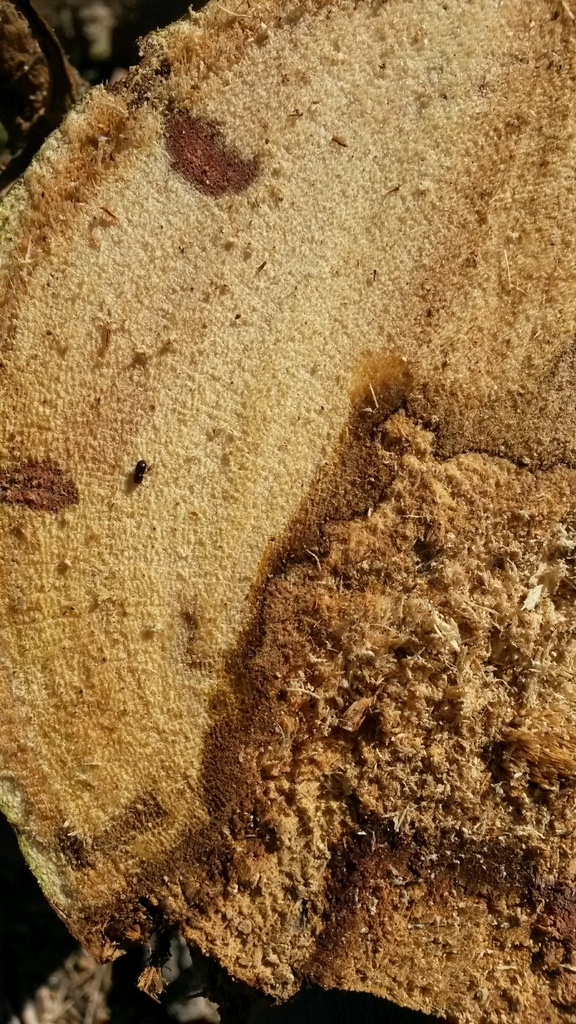
Adult females are 1.9 to 2.5 mm long and look bulky, dark brown or black with saw-like projections on the pronotum. They breed in live hosts, spread to greenhouses in Europe and were found in South Africa in 2017. Both larvae and adults feed on a symbiotic fungus, not the wood itself, and the fungus kills trees.
Source: Wikipedia
How to recognize it
They are bulky, dark brown or black and have a row of saw-like projections on the front edge of the pronotum. Erect setae form rows on the elytral declivity with a costa on the posterolateral edge.
Source: Wikipedia
Size
Adult females measure 1.9 to 2.5 mm long. Males are much smaller and have non-functional wings.
Source: Wikipedia
Is it a pest in the house?
The beetle damages trees by deep tunnelling and cultivating fungus that blocks the tree’s vascular system.
Source: Wikipedia
How to get rid of it
Recommended management includes removing infected hosts and preventing spread of infected material. Chemical control may be used on non-food hosts, and limited biological control attempts have had little success.
Source: Wikipedia
Where it lives
The beetle breeds in a variety of live host trees.
Source: Wikipedia
What it eats
Large numbers of beetles plus the fungus can kill trees.
Source: Wikipedia
Life cycle
Larvae are legless, C-shaped, with a sclerotized head capsule, typical of Curculionidae.
Source: Wikipedia
Where it comes from
It has been unintentionally introduced into greenhouses in several European countries. It was first recorded in South Africa in early 2017.
Source: Wikipedia
Where it is found in the US
Recorded in 4 of 51 states and DC. Most records: California, Hawaii, Florida, Kansas.
Darker = more records. Counts are museum and citizen-science records, not population size.
Source: GBIF
Months it is reported in the US
Source: GBIF
Questions people ask
How can I identify Polyphagous Shot Hole Borer?
Look for a small, bulky, dark brown or black beetle about 2 mm long with saw-like projections on the front edge of the pronotum and rows of erect setae on the elytral declivity.
Source: Wikipedia
What damage does this beetle cause?
It tunnels deep into trees and cultivates a fungus that blocks the vascular system, ultimately killing the tree.
Source: Wikipedia
How should I control an infestation?
Remove and destroy infected trees, avoid moving infected material, and consider chemical treatments on non-food hosts; biological control has not been very effective.
Source: Wikipedia
Same family (Curculionidae)
 Green Immigrant Leaf WeevilPolydrusus formosusDamages trees, gardens or crops
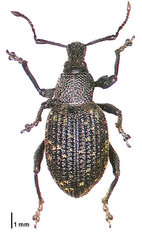 Black Vine WeevilOtiorhynchus sulcatusDamages trees, gardens or crops
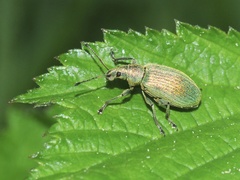 Nettle weevilPhyllobius pomaceusDamages trees, gardens or crops
 Asian Oak WeevilCyrtepistomus castaneusDamages trees, gardens or crops
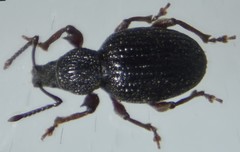 Strawberry Root WeevilOtiorhynchus ovatusDamages trees, gardens or crops
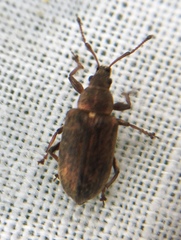 Common Leaf WeevilPhyllobius pyriDamages trees, gardens or crops
Sources
- Wikipedia: https://en.wikipedia.org/wiki/Euwallacea_fornicatus
Look it up elsewhere: GBIF · iNaturalist · BugGuide · ITIS · Wikipedia
Text written 2026-10-23 from the sources above and checked sentence by sentence against them. Data fetched 2026-10-23.