 Bug FAQ
Polybia sericea
Polybia sericea · Order: Hymenoptera · Family: Eumenidae
Source: Wikipedia
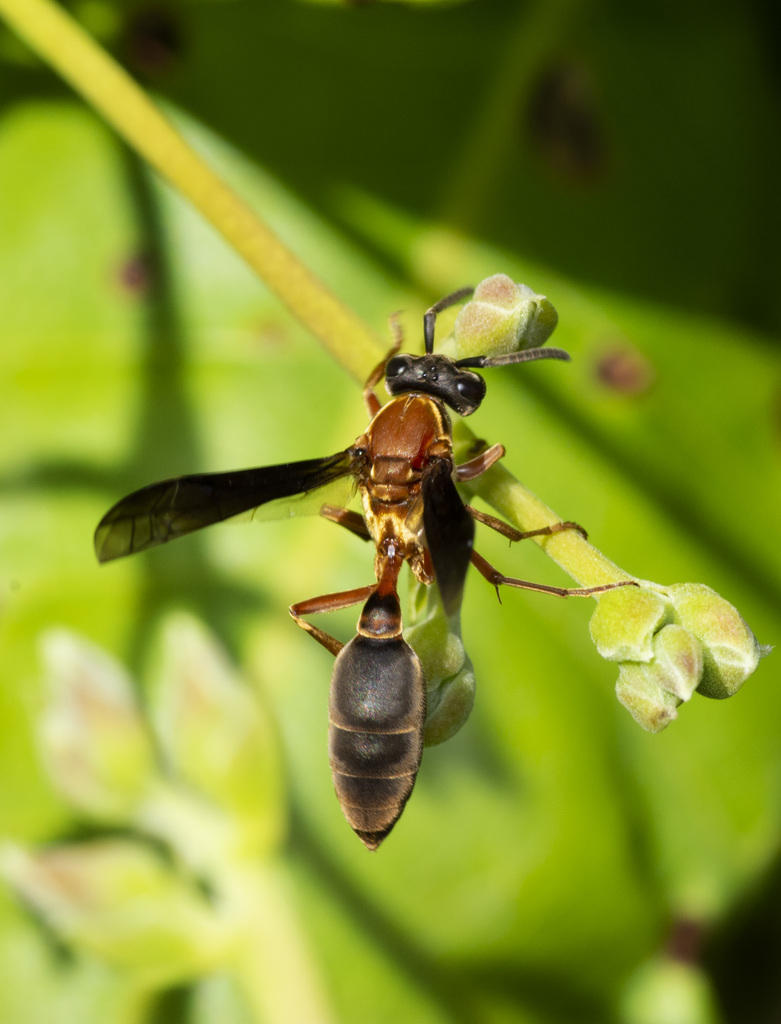
They build small reddish-brown nests in open, semi-arid areas near forest edges, rivers, grasses, trees and shrubs, mainly in Brazil and other parts of South America. Their diet includes caterpillars, flies, nectar and fruit, while larvae are fed only animal protein supplied by workers.
Source: Wikipedia
How to recognize it
They are dark in colour, fly slowly and are usually docile unless disturbed. Their nests are reddish-brown and not very large.
Source: Wikipedia
Size
Adults are about 17 mm long. Queens have larger abdomens and relatively smaller heads and wings than workers.
Source: Wikipedia
Does it bite or sting?
They are generally docile and do not attack unless provoked. If attacked, they may chase the threat up to 15 m and can sting or bite the predator.
Source: Wikipedia
Where it lives
They prefer semi-arid, open habitats near forest edges, rivers and areas with grasses, trees and shrubs.
Source: Wikipedia
What it eats
Larvae are fed only animal protein brought by adult workers.
Source: Wikipedia
Life cycle
Colonies range from a few to several thousand individuals, usually a few hundred workers. New colonies start by the whole colony moving to a new nest site in a swarming emigration.
Source: Wikipedia
Where it comes from
They are a tropical social wasp found throughout South America, especially Brazil.
Source: Wikipedia
Lookalikes
Synoeca surinama shows similar defensive behaviour.
Source: Wikipedia
Questions people ask
Can Polybia sericea sting people?
Yes, they may sting if they feel threatened, though they are usually calm.
Source: Wikipedia
Where are Polybia sericea wasps found?
They live in semi-arid open areas of South America, especially Brazil, near forest edges, rivers and vegetation.
Source: Wikipedia
What do Polybia sericea wasps eat?
Adults feed on caterpillars, flies, nectar and fruit, while larvae receive only animal protein from workers.
Source: Wikipedia
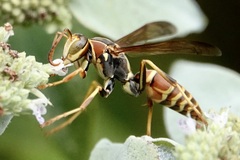
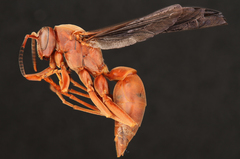
Same family (Eumenidae)

Sources
- Wikipedia: https://en.wikipedia.org/wiki/Polybia_sericea
Look it up elsewhere: GBIF · iNaturalist · BugGuide · Wikipedia
Text written 2026-10-23 from the sources above and checked sentence by sentence against them. Data fetched 2026-10-22.