 Bug FAQ
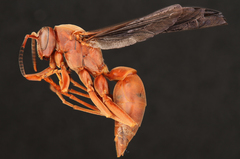
Polybia paulista
Polybia paulista · Order: Hymenoptera · Family: Eumenidae
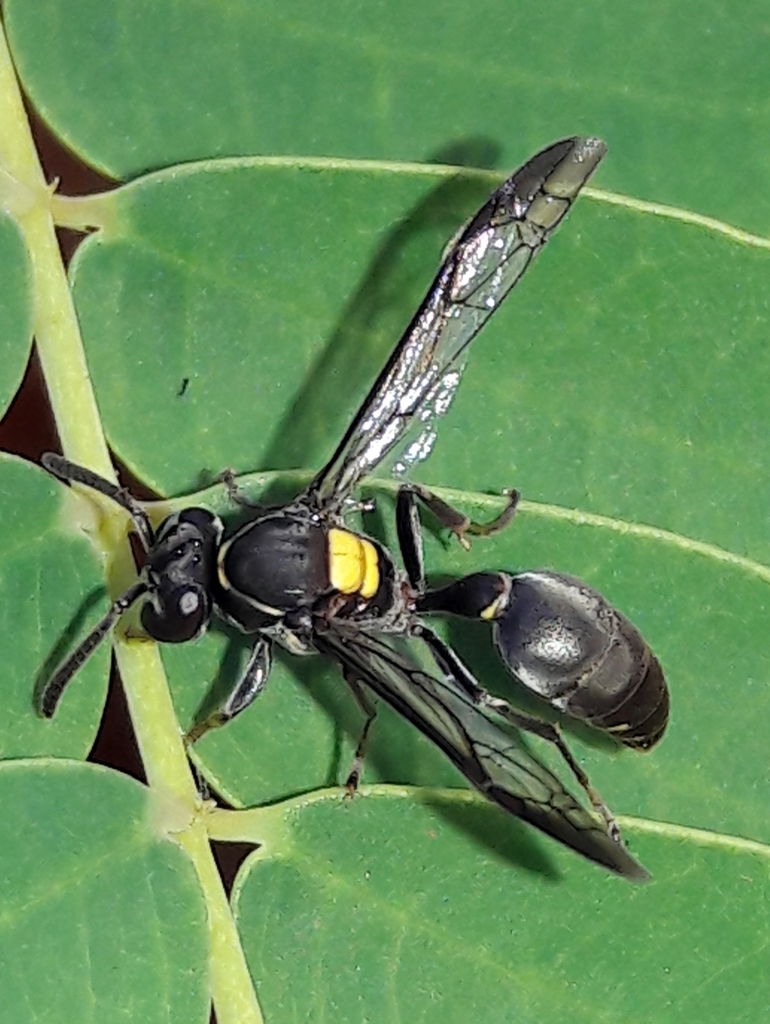
Polybia paulista lives in Brazil, Paraguay and Argentina. It builds nests in protected tropical spots and prefers areas that shield it from weather. Adults collect water, animal protein, carbohydrates and plant fibre throughout the year, especially from cactus fruits.
Source: Wikipedia
Where it lives
They are found in tropical parts of Argentina, Paraguay and especially São Paulo in Brazil. Nesting occurs where the site offers protection from weather.
Source: Wikipedia
What it eats
Water is gathered year-round for nest cooling, construction and metabolism. Animal protein is collected continuously to feed larvae. Carbohydrates are foraged all year for adult energy. They mainly eat cactus fruits that are abundant at the time. Plant fibre or pulp is collected during August-September and December-January.
Source: Wikipedia
Life cycle
Queens can live up to one year, while workers live about 30 days and start flying around day six. Larvae pass through five instars, developing multiple morphological features.
Source: Wikipedia
When you see it
Foraging happens when temperatures are between 19.5 °C and 32 °C. Plant fibre is gathered mainly in late winter and early summer months.
Source: Wikipedia
Where it comes from
This wasp species occurs in Brazil, Paraguay and Argentina.
Source: Wikipedia
More photos
Questions people ask
What do Polybia paulista wasps eat?
They collect water, animal protein, carbohydrates and plant fibre, and they especially feed on cactus fruits.
Source: Wikipedia
When are they most active foraging?
They forage when temperatures are between 19.5 °C and 32 °C and gather plant fibre mainly in August-September and December-January.
Source: Wikipedia
Where can I find Polybia paulista?
They occur in tropical areas of Brazil, Paraguay and Argentina, especially around São Paulo, and nest in protected sites.
Source: Wikipedia
How long do the queens and workers live?
Queens may live up to a year, while workers live about 30 days and begin flying around the sixth day after emergence.
Source: Wikipedia
Same family (Eumenidae)

Sources
- Wikipedia: https://en.wikipedia.org/wiki/Polybia_paulista
Look it up elsewhere: GBIF · iNaturalist · BugGuide · Wikipedia
Text written 2026-10-23 from the sources above and checked sentence by sentence against them. Data fetched 2026-10-23.