 Bug FAQ
Polistes snelleni
Polistes snelleni · Order: Hymenoptera · Family: Eumenidae
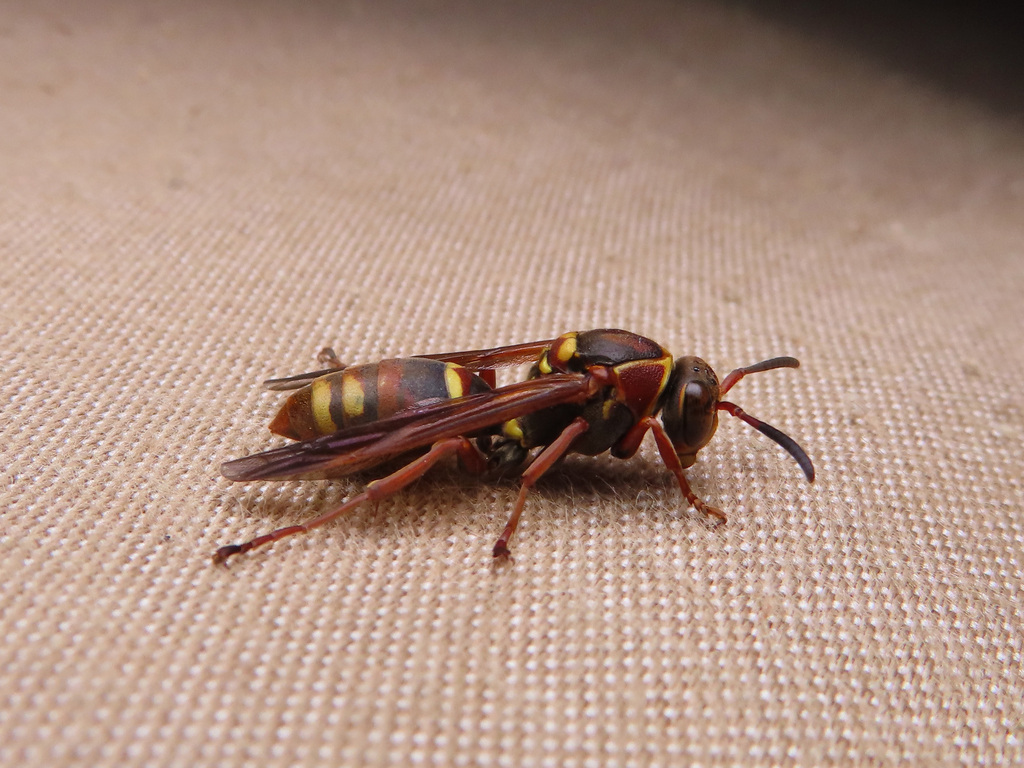
Queens are the largest, young queens weigh about 102 mg, and workers have a white-creamy body fat. Nests are built on south-facing slopes with small trees and short weeds; in northern Japan they stay under snow until early April and workers appear in early July.
Source: Wikipedia
How to recognize it
The wasps are black and yellow. Workers can be recognized by a white-creamy body fat.
Source: Wikipedia
Size
Queens are the biggest individuals in the species. New reproductive females (young queens) weigh about 102 mg.
Source: Wikipedia
Where it lives
They live in hilly or sub-montane (semi-highland) areas. Nests are usually on south-facing slopes with small trees and short weeds.
Source: Wikipedia
What it eats
Larvae are fed animal prey. The queen hunts for prey in single flights lasting 10 to 30 minutes.
Source: Wikipedia
Life cycle
Nests stay under snow until early April in northern Japan. The first worker emerges in early July, with all workers appearing within a few days.
Source: Wikipedia
Where it comes from
Common in central and northern Japan.
Source: Wikipedia
More photos
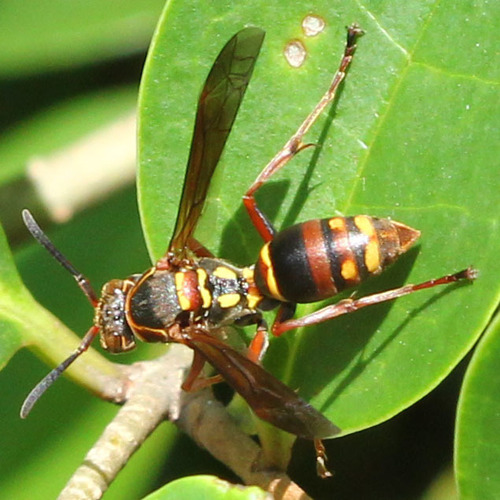
Same family (Eumenidae)
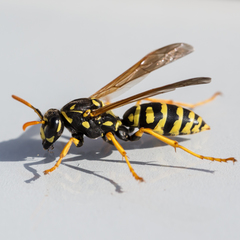

Sources
- Wikipedia: https://en.wikipedia.org/wiki/Polistes_snelleni
Look it up elsewhere: GBIF · iNaturalist · BugGuide · Wikipedia
Text written 2026-10-23 from the sources above and checked sentence by sentence against them. Data fetched 2026-10-23.