 Bug FAQ
Polar Bumble Bee
Bombus polaris · Order: Hymenoptera · Family: Apidae
Also called: Arctic Bee
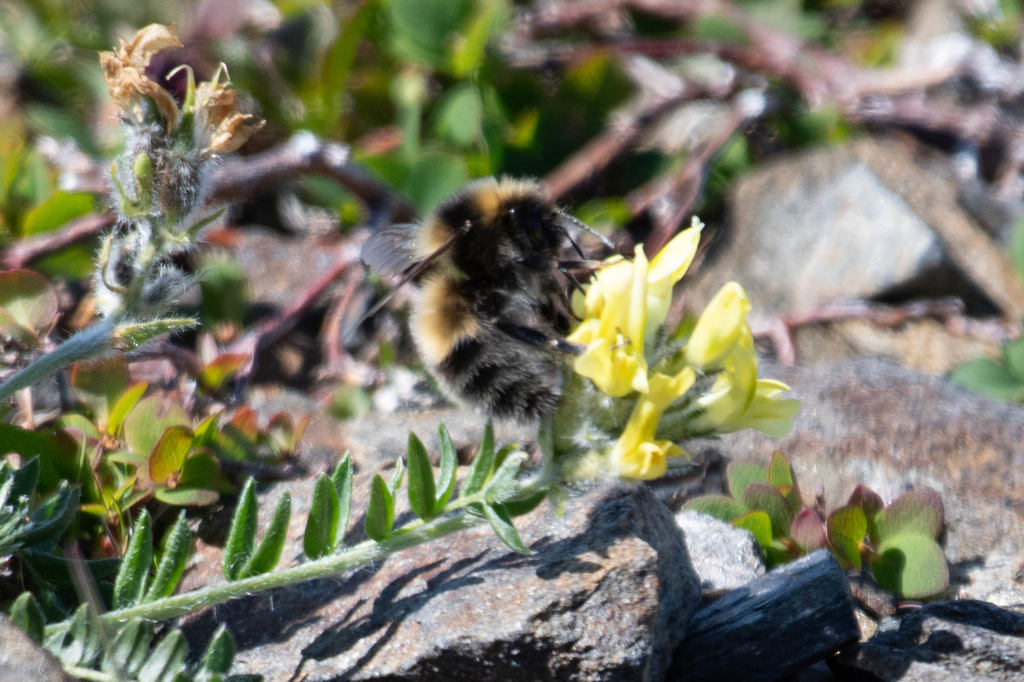
The polar bumble bee lives high in Arctic mountains and can survive near-freezing temperatures thanks to a thick coat of hair and social nesting. Colonies start in June or July, last only a few months, and the queens hibernate for about nine months in mouse nests or burrows. It pollinates Arctic plants such as poppies, roses and willows, but the food it gathers each day usually lasts only one night.
Source: Wikipedia
How to recognize it
The hair on the rear abdominal segments can range from deep rust to dull yellow.
Source: Wikipedia
Size
Individuals can be as small as 10 mm or much larger.
Source: Wikipedia
Where it lives
They are an alpine species that live only at mountain summits. They are social and can survive at near-freezing temperatures.
Source: Wikipedia
What it eats
They pollinate Arctic poppies, roses and willows. Food collected during the day generally lasts only one night.
Source: Wikipedia
Life cycle
Colonies begin in June and survive only two to three months before winter returns. Young queens hibernate for about nine months in mouse nests or other burrows until the ground warms.
Source: Wikipedia
When you see it
Because of their cold tolerance, they are among the earliest Arctic pollinators each year.
Source: Wikipedia
Where it comes from
They are found across the Arctic of North America, including Canada and Alaska. Their range also includes northern Scandinavia, Arctic Russia and Greenland.
Source: Wikipedia
Lookalikes
The only other bumblebees above the Arctic Circle are the social parasites Bombus hyperboreus and Bombus natvigi.
Source: Wikipedia
Where it is found in the US
Recorded in 4 of 51 states and DC. Most records: Alaska, Kansas, Idaho, Washington.
Darker = more records. Counts are museum and citizen-science records, not population size.
Source: GBIF
Status: native in North America; native in Canada. Source: iNaturalist
Months it is reported in the US
Source: GBIF
More photos
Questions people ask
When do polar bumble bee colonies appear?
Colonies start forming in June or July and last only a few months.
Source: Wikipedia
What plants do they pollinate?
They visit Arctic poppies, roses and willows for nectar and pollen.
Source: Wikipedia
Where are they found?
They live on high-altitude Arctic mountain summits across North America, Scandinavia, Russia and Greenland.
Source: Wikipedia
How can I tell them apart from other Arctic bumblebees?
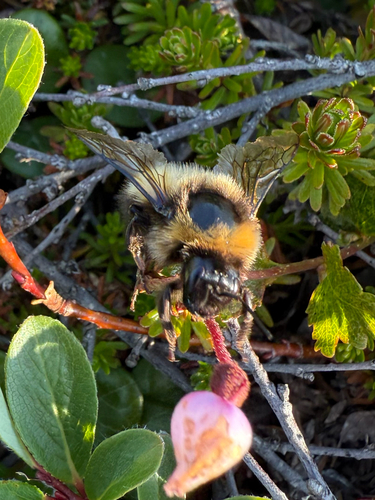
Look for a black thorax with orange-yellow edges and an abdomen that is mostly orange-yellow with a black tip; other Arctic bumblebees are different species.
Source: Wikipedia
Same family (Apidae)





Sources
- Wikipedia: https://en.wikipedia.org/wiki/Bombus_polaris
Look it up elsewhere: GBIF · iNaturalist · BugGuide · ITIS · Wikipedia
Text written 2026-10-24 from the sources above and checked sentence by sentence against them. Data fetched 2026-10-24.