 Bug FAQ
Podium rufipes
Podium rufipes · Order: Hymenoptera · Family: Sphecidae
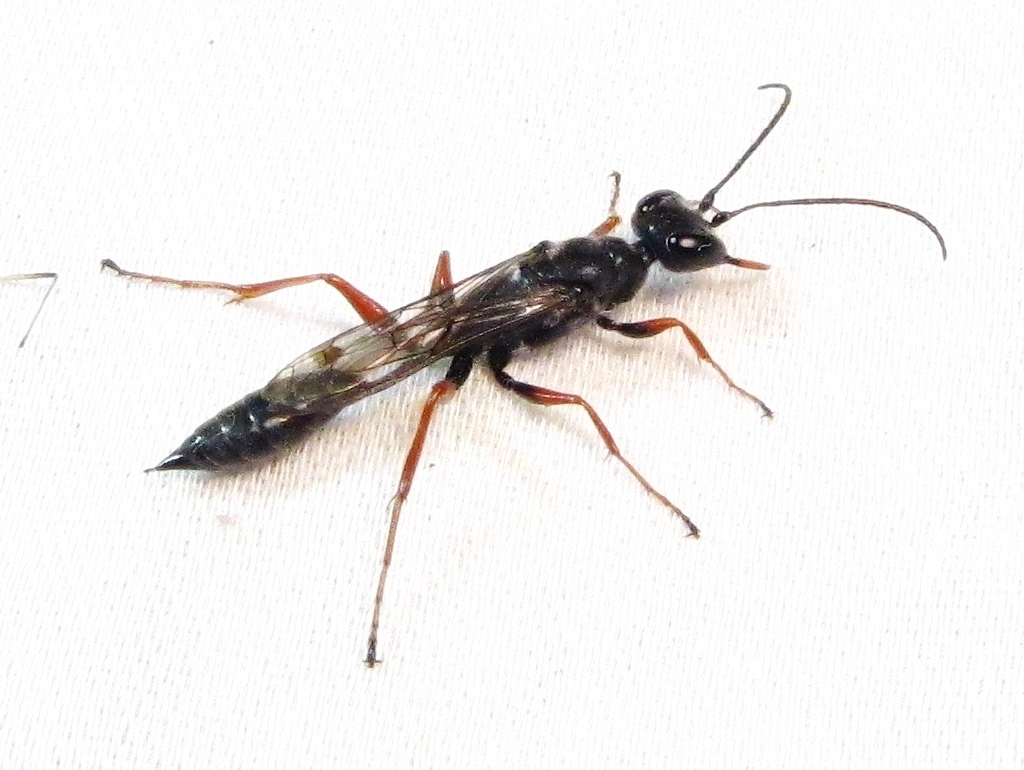
Podium rufipes is about 19 mm long (0.75 in). Females either reuse abandoned nests (including those of Sceliphron and wood-boring beetles) or build trap nests in wood. The larvae are supplied with paralyzed cockroach nymphs.
Source: Wikipedia
How to recognize it
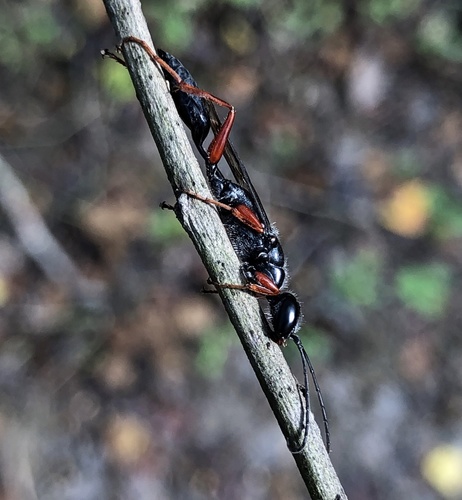
The wasp’s body is black with a bluish tint and its legs are red, with the lower quarter of the femora usually black.
Source: Wikipedia
Size
Adults average about 19 mm (0.75 in) in length.
Source: Wikipedia
Where it lives
Females repurpose abandoned nests, such as those of Sceliphron and wood-boring beetles, or construct trap nests in wood.
Source: Wikipedia
Where it is found in the US
Recorded in 22 of 51 states and DC. Most records: Texas, Florida, North Carolina, Georgia, Alabama, Arkansas, South Carolina, Louisiana.
Darker = more records. Counts are museum and citizen-science records, not population size.
Source: GBIF
Status: native in North America; native in United States. Source: iNaturalist
Months it is reported in the US
Source: GBIF
More photos
Questions people ask
What does Podium rufipes look like?
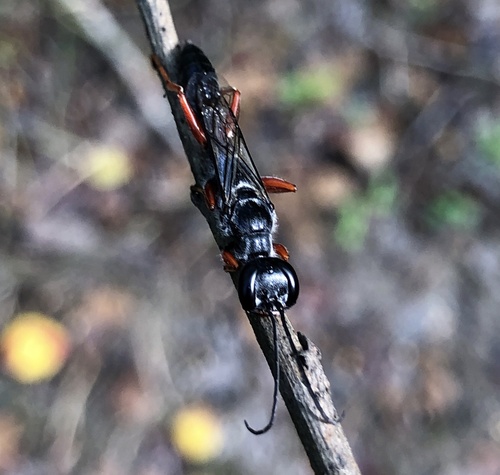
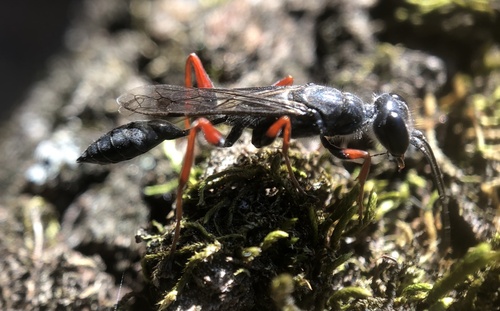
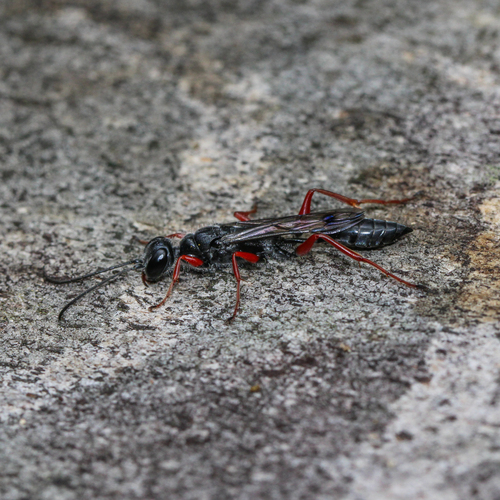
It has a black body with a bluish tint and red legs, the lower part of the femora is usually black.
Source: Wikipedia
Where do females build their nests?
They reuse abandoned nests (including those of Sceliphron and wood-boring beetles) or make trap nests in wood.
Source: Wikipedia
Same family (Sphecidae)
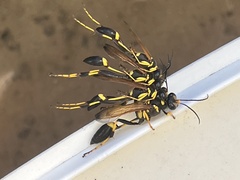 Yellow-legged Mud-dauber WaspSceliphron caementariumCan sting
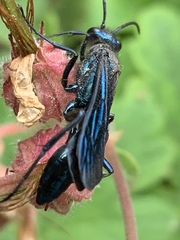 Common Blue Mud-dauber WaspChalybion californicumCan sting
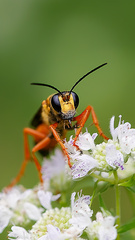 Great Golden Digger WaspSphex ichneumoneus
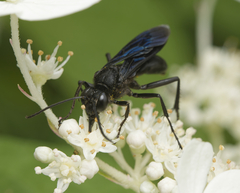 Great Black Digger WaspSphex pensylvanicusCan sting
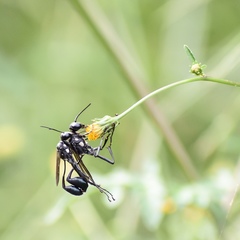 Gold-marked Thread-waisted WaspEremnophila aureonotata
 Mexican Grass-carrying WaspIsodontia mexicana
Sources
- Wikipedia: https://en.wikipedia.org/wiki/Podium_rufipes
Look it up elsewhere: GBIF · iNaturalist · BugGuide · ITIS · Wikipedia
Text written 2026-10-26 from the sources above and checked sentence by sentence against them. Data fetched 2026-10-26.