 Bug FAQ
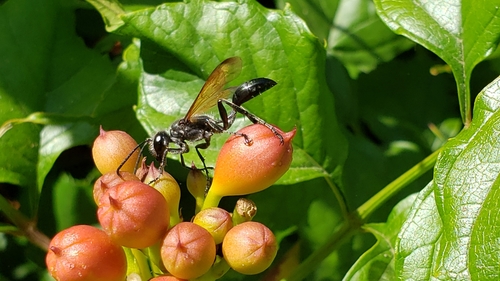
Mexican Grass-carrying Wasp
Isodontia mexicana · Order: Hymenoptera · Family: Sphecidae
Also called: Mud Dauber
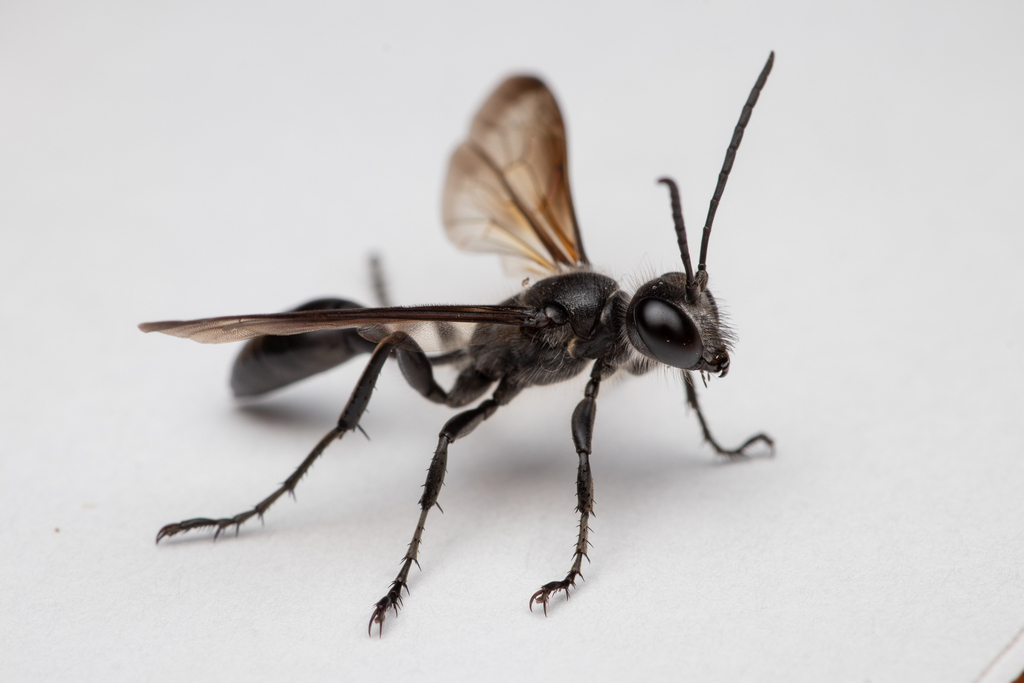
The Mexican grass-carrying wasp is a small, entirely black insect about 18 to 20 mm long, with a hairy thorax and smoky-brown wings. It builds nests in hollow branches or other natural cavities, often reusing old nests, and is found across North America from early summer through September. Females are larger than males and emerge later in the season, and they hunt small grasshoppers, katydids, or tree crickets to provision their larvae.
Source: Wikipedia
Size
Adults reach about 18 to 20 mm (0.71 to 0.79 in) in length.
Source: Wikipedia
Where it lives
They nest in hollowed branches or other natural cavities, often reusing nests of other species.
Source: Wikipedia
What it eats
Females capture small grasshoppers, katydids, or tree crickets, paralyze them, and bring them to the nest for their larvae.
Source: Wikipedia
Life cycle
Females are larger than males and appear later in the season.
Source: Wikipedia
When you see it
They can be seen from early summer through September.
Source: Wikipedia
Where it comes from
They are mainly found throughout North America.
Source: Wikipedia
Where it is found in the US
Recorded in 49 of 51 states and DC. Most records: Minnesota, Massachusetts, New York, Washington, Texas, California, Ohio, Oregon.
Darker = more records. Counts are museum and citizen-science records, not population size.
Source: GBIF
Months it is reported in the US
Source: GBIF
More photos
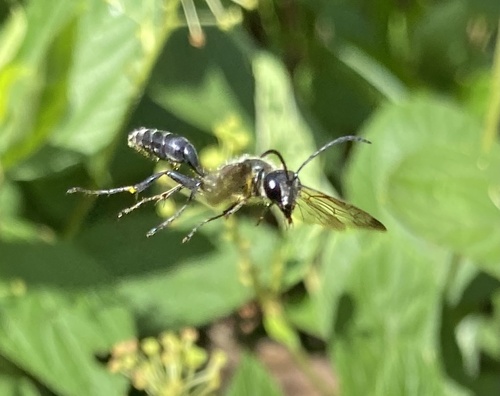
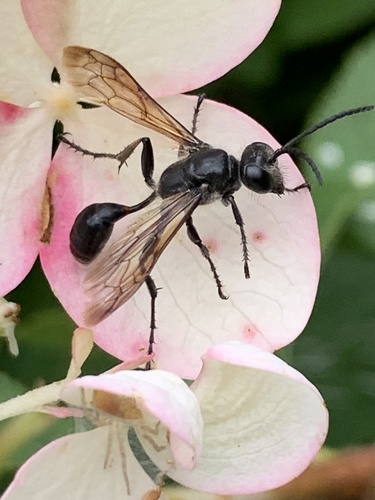
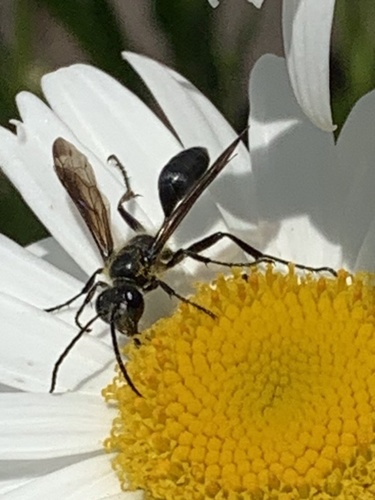
Same family (Sphecidae)
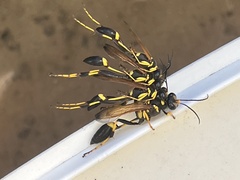 Yellow-legged Mud-dauber WaspSceliphron caementariumCan sting
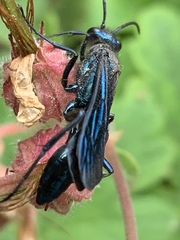 Common Blue Mud-dauber WaspChalybion californicumCan sting
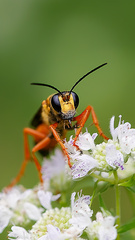 Great Golden Digger WaspSphex ichneumoneus
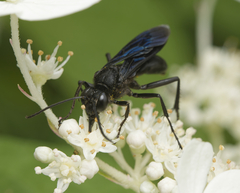 Great Black Digger WaspSphex pensylvanicusCan sting
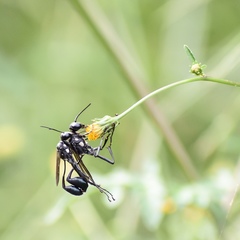 Gold-marked Thread-waisted WaspEremnophila aureonotata
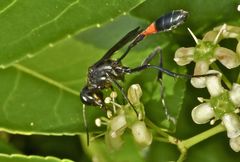 Common Thread-waisted WaspAmmophila procera
Sources
- Wikipedia: https://en.wikipedia.org/wiki/Isodontia_mexicana
Look it up elsewhere: GBIF · iNaturalist · BugGuide · ITIS · Wikipedia
Text written 2026-10-22 from the sources above and checked sentence by sentence against them. Data fetched 2026-10-22.