 Bug FAQ
Plains Cupid
Luthrodes pandava · Order: Lepidoptera · Family: Lycaenidae
Also called: Cycad Blue
Source: Wikipedia
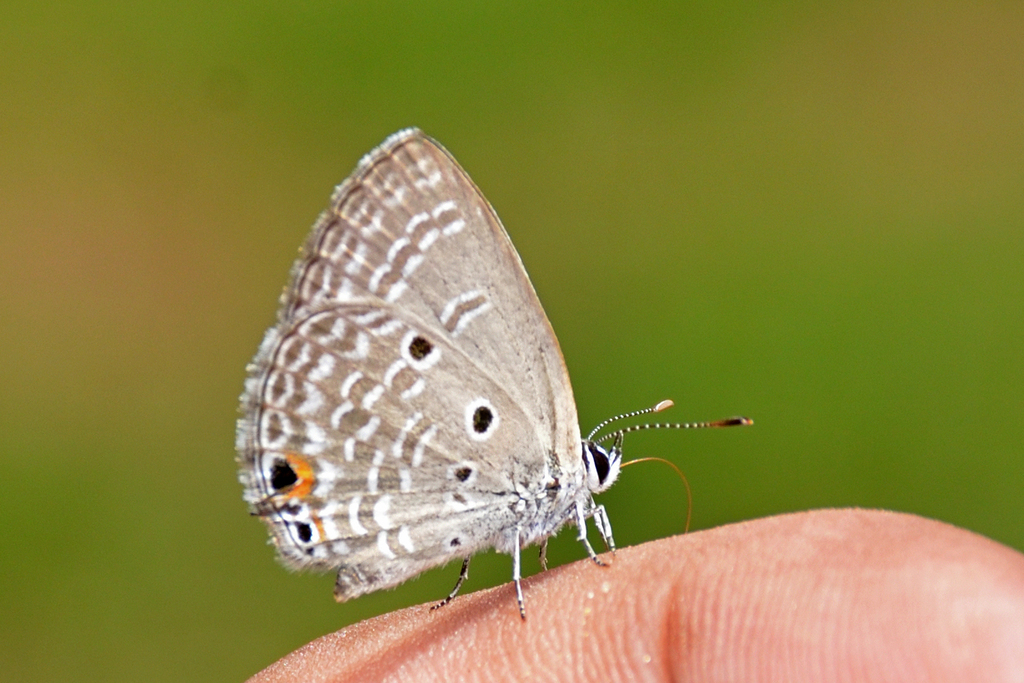
Adult Plains Cupids are about half an inch long; males have lavender-blue uppersides while females are brown. The caterpillars feed on cycad leaves, especially Cycas revoluta, and can strip the plant’s new growth in April and May.
Source: Wikipedia
How to recognize it
Males show a lavender-blue colour on the upper side of their wings. Females have brown uppersides.
Source: Wikipedia
Size
Full-grown adults are just over half an inch long.
Source: Wikipedia
Where it lives
They breed on cycads, which are toxic to most vertebrates. In Calcutta they are found on the ornamental cycad Cycas revoluta.
Source: Wikipedia
What it eats
Larvae have a rough, pitted surface with tiny white tubercles and fine hairs that require a lens to see. They feed on cycad leaves, especially the new shoots of Cycas revoluta.
Source: Wikipedia
Life cycle
Adults are about half an inch long and show two colour forms: bright green or dark reddish-purple. Larvae appear in April to May, eat young cycad fronds, and are carried by ants to underground nests where they pupate.
Source: Wikipedia
When you see it
Larval swarms occur in April and May, damaging cultivated cycads for the year.
Source: Wikipedia
Questions people ask
Do Plains Cupid caterpillars damage garden plants?
Yes, the larvae feed on cycad leaves and can strip new shoots, ruining the plant’s appearance for the season.
Source: Wikipedia
What do male and female Plains Cupids look like?
Males have lavender-blue uppersides, while females are brown.
Source: Wikipedia
Where can I find Plains Cupids?
They occur across South and Southeast Asia, the UAE, and several islands including Java and the Philippines.
Source: Wikipedia
Same family (Lycaenidae)

Sources
- Wikipedia: https://en.wikipedia.org/wiki/Luthrodes_pandava
Look it up elsewhere: GBIF · iNaturalist · BugGuide · Wikipedia
Text written 2026-10-22 from the sources above and checked sentence by sentence against them. Data fetched 2026-10-22.