 Bug FAQ
Plains Clubtail
Gomphurus externus · Order: Odonata · Family: Gomphidae
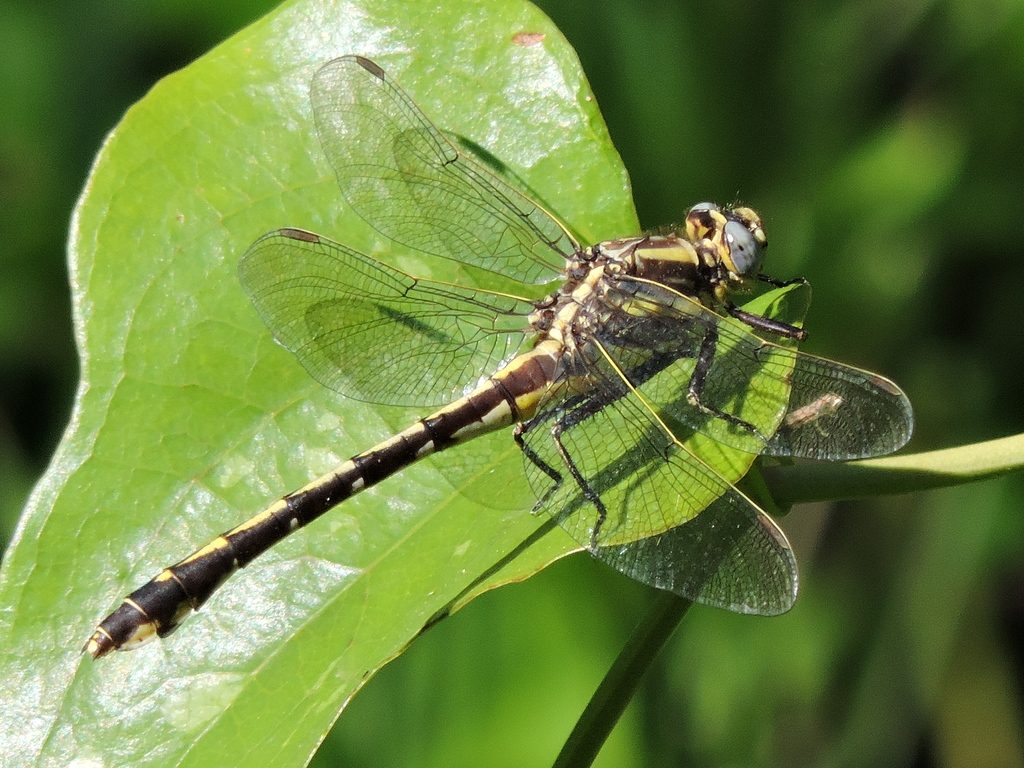
The plains clubtail is a medium-large dragonfly about 52 to 60 mm long, and its nymph can grow up to 33 mm. Adults fly mainly from early April to mid-August, especially mid-July to mid-August, and they are most common in spring.
Source: Wikipedia
How to recognize it
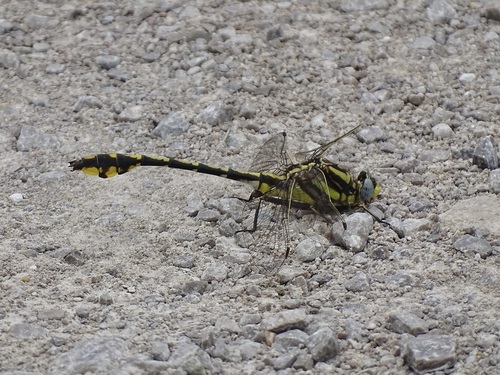
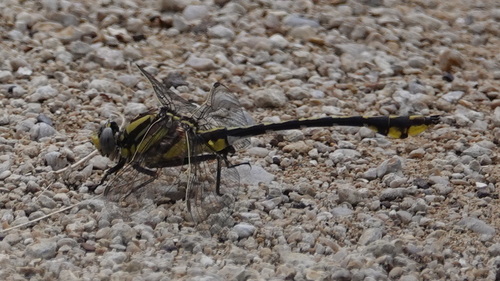
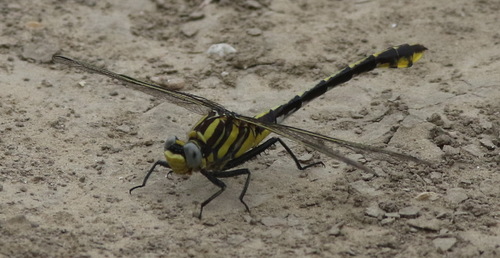
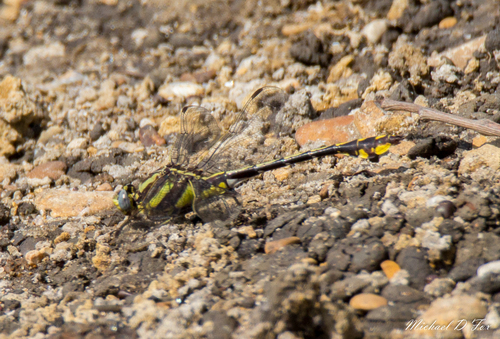
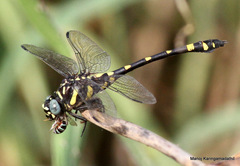
The base of the body is dark brown-black and the face shows yellow markings. Two parallel yellow stripes run across the top of the thorax, with additional diagonal yellow stripes on each side. The wing bases may have a yellow cloud where they attach to the thorax. The abdomen is black with a series of yellow dashes along the top, and the final segments are broader, forming a club.
Source: Wikipedia
Size
Nymphs can reach up to 1 5⁄16 inches (33 mm).
Source: Wikipedia
What it eats
Nymphs feed on aquatic insects, mosquito larvae, mayfly larvae, freshwater shrimp, and occasionally small fish or tadpoles.
Source: Wikipedia
Life cycle
Unlike most dragonflies, the nymphs emerge as adults during daylight hours. After mating, females lay eggs by dipping the tip of their abdomen into water while hovering, without the male attached. A single female can lay more than 5 000 eggs in laboratory studies.
Source: Wikipedia
When you see it
The most common flight period is mid-July to mid-August, though they can be seen from early April through mid-August and are especially common in spring. In Wisconsin, they have been recorded from early June to mid-July.
Source: Wikipedia
Where it comes from
In North America they are native to many U.S. states and Manitoba in Canada.
Source: Wikipedia
Lookalikes
Male pronghorn clubtails have an epiproct only slightly wider than the cerci.
Source: Wikipedia
Where it is found in the US
Recorded in 24 of 51 states and DC. Most records: Texas, Kansas, Illinois, Minnesota, Ohio, Oklahoma, Iowa, Nebraska.
Darker = more records. Counts are museum and citizen-science records, not population size.
Source: GBIF
Status: native in North America; native in Canada; native in United States. Source: iNaturalist
Months it is reported in the US
Source: GBIF
More photos
Questions people ask
How can I tell a plains clubtail apart from similar species?
Look for a dark brown-black body with yellow face markings, parallel yellow thorax stripes, yellow-clouded wing bases, and a black abdomen with a line of yellow dashes ending in a widened club; compare these to the larger, darker Tamaulipan clubtail and the smaller pronghorn clubtail.
Source: Wikipedia
When are plains clubtails active?
Adults are most common from mid-July to mid-August, but can be seen from early April through mid-August, with peak activity in spring.
Source: Wikipedia
What do plains clubtail nymphs eat?
Nymphs feed on mosquito larvae, other aquatic insect larvae, mayfly larvae, freshwater shrimp, and sometimes small fish or tadpoles.
Source: Wikipedia
Same family (Gomphidae)

Sources
- Wikipedia: https://en.wikipedia.org/wiki/Gomphurus_externus
Look it up elsewhere: GBIF · iNaturalist · BugGuide · ITIS · Wikipedia
Text written 2026-10-23 from the sources above and checked sentence by sentence against them. Data fetched 2026-10-23.