 Bug FAQ
Pearly Heath
Coenonympha arcania · Order: Lepidoptera · Family: Nymphalidae
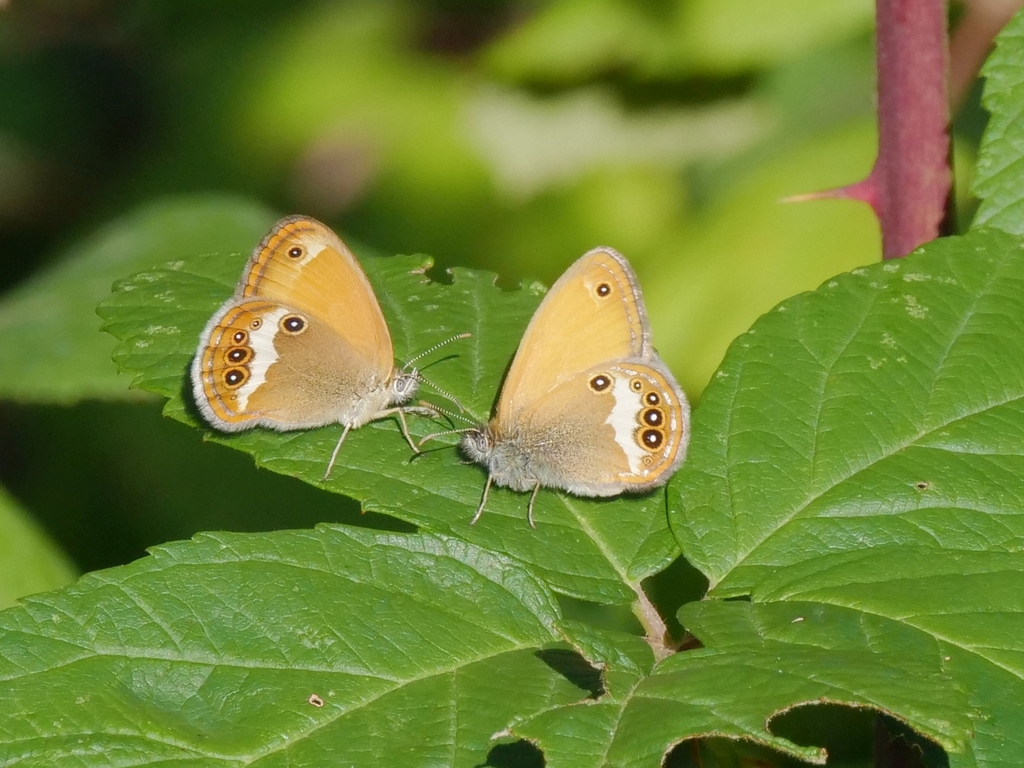
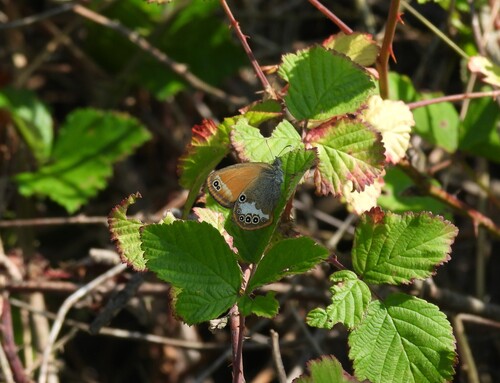
The Pearly Heath has a fiery reddish-yellow forewing with a black edge and a dark brown hindwing; the underside of the hindwing shows a broad white band that cuts the row of eye-spots, placing the apical eye inside the band. It lives at woodland edges, in open countryside and on hills, often fluttering around bushes and perching on low twigs, though it may also rise into higher tree branches. Adults appear in one generation from May to August, are most common in June and July, and usually rest with their wings closed in sunny spots.
Source: Wikipedia
How to recognize it
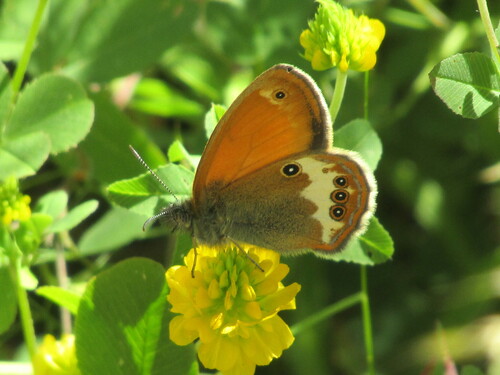
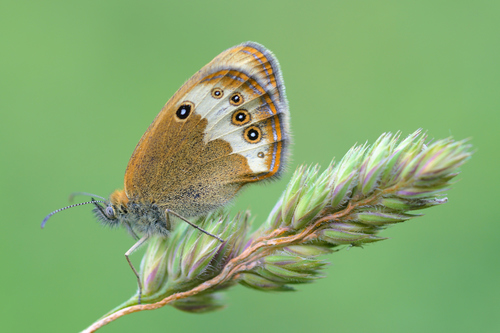
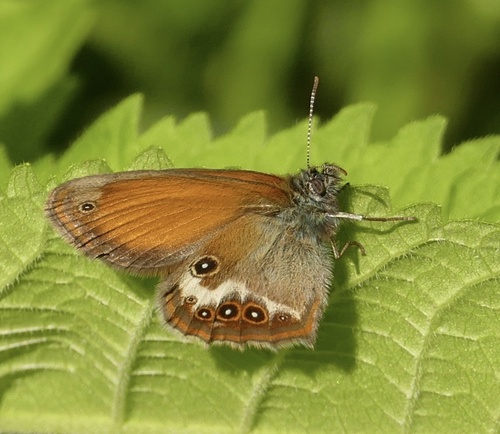
Forewings are fiery reddish-yellow with a black distal margin; hindwings are dark brown. The hindwing underside has a broad white band that interrupts the row of ocelli, placing the apical eye inside the band.
Source: Wikipedia
Where it lives
Found at the edge of woods with dense undergrowth, in open country and on hills. Flies around bushes, settles on low twigs, and sometimes climbs to higher tree branches.
Source: Wikipedia
What it eats
Caterpillars feed on various grasses such as Holcus lanatus and Festuca ovina.
Source: Wikipedia
Life cycle
Adults fly in a single generation from May through August. Young caterpillars overwinter before completing development.
Source: Wikipedia
When you see it
Butterflies are very common in June and July, often seen in large numbers.
Source: Wikipedia
Lookalikes
It resembles the butterfly Coenonympha hero.
Source: Wikipedia
Where it is found in the US
Recorded in 3 of 51 states and DC. Most records: Florida, Oregon, California.
Darker = more records. Counts are museum and citizen-science records, not population size.
Source: GBIF
More photos
Questions people ask
When are Pearly Heath butterflies most likely to be seen?
They are most abundant in June and July and can be seen from May to August.
Source: Wikipedia
What plants do the caterpillars eat?
The larvae feed on grasses such as Holcus lanatus and Festuca ovina.
Source: Wikipedia
Where does this butterfly live?
It inhabits woodland edges, open countryside and hills across most of Europe except Great Britain.
Source: Wikipedia
How can I tell this butterfly apart from similar species?
Look for the broad white band on the underside of the hindwing that cuts the row of eye-spots, a feature not present in the similar Coenonympha hero.
Source: Wikipedia
Same family (Nymphalidae)






Sources
- Wikipedia: https://en.wikipedia.org/wiki/Coenonympha_arcania
Look it up elsewhere: GBIF · iNaturalist · BugGuide · Wikipedia
Text written 2026-10-22 from the sources above and checked sentence by sentence against them. Data fetched 2026-10-22.