 Bug FAQ
Pea Weevil
Sitona lineatus · Order: Coleoptera · Family: Curculionidae
Also called: Pea and Bean Weevil, Weevil, pea leaf weevil
Source: Wikipedia
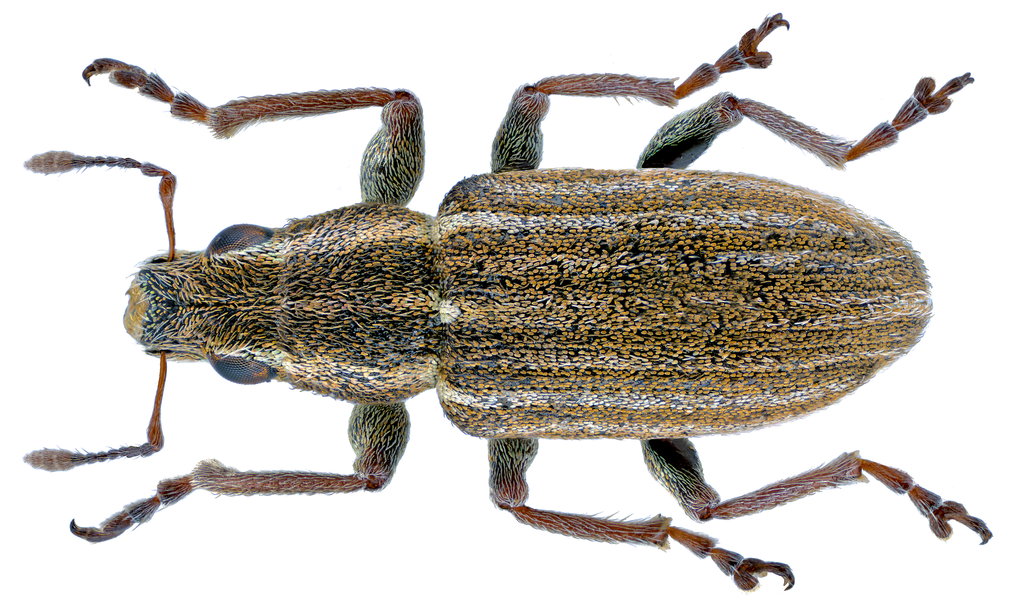
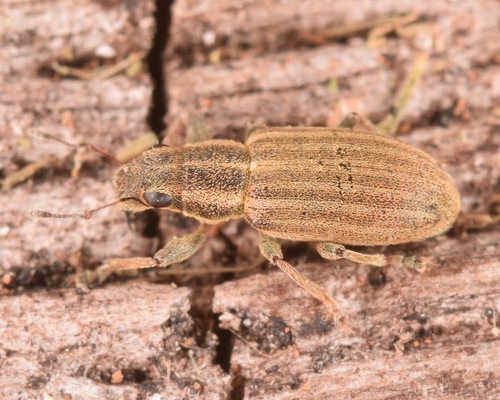
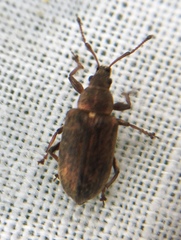
Adult pea weevils are tiny beetles about 3.4 to 5.3 mm long with striped elytra and dark femora but red tibiae and tarsi. The larvae feed on root-nodule Rhizobium underground while adults eat foliage, making them a serious pest of beans, peas and other Fabaceae. They overwinter in field margins, emerge when temperatures reach about 12.5 °C, and are more common in conventionally tilled fields.
Source: Wikipedia
How to recognize it
The beetle’s elytra have alternating colored scale lines, giving the species its name lineatus meaning “lined”. Its femora are dark while the tibiae and tarsi are red.
Source: Wikipedia
Is it a pest in the house?
It is a notable pest of beans, peas and other Fabaceae, causing serious crop damage.
Source: Wikipedia
How to get rid of it
Research shows that conventional tillage encourages colonization, while no-till practices reduce it.
Source: Wikipedia
Where it lives
Adults overwinter in field margins of pea or bean crops or move to alfalfa fields before winter.
Source: Wikipedia
What it eats
Adults feed on foliage while larvae burrow into soil and eat Rhizobium nodules on roots.
Source: Wikipedia
Life cycle
The species has one generation per year and feeds only on Fabaceae plants. Larvae pass through five instars underground before emerging as adults in midsummer.
Source: Wikipedia
When you see it
Adults leave winter dormancy when temperatures reach about 12.5 °C. In late summer the surviving adults migrate to field margins.
Source: Wikipedia
Where it comes from
Sitona lineatus originates from Europe and North Africa.
Source: Wikipedia
Where it is found in the US
Recorded in 21 of 51 states and DC. Most records: Texas, California, Oregon, North Carolina, Georgia, South Carolina, Washington, Louisiana.
Darker = more records. Counts are museum and citizen-science records, not population size.
Source: GBIF
Status: introduced in Canada. Source: iNaturalist
Months it is reported in the US
Source: GBIF
More photos
Questions people ask
How can I identify a pea weevil?
Look for a tiny 3 to 5 mm beetle with striped elytra, dark femora and red tibiae and tarsi.
Source: Wikipedia
When do pea weevils appear?
Adults become active when soil temperatures reach about 12.5 °C in spring and are present through midsummer.
Source: Wikipedia
What damage do they cause?
Larvae damage root-nodule Rhizobium underground and adults eat the foliage, reducing yields of peas, beans and other legumes.
Source: Wikipedia
How can I reduce pea weevil infestations?
Adopt no-till practices and consider integrated pest management using biological agents, appropriate pesticides and soil management.
Source: Wikipedia
Same family (Curculionidae)
 Green Immigrant Leaf WeevilPolydrusus formosusDamages trees, gardens or crops
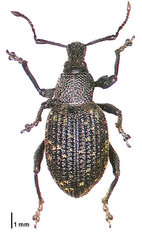 Black Vine WeevilOtiorhynchus sulcatusDamages trees, gardens or crops
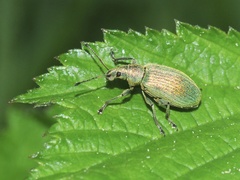 Nettle weevilPhyllobius pomaceusDamages trees, gardens or crops
 Asian Oak WeevilCyrtepistomus castaneusDamages trees, gardens or crops
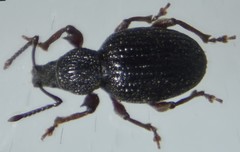 Strawberry Root WeevilOtiorhynchus ovatusDamages trees, gardens or crops
 Common Leaf WeevilPhyllobius pyriDamages trees, gardens or crops
Sources
- Wikipedia: https://en.wikipedia.org/wiki/Sitona_lineatus
Look it up elsewhere: GBIF · iNaturalist · BugGuide · ITIS · Wikipedia
Text written 2026-10-22 from the sources above and checked sentence by sentence against them. Data fetched 2026-10-22.