 Bug FAQ
Pea Gall Wasp
Cynips divisa · Order: Hymenoptera · Family: Cynipidae
Also called: Red Currant Gall
Source: Wikipedia
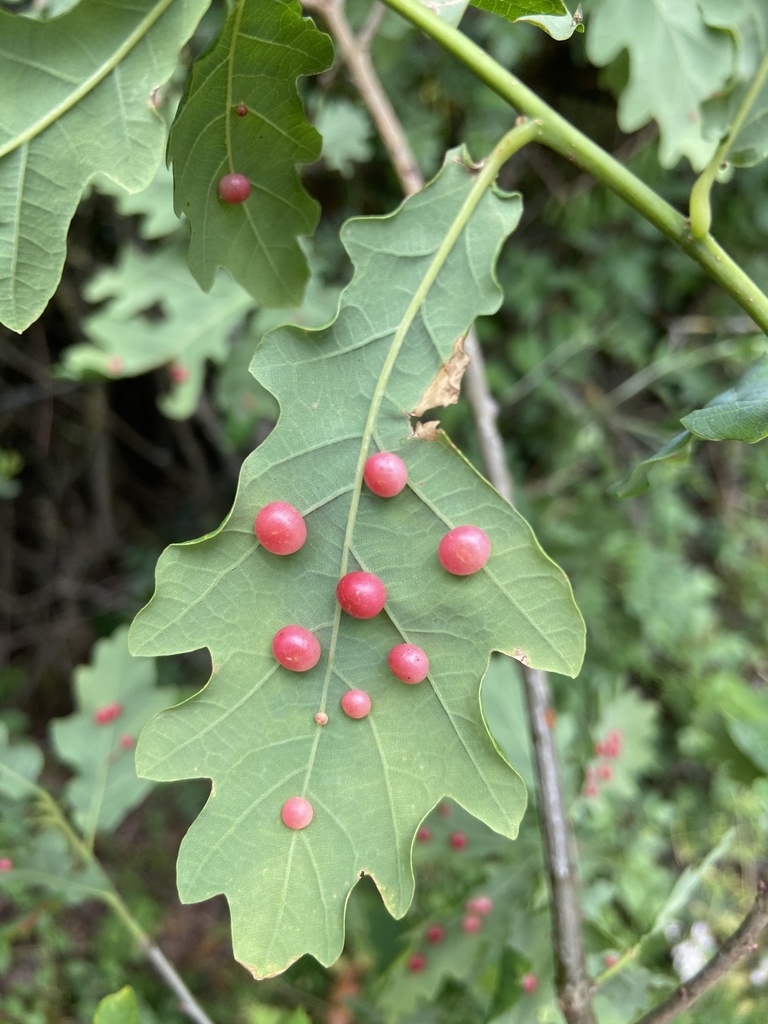
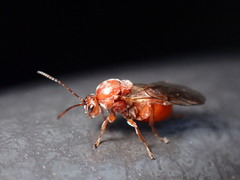
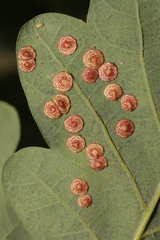
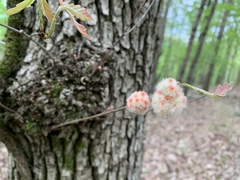
The pea gall wasp is a small, glossy, flattened sphere that changes color from green to red-brown. It lives inside red-pea galls on oak trees, which serve as both its home and food. Adults emerge in June for the sexual generation and in October for the asexual generation.
Source: Wikipedia
How to recognize it
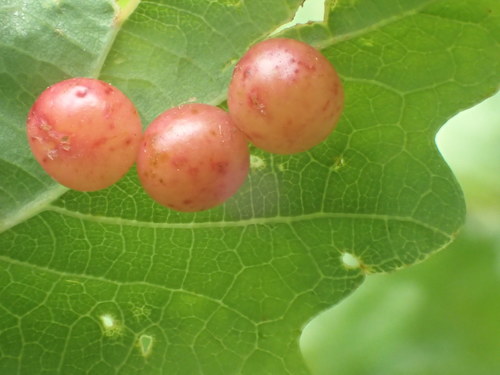
The insect looks like a glossy, somewhat flattened sphere. Its color starts green, then turns yellow, orange, and finally red-brown.
Source: Wikipedia
Size
It measures about 5 mm by 6 mm (0.20 in × 0.24 in).
Source: Wikipedia
Where it lives
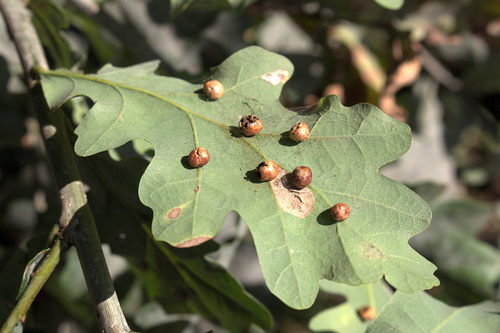
Galls form on the underside of oak leaf veins and act as the wasp’s habitat and food source.
Source: Wikipedia
Life cycle
Asexual females emerge in October, overwinter, and lay eggs that cause new red-wart galls. The sexual generation (males and females) emerges in June.
Source: Wikipedia
When you see it
Galls appear from midsummer onward.
Source: Wikipedia
Where it comes from
It is a native species.
Source: Wikipedia
Lookalikes
It has been called Diplolepis divisa, Dryophanta divisa, and Spathegaster verrucosus.
Source: Wikipedia
More photos
Questions people ask
How can I identify a pea gall wasp?
Look for a small (5 × 6 mm), glossy, flattened sphere that changes from green to red-brown and lives inside red-pea galls on oak leaves.
Source: Wikipedia
When do pea gall wasps appear?
The sexual adults emerge in June, while the asexual adults emerge in October; galls are visible from midsummer onward.
Source: Wikipedia
Same family (Cynipidae)


Sources
- Wikipedia: https://en.wikipedia.org/wiki/Red-pea_gall
Look it up elsewhere: GBIF · iNaturalist · BugGuide · ITIS · Wikipedia
Text written 2026-10-23 from the sources above and checked sentence by sentence against them. Data fetched 2026-10-23.