 Bug FAQ
Pea Blue
Lampides boeticus · Order: Lepidoptera · Family: Lycaenidae
Also called: Long-tailed Blue, Long-tailed Pea Blue
Source: Wikipedia
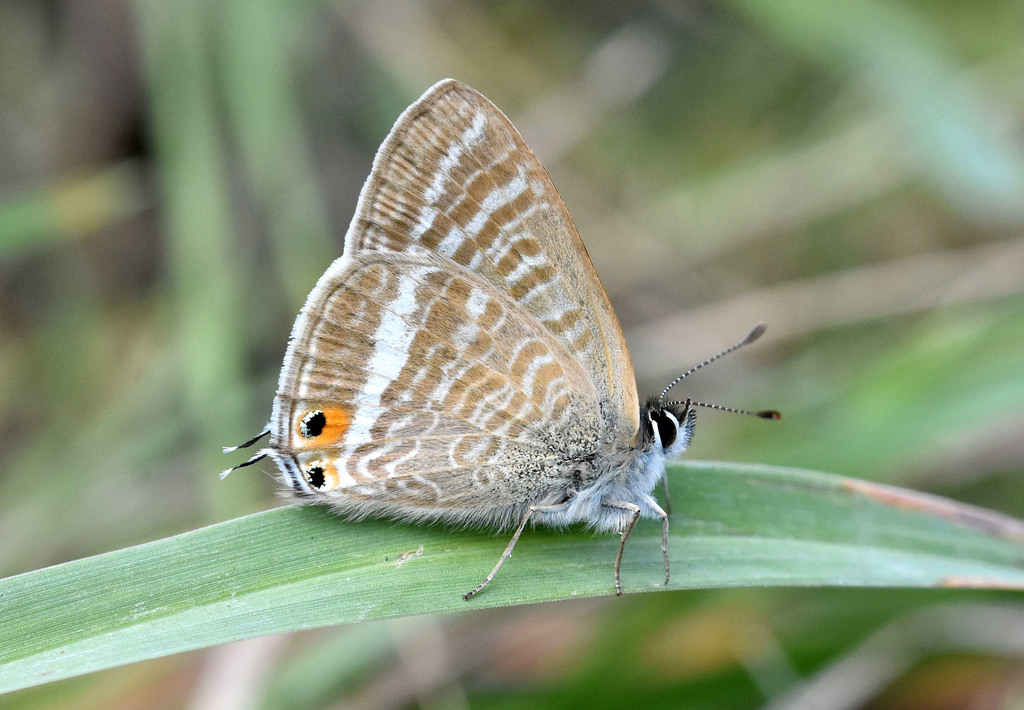
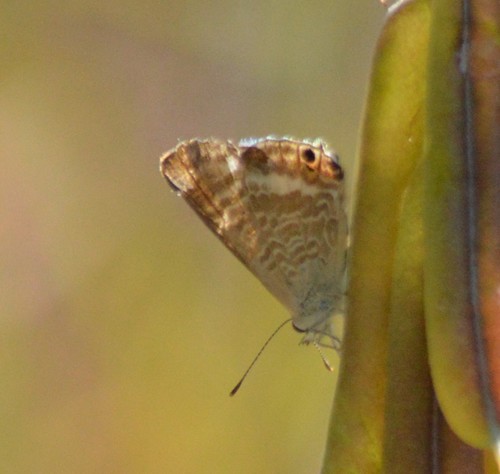
Males have a bright blue-violet upper wing surface with brown edges, while females show only a small blue patch in the centre; both sexes have thin tails and two black spots near the hindwing anal angle. Wingspan ranges from about 24 mm to 34 mm, with females slightly larger than males. They are found across Europe, Africa, Asia, Australia, and the Hawaiian islands, living on forest edges, mountain meadows and sunny flower-rich sites up to 2,700 m elevation.
Source: Wikipedia
How to recognize it
Males display a mainly blue-violet upper wing surface with brown margins; females have only a small central blue area. Both sexes possess a thin, elongated tail on the hindwing and two black spots at the anal angle.
Source: Wikipedia
Size
Males measure 24 to 32 mm and females 24 to 34 mm across the wings.
Source: Wikipedia
Where it lives
They inhabit forest edges, mountain meadows and hot, flower-laden places up to 2,700 m altitude.
Source: Wikipedia
Life cycle
The species can produce up to three generations each year.
Source: Wikipedia
When you see it
Adults are on the wing from February through early November and are strong migrants.
Source: Wikipedia
Where it comes from
Their range includes Europe, Africa, South and Southeast Asia, Australia and the Hawaiian islands.
Source: Wikipedia
Lookalikes
It may be confused with Leptotes pirithous or Cacyreus marshalli, but the pea-blue is noticeably larger.
Source: Wikipedia
Where it is found in the US
Recorded in 1 of 51 states and DC. Most records: Hawaii.
Darker = more records. Counts are museum and citizen-science records, not population size.
Source: GBIF
Months it is reported in the US
Source: GBIF
More photos
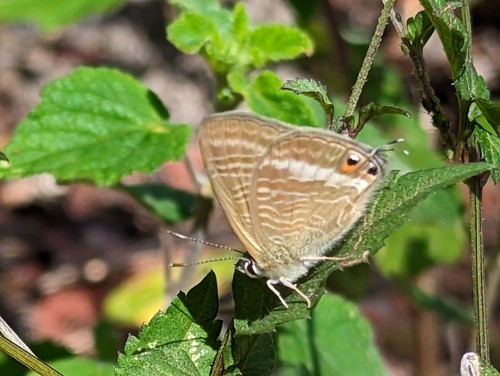
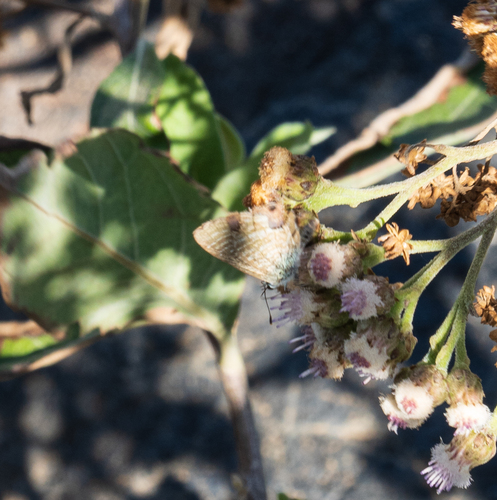
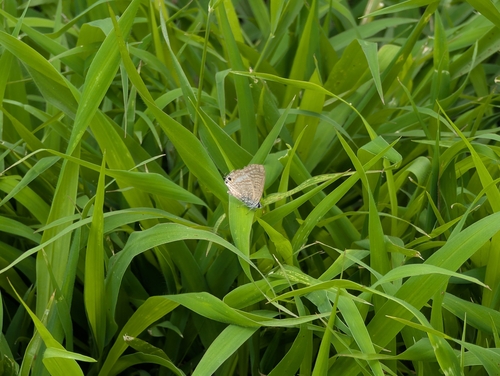
Questions people ask
Do pea-blue butterflies damage crops?
Yes, their larvae feed on legume crops such as beans and peas, potentially causing damage.
Source: Wikipedia
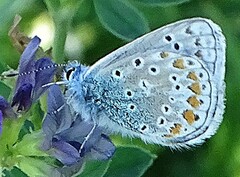
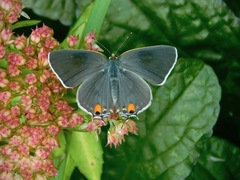
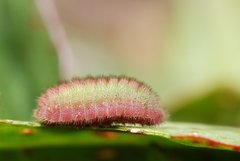
Same family (Lycaenidae)

Sources
- Wikipedia: https://en.wikipedia.org/wiki/Lampides_boeticus
Look it up elsewhere: GBIF · iNaturalist · BugGuide · ITIS · Wikipedia
Text written 2026-10-22 from the sources above and checked sentence by sentence against them. Data fetched 2026-10-22.