 Bug FAQ
Paratrigona subnuda
Paratrigona subnuda · Order: Hymenoptera · Family: Apidae
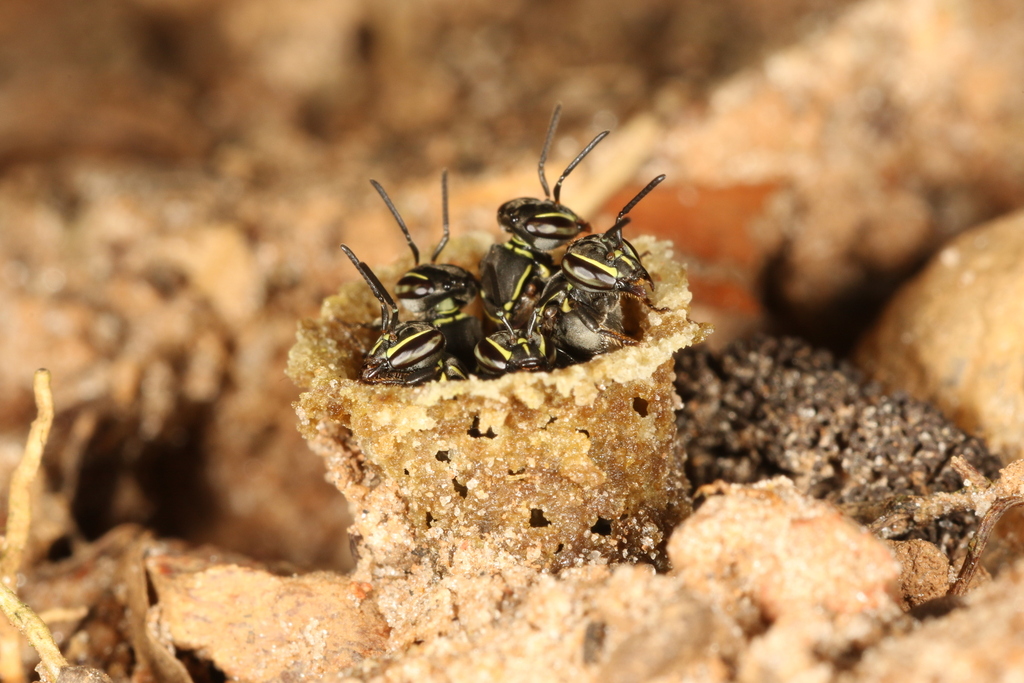
Workers are tiny, about 0.5-0.8 cm long, while queens are roughly twice that size (1.2-1.8 cm). They build spherical nests underground in moist forest soils and also live in urban areas of South America. Adults collect pollen and nectar from many native tropical plants.
Source: Wikipedia
How to recognize it
They show the typical features of the Meliponini tribe, such as dense hair and short wings.
Source: Wikipedia
Size
Workers measure 0.5-0.8 cm; queens are about double that, 1.2-1.8 cm.
Source: Wikipedia
Does it bite or sting?
As a Meliponini member, they have a reduced stinger.
Source: Wikipedia
Where it lives
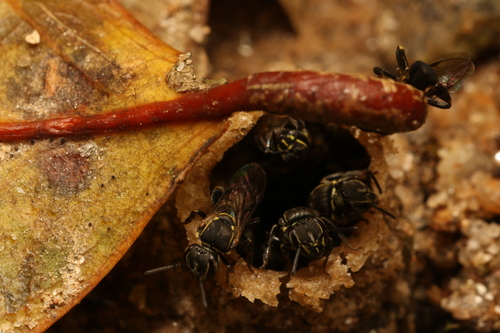
Nests are spherical and located in moist underground sites within forest habitats.
Source: Wikipedia
What it eats
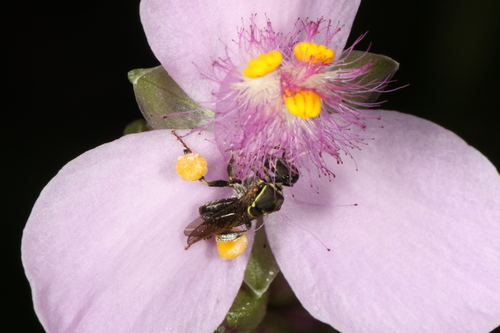
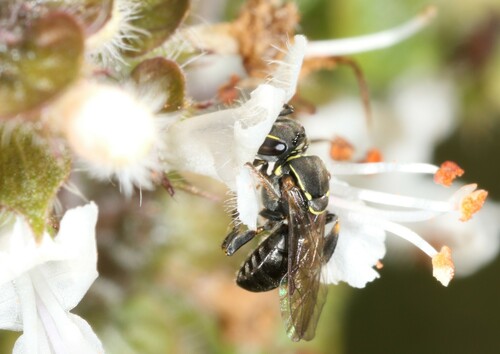
They feed on pollen and nectar from a wide variety of native tropical plants.
Source: Wikipedia
Life cycle
New colonies are formed gradually, with daughter queens leaving the nest to start them.
Source: Wikipedia
Where it comes from
Their range overlaps heavily with many other stingless bees, especially Tetragonisca angustula.
Source: Wikipedia
More photos
Questions people ask
How big are Paratrigona subnuda bees?
Workers are 0.5-0.8 cm long and queens are about 1.2-1.8 cm.
Source: Wikipedia
Where do they live?
They nest in moist underground sites in forest soils and also occur in South American urban areas.
Source: Wikipedia
Same family (Apidae)





Sources
- Wikipedia: https://en.wikipedia.org/wiki/Paratrigona_subnuda
Look it up elsewhere: GBIF · iNaturalist · BugGuide · ITIS · Wikipedia
Text written 2026-10-23 from the sources above and checked sentence by sentence against them. Data fetched 2026-10-23.