 Bug FAQ
Parataenius simulator
Parataenius simulator · Order: Coleoptera · Family: Scarabaeidae
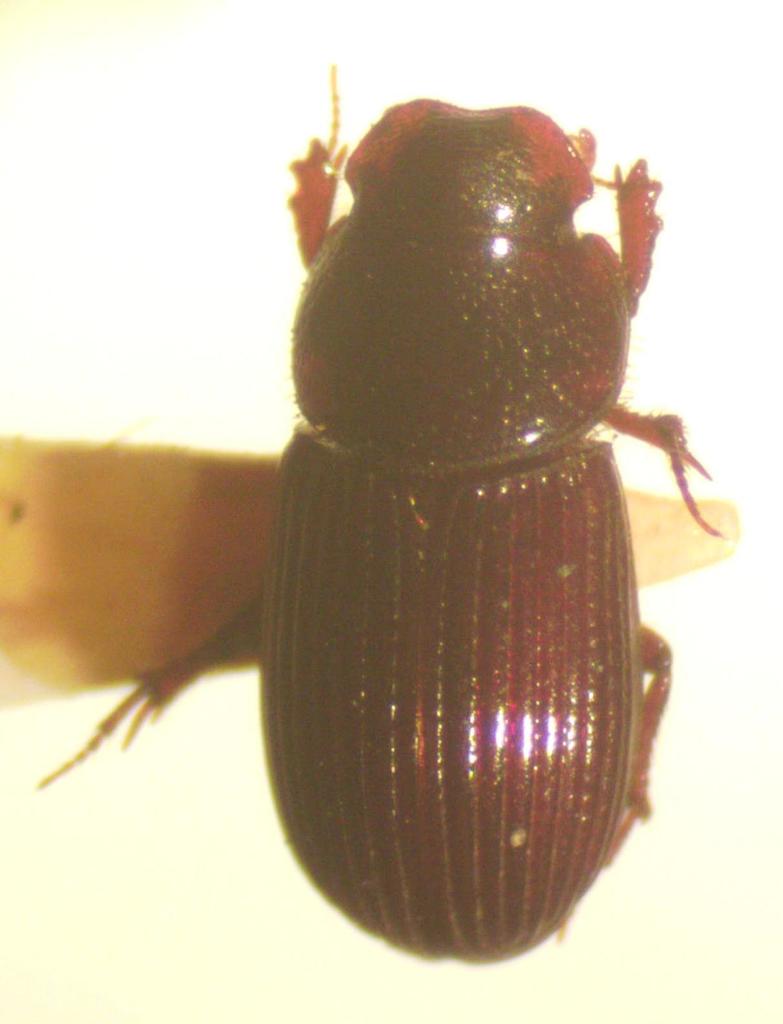
Adults are small, measuring about 3.8 to 5.9 mm in length and have a robust, elongate, smooth back. The head shows strong transverse wrinkles and punctures on the frons, the clypeus is smooth and not indented, and the pronotum and elytra have distinct puncture patterns (-). Larvae develop in cattle dung, while adults are found in logs and leaf litter across many continents, including North America (-).
Source: Wikipedia
How to recognize it
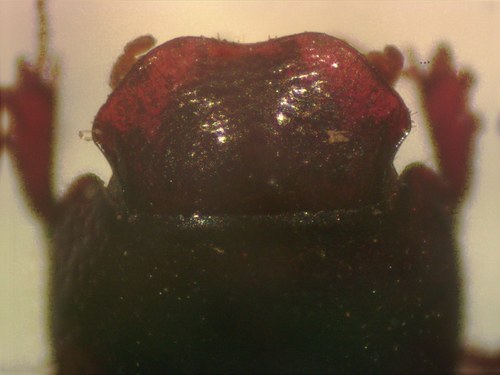
The head has strong transverse wrinkles and punctures on the frons. The clypeus is emarginate and lacks punctures. The pronotum bears punctures of two different sizes. Elytra feature fine, widely spaced punctures in the interstriae. Abdominal ventrites have large side punctures.
Source: Wikipedia
Where it lives
Larvae are collected from bovine fecal masses. Adults are found in logs and leaf litter.
Source: Wikipedia
What it eats
Larvae feed in cattle dung. Adults are associated with logs and leaf litter, suggesting they feed there.
Source: Wikipedia
Life cycle
The species' larvae develop in bovine fecal masses, and adults are later found in logs and leaf litter.
Source: Wikipedia
Where it is found in the US
Recorded in 8 of 51 states and DC. Most records: Florida, Georgia, Tennessee, Virginia, Texas, South Carolina, North Carolina, Mississippi.
Darker = more records. Counts are museum and citizen-science records, not population size.
Source: GBIF
Months it is reported in the US
Source: GBIF
More photos
Questions people ask
Where are Parataenius simulators found?
They are recorded across many regions, including North America, Africa, Australia, the Caribbean, Europe, Northern Asia (except China), Central and South America.
Source: Wikipedia
What habitats do they live in?
Larvae live in cattle dung, while adults are found in logs and leaf litter.
Source: Wikipedia
Same family (Scarabaeidae)
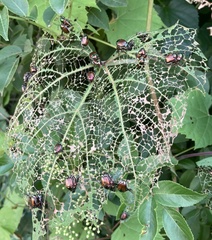 Japanese BeetlePopillia japonicaDamages trees, gardens or crops
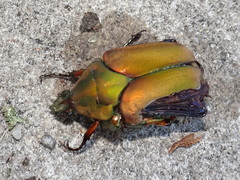 Common Green June BeetleCotinis nitidaDamages trees, gardens or crops
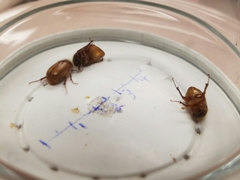 Phyllophaga crinitaDamages trees, gardens or crops
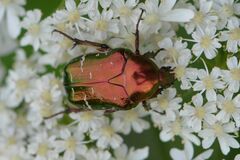 European Rose ChaferCetonia aurata
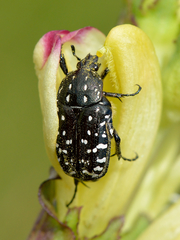 Mediterranean Spotted ChaferOxythyrea funestaDamages trees, gardens or crops
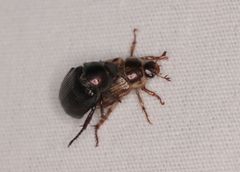 Oriental BeetleExomala orientalisDamages trees, gardens or crops
Sources
- Wikipedia: https://en.wikipedia.org/wiki/Parataenius_simulator
Look it up elsewhere: GBIF · iNaturalist · BugGuide · ITIS · Wikipedia
Text written 2026-10-26 from the sources above and checked sentence by sentence against them. Data fetched 2026-10-26.