 Bug FAQ
Pallid Blue
Philotes pallescens · Order: Lepidoptera · Family: Lycaenidae
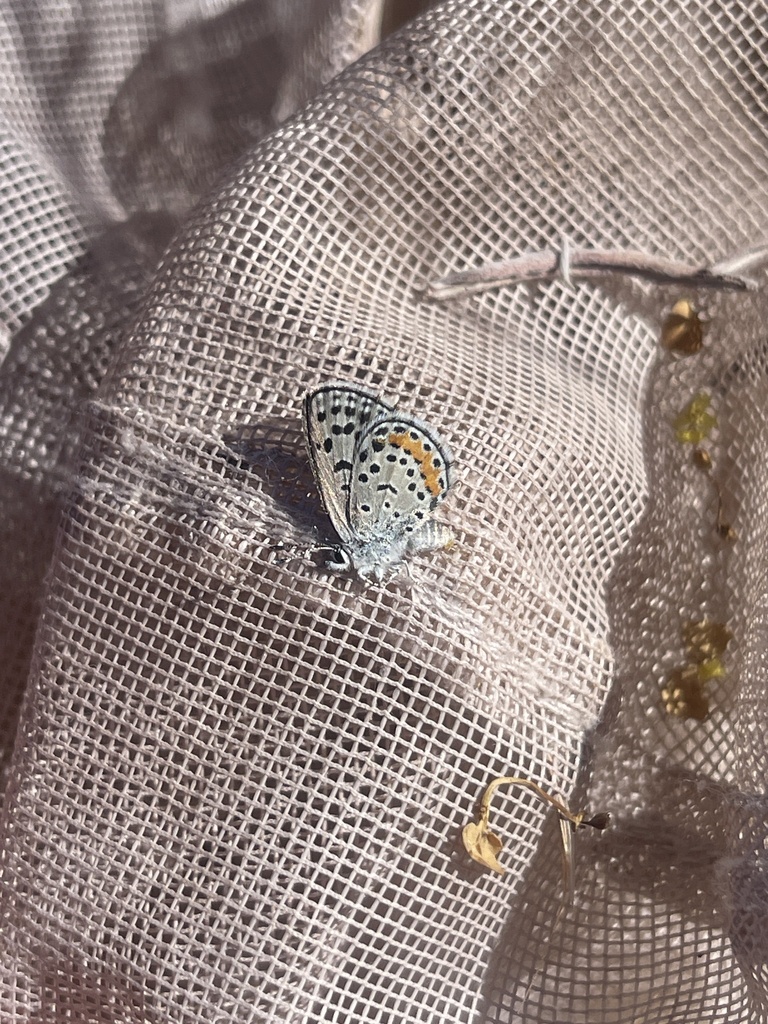
The pallid blue butterfly (Euphilotes pallescens) has a wingspan of about 16 to 21 mm and is a pale-blue member of the Lycaenidae family.
Source: Wikipedia
Size
Wingspan ranges from 16 to 21 mm.
Source: Wikipedia
What it eats
Adults sip nectar from Eriogonum flowers. Larvae eat the flowers and fruits of several Eriogonum species, such as E. kearneyi, E. microthecum and E. plumatella.
Source: Wikipedia
Life cycle
Adults are on the wing from July through September, producing one generation per year. Larvae are tended by ants.
Source: Wikipedia
When you see it
Adults appear from July to September.
Source: Wikipedia
Where it comes from
Native to the United States in the same four states.
Source: Wikipedia
Where it is found in the US
Recorded in 11 of 51 states and DC. Most records: Utah, California, Nevada, Arizona, Colorado, Oregon, Wyoming, New Mexico.
Darker = more records. Counts are museum and citizen-science records, not population size.
Source: GBIF
Status: native in North America; native in United States. Source: iNaturalist
Months it is reported in the US
Source: GBIF
More photos
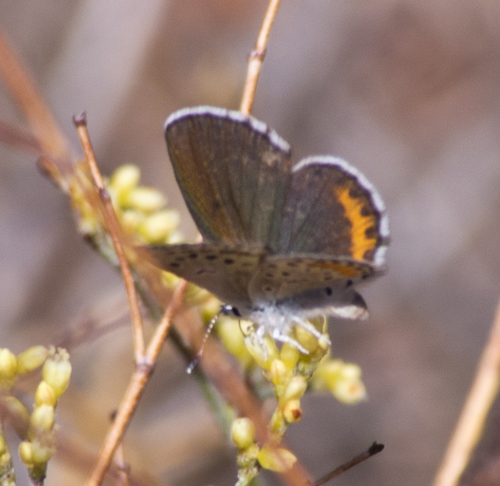
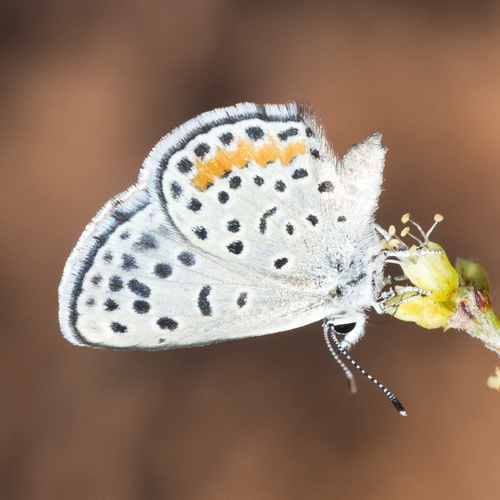
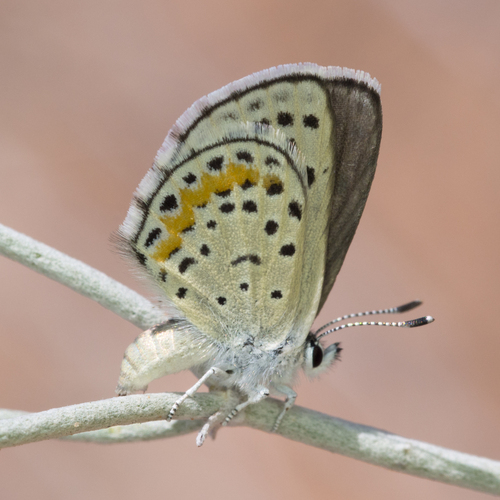
Questions people ask
When are pallid blue butterflies active?
Adults fly from July to September each year.
Source: Wikipedia
What do the larvae eat?
They feed on the flowers and fruits of various Eriogonum species.
Source: Wikipedia
Same family (Lycaenidae)






Sources
- Wikipedia: https://en.wikipedia.org/wiki/Euphilotes_pallescens
Look it up elsewhere: GBIF · iNaturalist · BugGuide · ITIS · Wikipedia
Text written 2026-10-24 from the sources above and checked sentence by sentence against them. Data fetched 2026-10-24.