 Bug FAQ
Pale-spotted Leafwing
Anaea pithyusa · Order: Lepidoptera · Family: Nymphalidae

The Pale-spotted Leafwing has a wingspan of about 57 to 76 mm and lives in many forest types. Adults appear in two seasonal forms: the dry-season form from May to September and the wet-season form from November to March.
Source: Wikipedia
How to recognize it
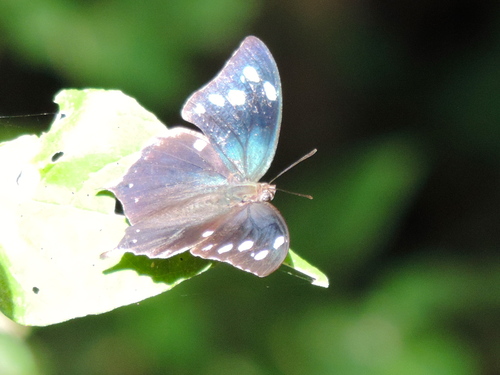
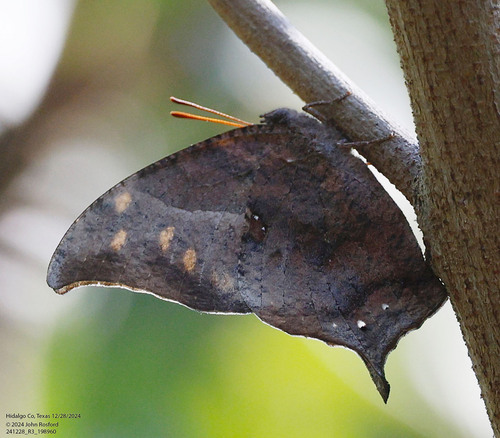
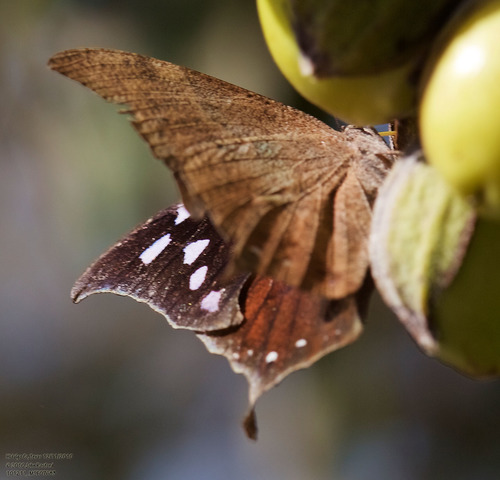
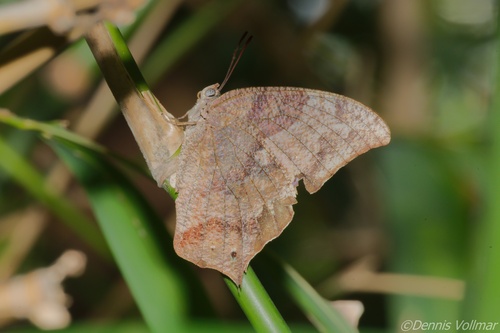
The underside is light brown and looks like a dead leaf.
Source: Wikipedia
Size
Wingspan ranges from 57 mm to 76 mm.
Source: Wikipedia
Where it lives
It lives in various types of forest.
Source: Wikipedia
What it eats
Caterpillars feed on Croton plants, including Croton reflexifolius and Croton lucidus.
Source: Wikipedia
When you see it
Adults are active May-September in the dry season and November-March in the wet season.
Source: Wikipedia
Where it comes from
It occurs in southern North America and South America.
Source: Wikipedia
Where it is found in the US
Recorded in 1 of 51 states and DC. Most records: Texas.
Darker = more records. Counts are museum and citizen-science records, not population size.
Source: GBIF
Months it is reported in the US
Source: GBIF
More photos
Questions people ask
What plants do the caterpillars eat?
The caterpillars feed on Croton species such as Croton reflexifolius and Croton lucidus.
Source: Wikipedia
When are adult Pale-spotted Leafwings active?
The dry-season adults fly from May to September, and the wet-season adults fly from November to March.
Source: Wikipedia
What does the underside of the butterfly look like?
The underside is light brown and mimics a dead leaf.
Source: Wikipedia
Same family (Nymphalidae)




Sources
- Wikipedia: https://en.wikipedia.org/wiki/Memphis_pithyusa
Look it up elsewhere: GBIF · iNaturalist · BugGuide · ITIS · Wikipedia
Text written 2026-10-27 from the sources above and checked sentence by sentence against them. Data fetched 2026-10-27.