 Bug FAQ
Pale Green Weevil
Polydrusus impressifrons · Order: Coleoptera · Family: Curculionidae
Also called: Weevil
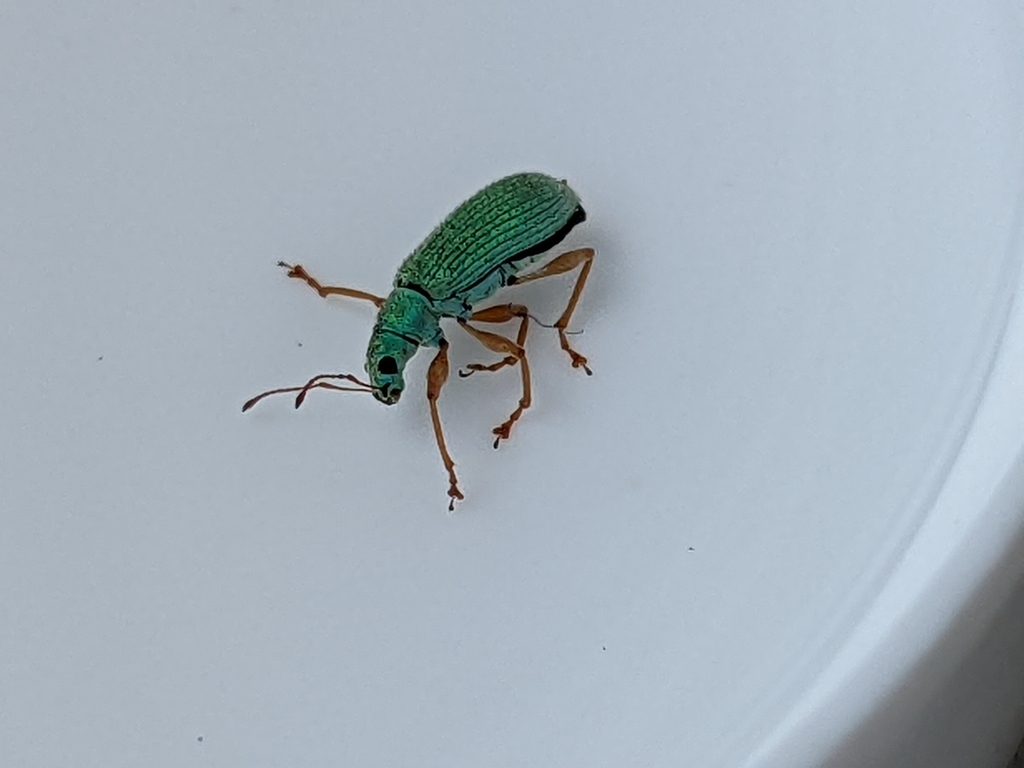
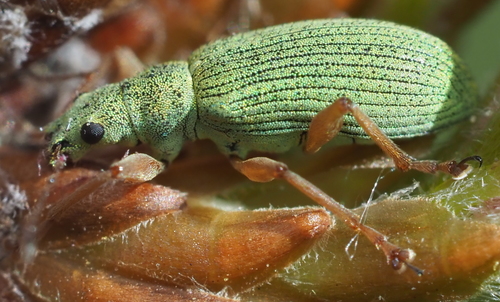
Adult Pale Green Weevils are pale green-blue with lines and dots on their backs. They are 0.15 to 0.22 inches long (3.8 to 5.6 mm). They are native to Europe and were introduced to North America in the early 1900s.
Source: Wikipedia
How to recognize it
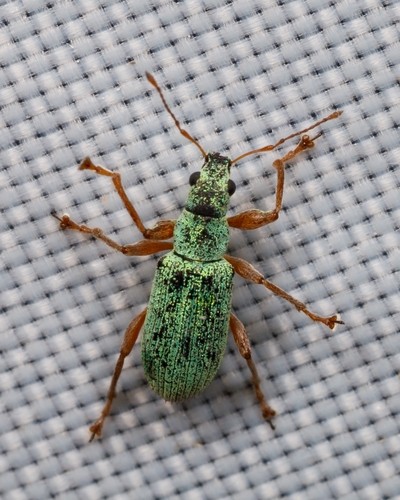
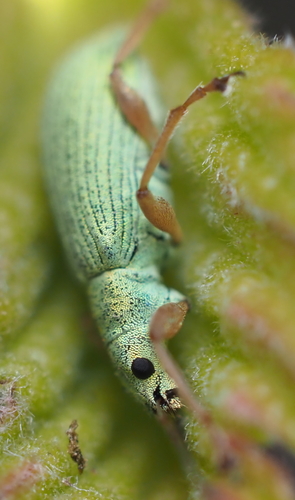
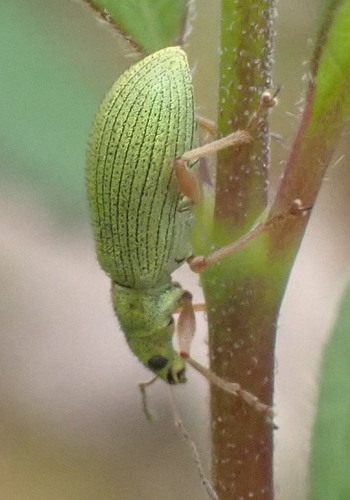
Adults have a pale green-blue color with a pattern of lines and dots on the back.
Source: Wikipedia
Where it comes from
Originally from Europe, they arrived in North America in the early 20th century.
Source: Wikipedia
Lookalikes
They resemble Polydrusus formosus but are smaller, lighter, and have a broader head.
Source: Wikipedia
Where it is found in the US
Recorded in 27 of 51 states and DC. Most records: Colorado, Michigan, Minnesota, Oregon, New York, Washington, Idaho, Montana.
Darker = more records. Counts are museum and citizen-science records, not population size.
Source: GBIF
Status: introduced in North America; introduced in Canada; introduced in United States. Source: iNaturalist
Months it is reported in the US
Source: GBIF
More photos
Questions people ask
How can I recognize a Pale Green Weevil?
Look for a small (0.15 to 0.22 in) beetle that is pale green-blue with lines and dots on its back.
Source: Wikipedia
What plants does it damage?
It feeds on fruit trees and hardwood trees, causing damage to those plants.
Source: Wikipedia
Same family (Curculionidae)
 Green Immigrant Leaf WeevilPolydrusus formosusDamages trees, gardens or crops
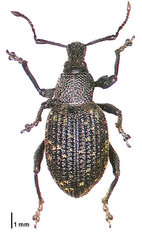 Black Vine WeevilOtiorhynchus sulcatusDamages trees, gardens or crops
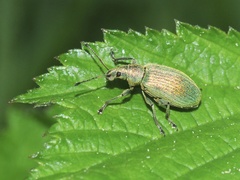 Nettle weevilPhyllobius pomaceusDamages trees, gardens or crops
 Asian Oak WeevilCyrtepistomus castaneusDamages trees, gardens or crops
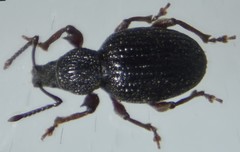 Strawberry Root WeevilOtiorhynchus ovatusDamages trees, gardens or crops
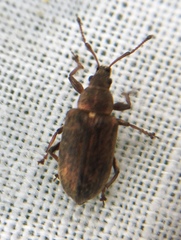 Common Leaf WeevilPhyllobius pyriDamages trees, gardens or crops
Sources
- Wikipedia: https://en.wikipedia.org/wiki/Polydrusus_impressifrons
Look it up elsewhere: GBIF · iNaturalist · BugGuide · ITIS · Wikipedia
Text written 2026-10-23 from the sources above and checked sentence by sentence against them. Data fetched 2026-10-22.