 Bug FAQ
Pale-green Darner
Triacanthagyna septima · Order: Odonata · Family: Aeshnidae
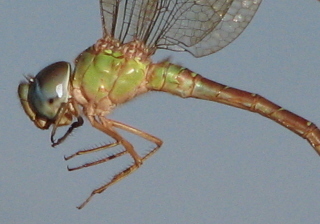
It is found in southern Texas.
Source: Wikipedia
How to recognize it
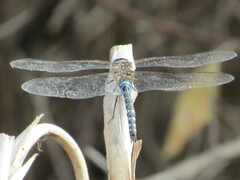
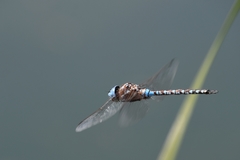
Males have an olive head, bluish-green eyes, a pale-green thorax with a brown front wash, pale legs, and a mostly brown abdomen with greenish sides on the first two segments and a thin green dorsal stripe. Females look like males but have greenish-brown eyes and three long slender cerci on the last segment, which may break off and make them resemble males.
Source: Wikipedia
Size
Total length ranges from 59 to 66 mm and wingspan from 68 to 86 mm.
Source: Wikipedia
Where it lives
It occurs in southern Texas.
Source: Wikipedia
Where it comes from
It is native to southern Texas.
Source: Wikipedia
Where it is found in the US
Recorded in 2 of 51 states and DC. Most records: Florida, Texas.
Darker = more records. Counts are museum and citizen-science records, not population size.
Source: GBIF
Status: native in North America. Source: iNaturalist
Months it is reported in the US
Source: GBIF
More photos
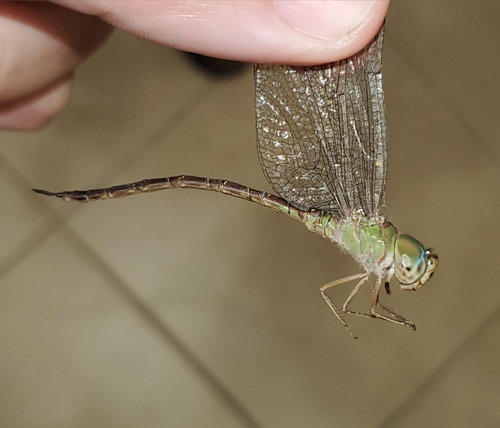
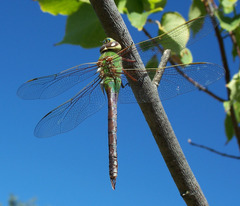
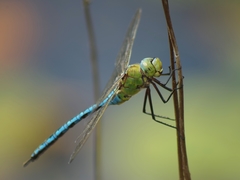
Same family (Aeshnidae)
Sources
- Wikipedia: https://en.wikipedia.org/wiki/Triacanthagyna_septima
Look it up elsewhere: GBIF · iNaturalist · BugGuide · ITIS · Wikipedia
Text written 2026-10-23 from the sources above and checked sentence by sentence against them. Data fetched 2026-10-23.