 Bug FAQ
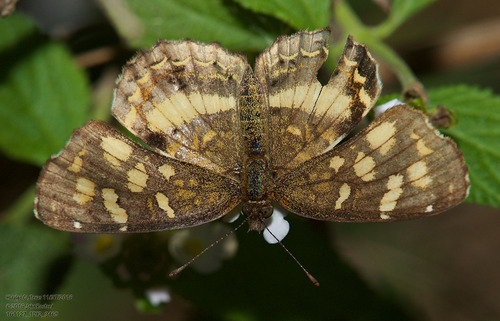
Pale-banded Crescent
Anthanassa tulcis · Order: Lepidoptera · Family: Nymphalidae
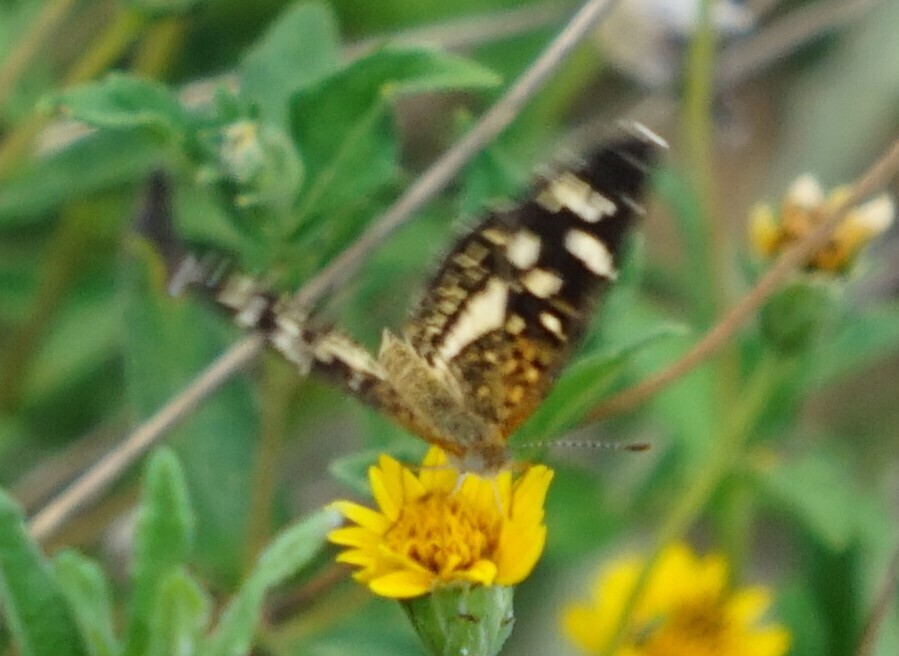
The pale-banded crescent has a wingspan of about 32 to 35 mm. It lives from Argentina through Central America and Mexico into southern Texas, with occasional strays into west Texas and southern Arizona. Caterpillars feed on Dicliptera species, while adults sip flower nectar.
Source: Wikipedia
How to recognize it
It belongs to the butterfly family Nymphalidae.
Source: Wikipedia
Size
Wingspan ranges from 32 to 35 mm.
Source: Wikipedia
What it eats
Larvae feed on Dicliptera species. Adults feed on flower nectar.
Source: Wikipedia
Life cycle
In southern Texas, adults fly from May to November.
Source: Wikipedia
When you see it
In southern Texas, they are active from May through November.
Source: Wikipedia
Where it comes from
Its range includes southern Texas in the United States.
Source: Wikipedia
Lookalikes
It is also called the pale-banded crescent or Tulcis crescent and some authors treat it as a separate species.
Source: Wikipedia
Where it is found in the US
Recorded in 2 of 51 states and DC. Most records: Texas, Arizona.
Darker = more records. Counts are museum and citizen-science records, not population size.
Source: GBIF
Months it is reported in the US
Source: GBIF
More photos
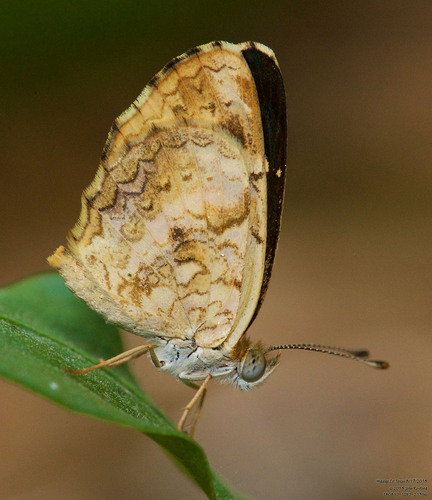
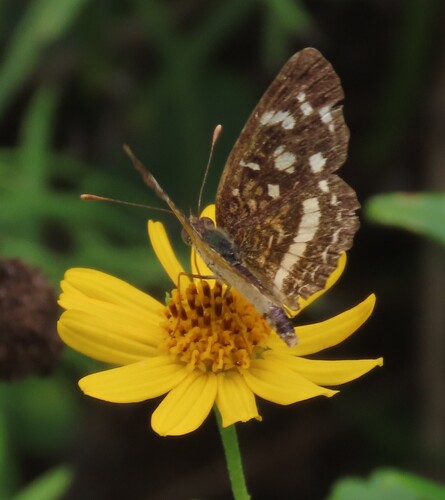
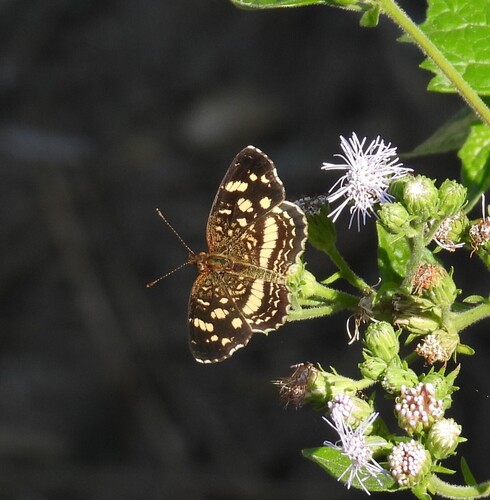
Questions people ask
Same family (Nymphalidae)






Sources
- Wikipedia: https://en.wikipedia.org/wiki/Anthanassa_frisia
Look it up elsewhere: GBIF · iNaturalist · BugGuide · ITIS · Wikipedia
Text written 2026-10-24 from the sources above and checked sentence by sentence against them. Data fetched 2026-10-24.