 Bug FAQ
Palamedes Swallowtail
Papilio palamedes · Order: Lepidoptera · Family: Papilionidae
Also called: Laurel Swallowtail
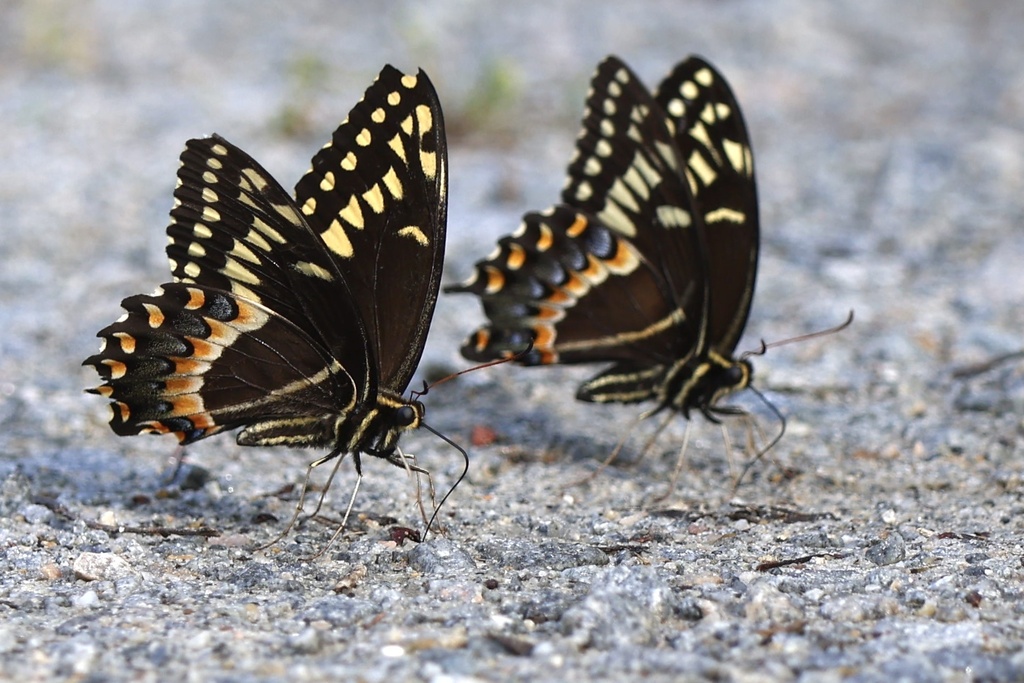
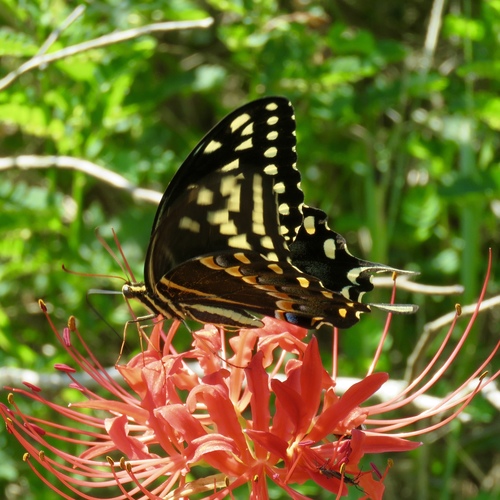
The Palamedes swallowtail is a medium-sized butterfly with a wingspan of about 11 to 13 cm. It lives in wet habitats of the southeastern United States and northeastern Mexico and feeds on redbay, swampbay, and white sassafras. Adults appear from spring through fall, and the species can have two or three generations each year.
Source: Wikipedia
How to recognize it
The upper side of the wings is dark brown with yellow bands across the middle and near the edge. The underside is black, and the forewing also shows yellow middle and edge bands.
Source: Wikipedia
Size
Wingspan ranges from roughly 11 to 13 cm.
Source: Wikipedia
Where it lives
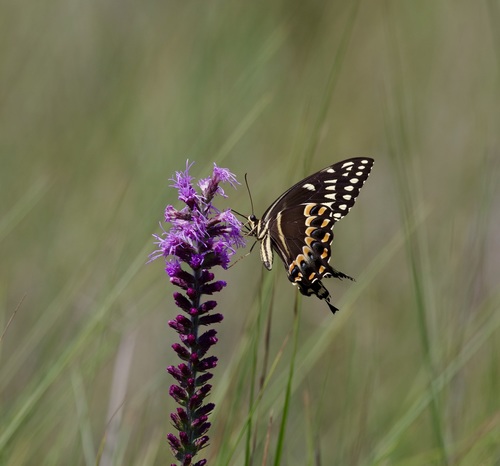
Found in cypress and coastal swamps, wet forest edges, bay forests, and savannas. Its long proboscis lets it pollinate plants like the swamp orchid Platanthera ciliaris.
Source: Wikipedia
What it eats
Caterpillars feed on redbay (Persea borbonia). They also use swampbay (Persea palustris) and white sassafras (Sassafras albidum) as hosts.
Source: Wikipedia
Life cycle
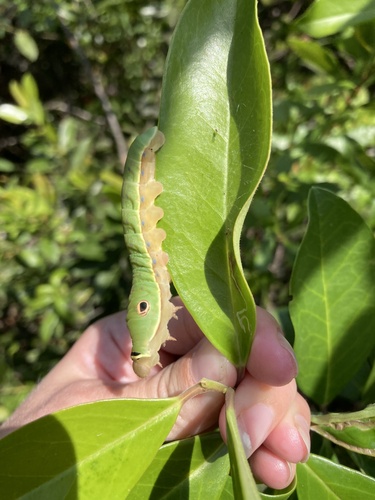
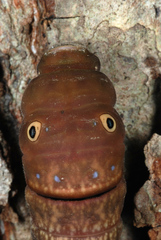
There are two to three broods each year. The green larva has two false eyespots on its thorax.
Source: Wikipedia
Where it comes from
It is a North American swallowtail butterfly in the family Papilionidae.
Source: Wikipedia
Lookalikes
It shows a few blue spots along the abdomen from segment one to eight. In the coastal Southeast, the spicebush swallowtail subspecies shares its redbay host plant.
Source: Wikipedia
Where it is found in the US
Recorded in 15 of 51 states and DC. Most records: Florida, North Carolina, Texas, South Carolina, Georgia, Mississippi, Louisiana, Virginia.
Darker = more records. Counts are museum and citizen-science records, not population size.
Source: GBIF
Status: native in United States. Source: iNaturalist
Months it is reported in the US
Source: GBIF
More photos
Questions people ask
Are they a pest for gardens or crops?
They feed on redbay, swampbay, and white sassafras, not on typical garden crops.
Source: Wikipedia
When can I see them?
In the southeast they appear from May through October, and farther south they can be seen from March to December.
Source: Wikipedia
Same family (Papilionidae)
Sources
- Wikipedia: https://en.wikipedia.org/wiki/Papilio_palamedes
Look it up elsewhere: GBIF · iNaturalist · BugGuide · ITIS · Wikipedia
Text written 2026-10-22 from the sources above and checked sentence by sentence against them. Data fetched 2026-10-22.