 Bug FAQ
Oyster Gall Wasp
Neuroterus anthracinus · Order: Hymenoptera · Family: Cynipidae
Also called: Oyster Gall
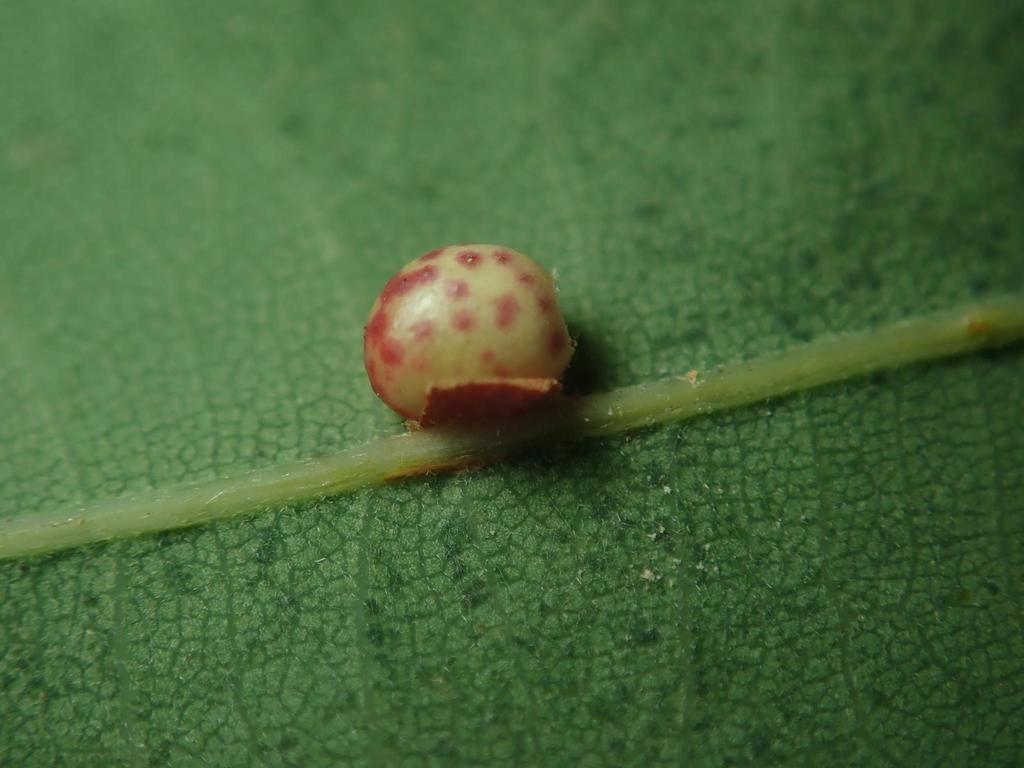
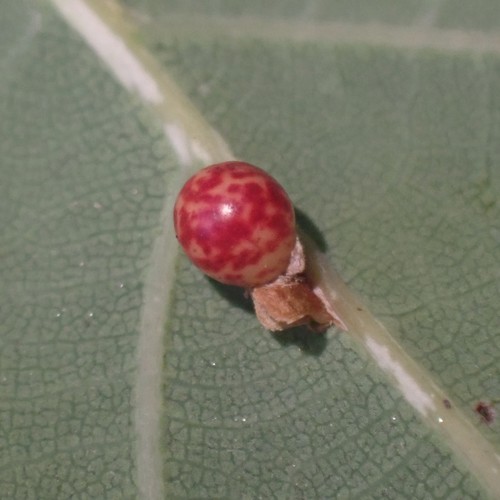
Oyster galls appear on the underside of oak leaves, about 0.3 cm wide, between the midrib and side veins. The wasp has two generations that create distinct galls: the oyster gall in autumn and the April-bud gall in spring.
Source: Wikipedia
How to recognize it
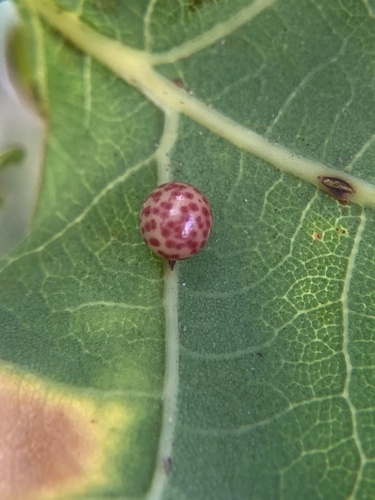
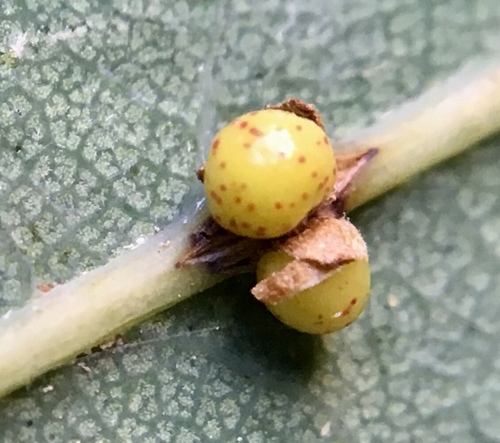
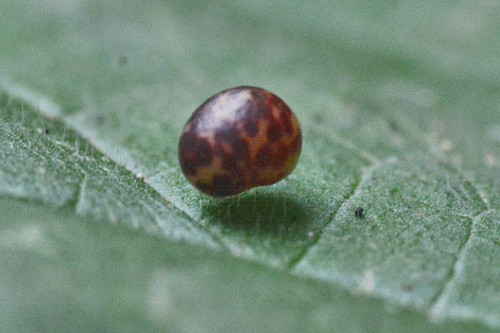
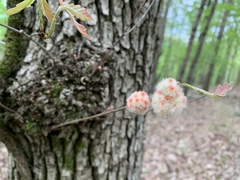
Galls may be green, brown, pink or have red spots, and retain two valve-like flaps even after falling.
Source: Wikipedia
Size
Each oyster gall is roughly 0.3 cm across and shows a clear escape aperture when old.
Source: Wikipedia
Where it lives
Neuroterus anthracinus lives on oak trees, inducing leaf galls mainly on the leaf underside.
Source: Wikipedia
What it eats
Females lay fertilised eggs in leaf tissue, which develop into the oyster gall. Parthenogenetic females emerge from the bean-shaped oyster gall in autumn and lay eggs in buds for the next generation.
Source: Wikipedia
Life cycle
The wasp has both sexual and agamic generations, producing the oyster gall and the April-bud gall respectively. Males and females emerge from April-bud galls in May and lay fertilised eggs that form oyster galls.
Source: Wikipedia
When you see it
Adults from the sexual generation appear in May, while the agamic generation emerges in autumn.
Source: Wikipedia
Where it comes from
The species is widely distributed wherever oak trees occur.
Source: Wikipedia
Lookalikes
Older literature lists many synonyms such as Andricus ostreus, Neuroterus schlechtendali and Andricus furunculus.
Source: Wikipedia
Where it is found in the US
Recorded in 6 of 51 states and DC. Most records: Oregon, Washington, Illinois, Utah, Connecticut, Idaho.
Darker = more records. Counts are museum and citizen-science records, not population size.
Source: GBIF
Status: introduced in North America; introduced in Canada; introduced in United States. Source: iNaturalist
Months it is reported in the US
Source: GBIF
More photos
Questions people ask
How can I tell an oyster gall apart from other leaf galls?
Look for a small (≈0.3 cm) gall on the leaf underside, often green, brown, pink or with red spots, and two persistent valve-like flaps.
Source: Wikipedia
When do these galls appear on oak leaves?
The oyster gall forms in autumn from the agamic generation, while the April-bud gall appears in spring from the sexual generation.
Source: Wikipedia
Same family (Cynipidae)


Sources
- Wikipedia: https://en.wikipedia.org/wiki/Neuroterus_anthracinus
Look it up elsewhere: GBIF · iNaturalist · BugGuide · Wikipedia
Text written 2026-10-23 from the sources above and checked sentence by sentence against them. Data fetched 2026-10-22.