 Bug FAQ
Plant bug (Orthotylus flavosparsus)
Orthotylus flavosparsus · Order: Hemiptera · Family: Miridae
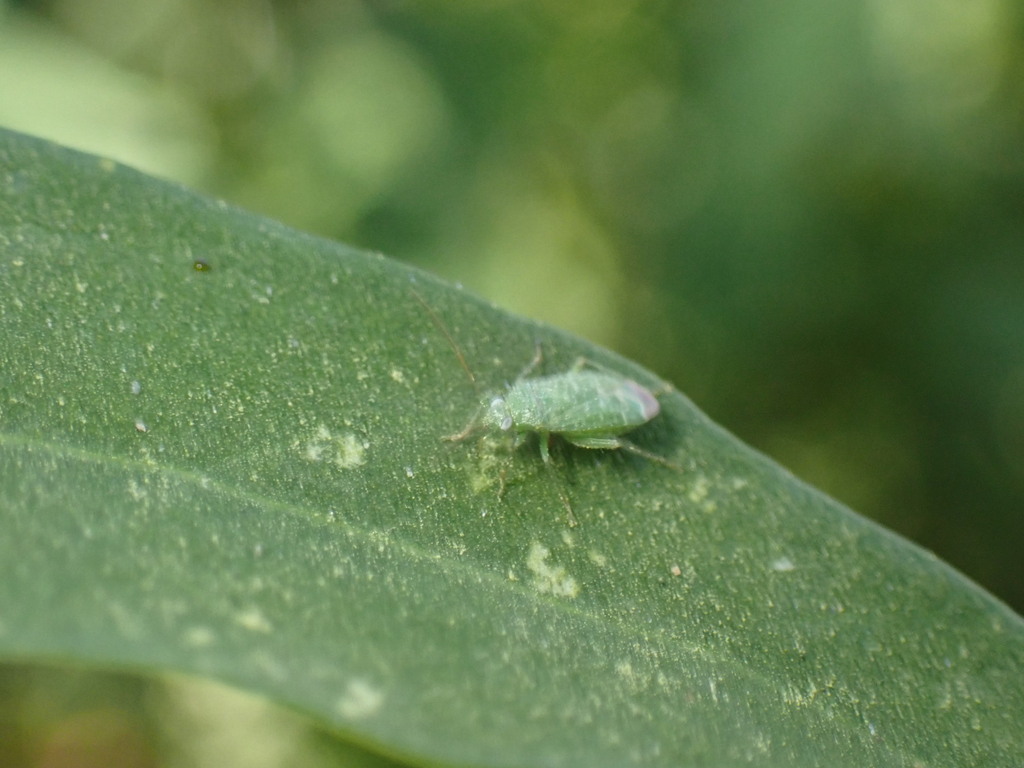
Adult Orthotylus flavosparsus are about 4 mm long and green in colour. They live on oraches and chenopods, which they feed on. The species occurs throughout Europe, but not in Albania or Iceland.
Source: Wikipedia
How to recognize it
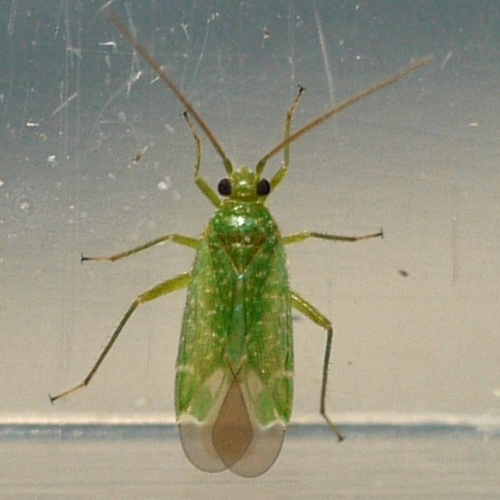
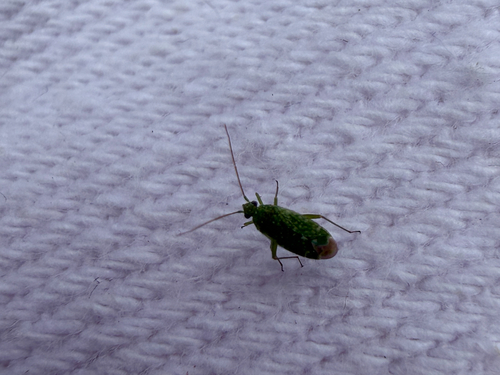
The bug is green.
Source: Wikipedia
Size
Adults are roughly 4 mm (0.16 in) long.
Source: Wikipedia
Where it lives
It is found on oraches and chenopods.
Source: Wikipedia
What it eats
Its main food is oraches and chenopods.
Source: Wikipedia
Where it comes from
It is present across Europe except Albania and Iceland.
Source: Wikipedia
Where it is found in the US
Recorded in 16 of 51 states and DC. Most records: Illinois, Iowa, Kentucky, New York, Massachusetts, Minnesota, Pennsylvania, Mississippi.
Darker = more records. Counts are museum and citizen-science records, not population size.
Source: GBIF
Status: native in North America; native in Canada. Source: iNaturalist
Months it is reported in the US
Source: GBIF
More photos
Questions people ask
Same family (Miridae)
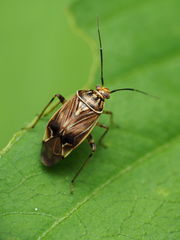 North American Tarnished Plant BugLygus lineolarisDamages trees, gardens or crops
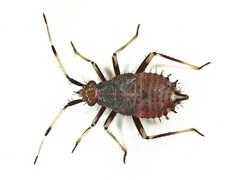 Red-spotted Plant BugDeraeocoris ruber
 Alfalfa Plant BugAdelphocoris lineolatusDamages trees, gardens or crops
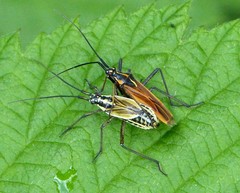 Meadow Plant BugLeptopterna dolabrataDamages trees, gardens or crops
 Four-lined Plant BugPoecilocapsus lineatusDamages trees, gardens or crops
 Lygus pratensisDamages trees, gardens or crops
Sources
- Wikipedia: https://en.wikipedia.org/wiki/Orthotylus_flavosparsus
Look it up elsewhere: GBIF · iNaturalist · BugGuide · ITIS · Wikipedia
Text written 2026-10-25 from the sources above and checked sentence by sentence against them. Data fetched 2026-10-25.