 Bug FAQ
Oriental Mud-dauber Wasp
Chalybion bengalense · Order: Hymenoptera · Family: Sphecidae
Also called: Mud dauber
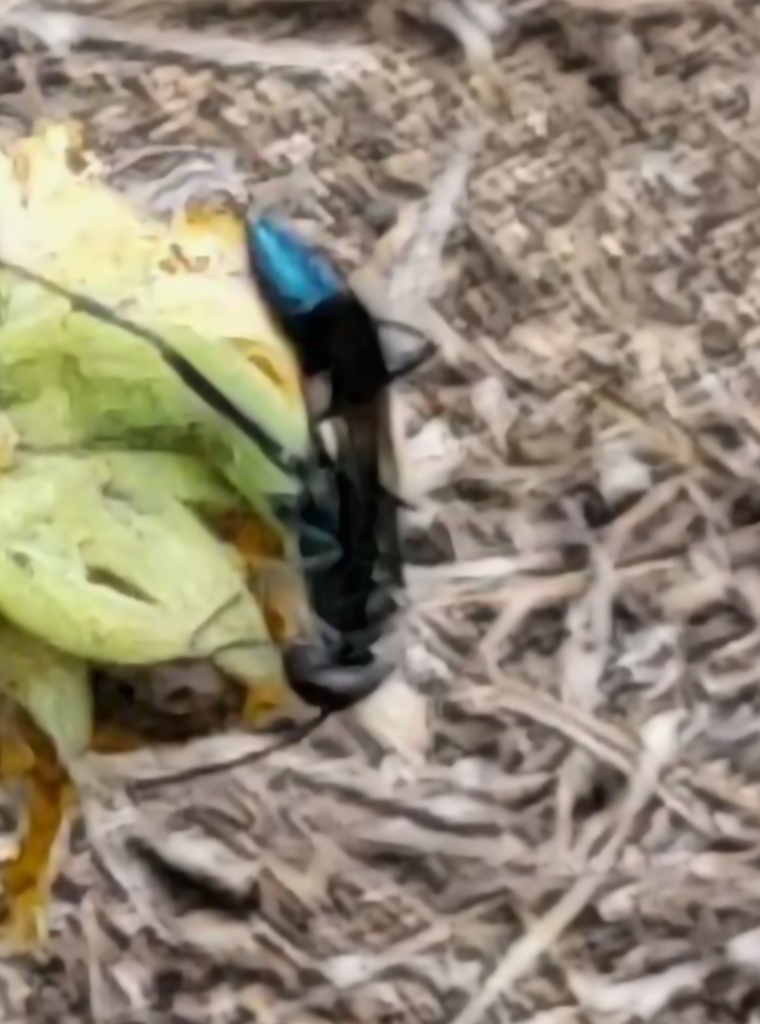
Females are about 13 to 17 mm long and males 8.5 to 15 mm; they shine metallic blue with translucent brownish wings and tiny white hairs. They do not build new nests but occupy existing holes, such as man-made openings or old mud-dauber nests, and females stock each cell with many paralyzed spiders before laying an egg. The species originates from the Indomalayan region, Australia and New Guinea, and can be parasitized by the wasp Melittobia assemi.
Source: Wikipedia
Size
Females measure 13 to 17 mm and males 8.5 to 15 mm in length.
Source: Wikipedia
Where it lives
They reuse existing holes, including man-made ones and old nests of other mud-dauber wasps.
Source: Wikipedia
What it eats
Females capture and paralyze spiders, placing 8 to 60 per cell, then lay an egg on one before sealing it with mud.
Source: Wikipedia
Life cycle
The parasitoid wasp Melittobia assemi has been reported to parasitize this species.
Source: Wikipedia
Where it comes from
Native to the Indomalayan realm, Australia and New Guinea.
Source: Wikipedia
Lookalikes
It is a widely distributed member of the genus Chalybion, also called the oriental mud-dauber wasp.
Source: Wikipedia
Where it is found in the US
Recorded in 1 of 51 states and DC. Most records: Hawaii.
Darker = more records. Counts are museum and citizen-science records, not population size.
Source: GBIF
Months it is reported in the US
Source: GBIF
More photos
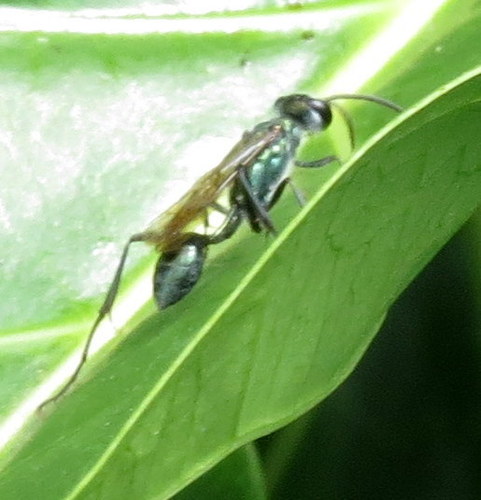
Same family (Sphecidae)
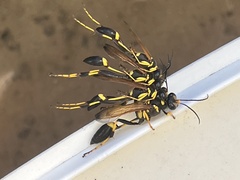 Yellow-legged Mud-dauber WaspSceliphron caementariumCan sting
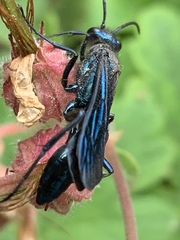 Common Blue Mud-dauber WaspChalybion californicumCan sting
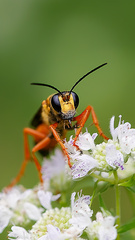 Great Golden Digger WaspSphex ichneumoneus
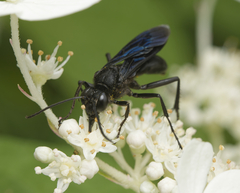 Great Black Digger WaspSphex pensylvanicusCan sting
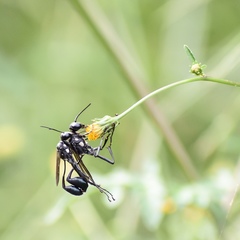 Gold-marked Thread-waisted WaspEremnophila aureonotata
 Mexican Grass-carrying WaspIsodontia mexicana
Sources
- Wikipedia: https://en.wikipedia.org/wiki/Chalybion_bengalense
Look it up elsewhere: GBIF · iNaturalist · BugGuide · ITIS · Wikipedia
Text written 2026-10-23 from the sources above and checked sentence by sentence against them. Data fetched 2026-10-22.