 Bug FAQ
Oriental Blue Dasher
Brachydiplax chalybea · Order: Odonata · Family: Libellulidae
Also called: Rufous-backed Marsh Hawk
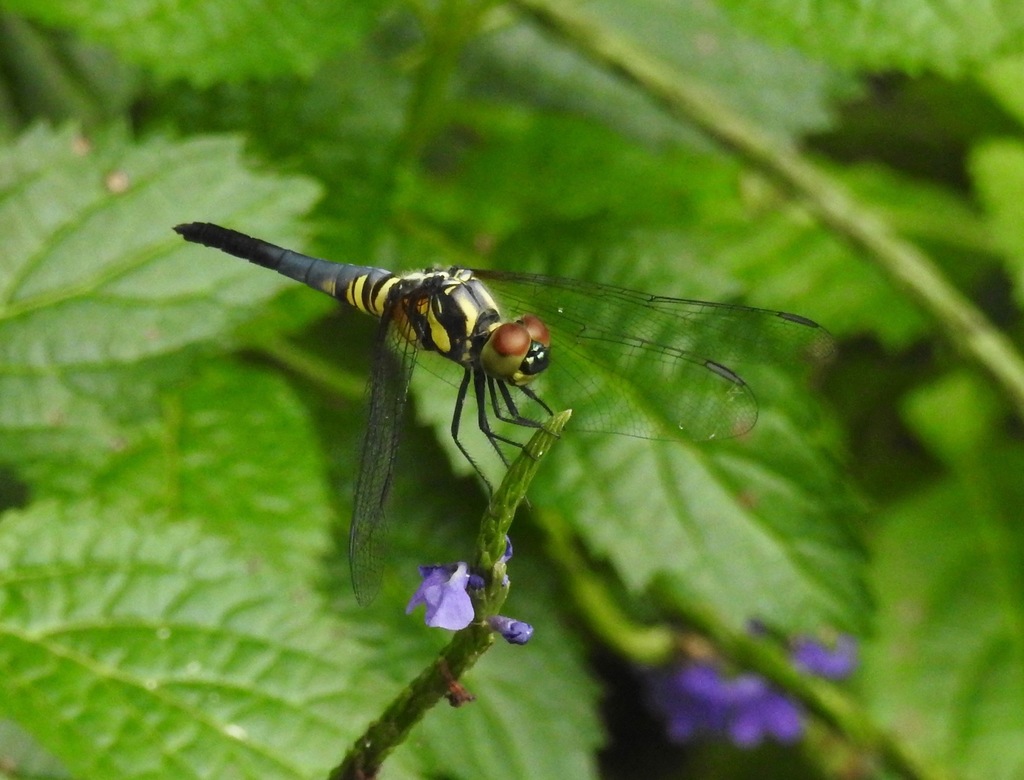
The Oriental Blue Dasher is a relatively large dragonfly, males measuring about 33-35 mm in length with hindwings 24-27 mm long. It lives in many wet habitats across eastern Asia, from India to Japan and Indonesia, including brackish and disturbed waters.
Source: Wikipedia
How to recognize it
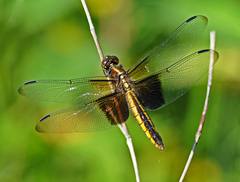
Females are brownish-yellow with darker dorsal abdominal markings and lack the yellow wing tinge.
Source: Wikipedia
Size
Males are 33-35 mm long and have hindwings 24-27 mm long.
Source: Wikipedia
Where it lives
Found in many wet habitats, including brackish and disturbed waters. Females lay eggs by flicking egg masses onto nearby rocks and vegetation.
Source: Wikipedia
Where it comes from
Native to eastern Asia, from India through Japan to Indonesia.
Source: Wikipedia
Lookalikes
Can be distinguished from other Brachydiplax species by its larger size, thorax colour, and wing bases.
Source: Wikipedia
More photos
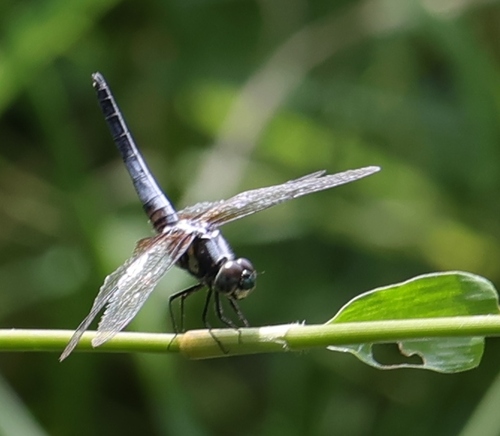
Questions people ask
How can I tell male and female Oriental Blue Dashers apart?
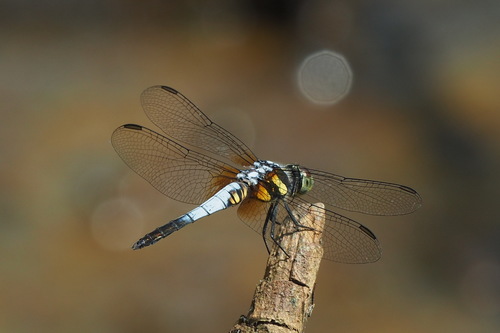
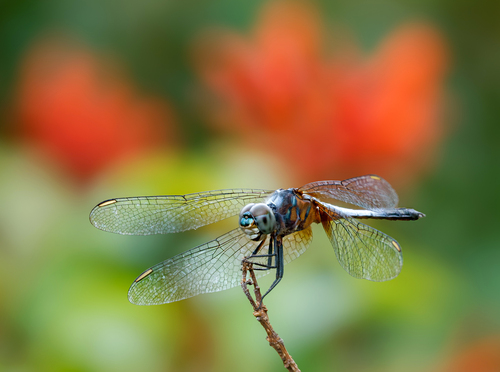
Males are powder-blue with a dark abdominal tip and have a burnt-brown to amber wing base, while females are brownish-yellow with darker dorsal markings and lack the yellow wing tint.
Source: Wikipedia
Where might I find an Oriental Blue Dasher?
They live in various wet areas such as brackish or disturbed waters across eastern Asia, from India to Japan and Indonesia.
Source: Wikipedia
Same family (Libellulidae)

Sources
- Wikipedia: https://en.wikipedia.org/wiki/Brachydiplax_chalybea
Look it up elsewhere: GBIF · iNaturalist · BugGuide · Wikipedia
Text written 2026-10-22 from the sources above and checked sentence by sentence against them. Data fetched 2026-10-22.