 Bug FAQ
Orchard Swallowtail
Papilio aegeus · Order: Lepidoptera · Family: Papilionidae
Also called: Large Citrus Butterfly, Orchard Butterfly, Orchard Swallowtail Butterfly
Source: Wikipedia

Orchard swallowtails are large butterflies with black fore- and hindwings crossed by white stripes; females show extra white and colorful orange-red-blue crescents on the hindwing edge. Females lay small white eggs on the tops of host-plant leaves; the larvae grow to about 60 mm in four weeks before pupating. Adults are most common in late summer and autumn in New South Wales, and they sometimes appear further south in Victoria during summer.
Source: Wikipedia
How to recognize it
Both sexes have black forewings with a white stripe; the hindwing also has a central white band, and females add chains of orange-red and blue crescents near the edge. The underside pattern mirrors the top side and the body is black.
Source: Wikipedia
Size
Wingspan reaches about 140 mm in females and 120 mm in males, making it the largest butterfly commonly seen in parts of its range.
Source: Wikipedia
Is it a pest in the house?
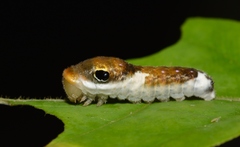
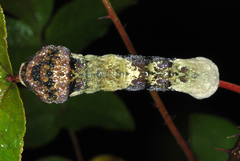
Caterpillars are sometimes regarded as garden pests because they eat citrus leaves in suburban yards.
Source: Wikipedia
Where it lives
In summer the species temporarily expands its range into Victoria.
Source: Wikipedia
What it eats
Larvae feed on a variety of native Rutaceae such as Boronia, Citrus, and Zieria, as well as introduced plants like Choisya and Murraya.
Source: Wikipedia
Life cycle
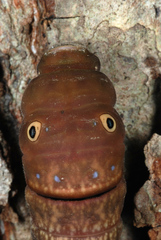
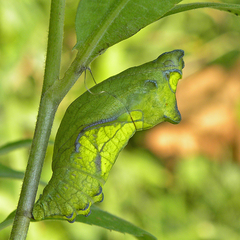
Females lay smooth white eggs about 0.5 mm across on the upper surface of host-plant leaves; eggs hatch after roughly a week. After about four weeks the caterpillar reaches 60 mm and is ready to pupate.
Source: Wikipedia
When you see it
Adults are most abundant in late summer and autumn in New South Wales.
Source: Wikipedia
Where it comes from
It occurs in eastern Australia and Papua New Guinea.
Source: Wikipedia
Lookalikes
The subspecies P. a. ormenus occurs in Papua New Guinea and Thursday Island. Male P. a. aegeus have a red spot on each hindwing above, which is absent in male P. a. ormenus.
Source: Wikipedia
Where it is found in the US
Recorded in 1 of 51 states and DC. Most records: Hawaii.
Darker = more records. Counts are museum and citizen-science records, not population size.
Source: GBIF
More photos


Questions people ask
Can they damage my garden?
Yes, the larvae can chew citrus leaves and are considered a garden pest in suburban areas.
Source: Wikipedia
When are adult orchard swallowtails most common?
Adults are most frequently seen in late summer and autumn, especially in New South Wales.
Source: Wikipedia
Same family (Papilionidae)
Sources
- Wikipedia: https://en.wikipedia.org/wiki/Papilio_aegeus
Look it up elsewhere: GBIF · iNaturalist · BugGuide · Wikipedia
Text written 2026-10-22 from the sources above and checked sentence by sentence against them. Data fetched 2026-10-22.