 Bug FAQ
Orange-tipped and Yellow-striped Oakworm Moths
Anisota senatoria · Order: Lepidoptera · Family: Saturniidae
Also called: Orange-striped Oakworm, Orange-striped Oakworm Moth, Orange-tipped Oakworm Moth, Orangestriped Oakworm
Source: Wikipedia
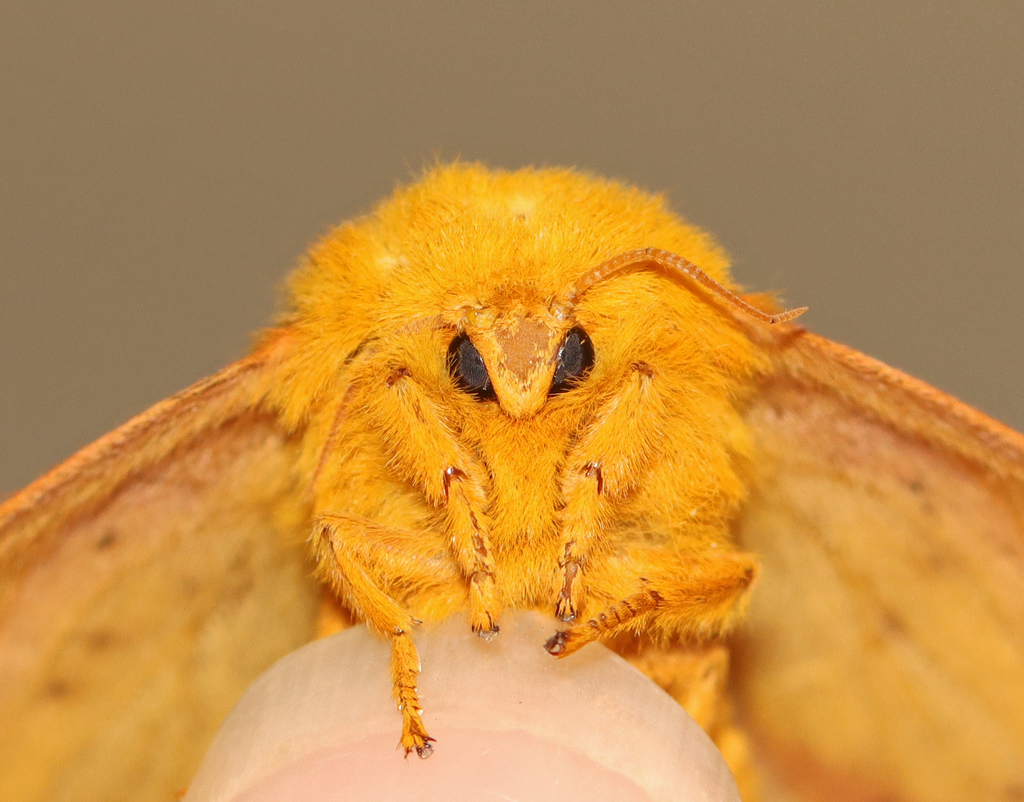
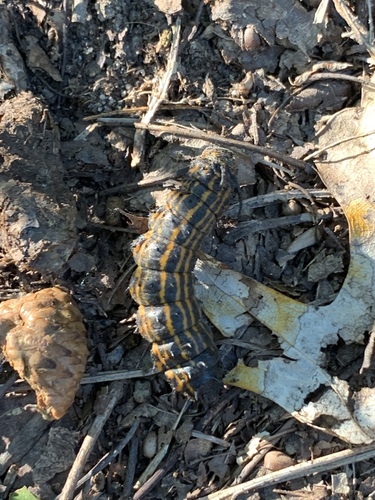
Adults have a wingspan of about 3 to 5 cm and appear once each year in early summer. The caterpillars feed on oaks and occasionally on other hardwoods, sometimes reaching pest status in the northern part of their range.
Source: Wikipedia
How to recognize it
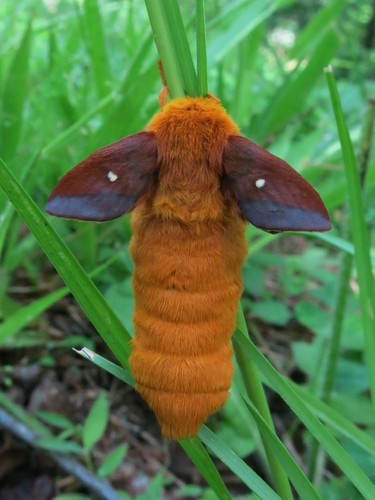
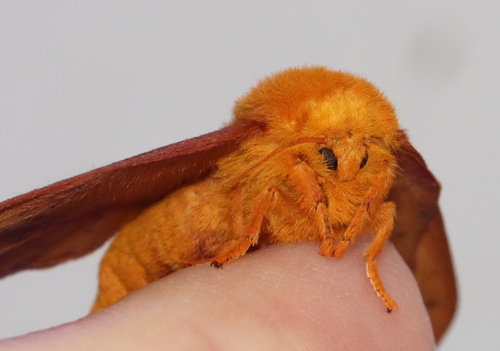
Females are stout, yellow-orange with a silvery spot and faint dark lines on both fore- and hindwings; males are smaller, reddish-brown, also bearing the white spot and pale lines, and both sexes have black speckles.
Source: Wikipedia
Size
The wingspan ranges from 3 to 5 cm.
Source: Wikipedia
Is it a pest in the house?
Occasionally it reaches pest status in the northern part of its range, though because it feeds late in the season it usually causes only minor, temporary damage.
Source: Wikipedia
Where it lives
It is a common Saturniid that can become a pest, especially in the northern areas of its distribution.
Source: Wikipedia
What it eats
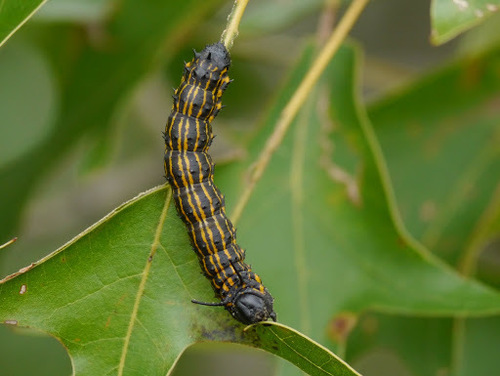
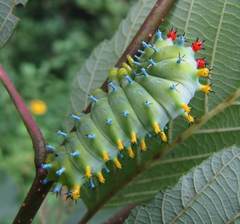
Caterpillars feed on oak species, especially red oaks, and have also been recorded on chestnut, birch, hazel, hickory and maple.
Source: Wikipedia
Life cycle
There is a single generation each year. Adults emerge in mid-June to mid-July to mate.
Source: Wikipedia
When you see it
Adult moths are on the wing from mid-June through mid-July.
Source: Wikipedia
Where it comes from
It lives in the eastern United States and adjacent parts of Canada, from the Great Plains edge eastward and from southern Ontario down to central Georgia, Alabama and eastern Texas.
Source: Wikipedia
Lookalikes
It looks very similar to Anisota finlaysoni in southern Ontario and to Anisota peigleri in the southern United States.
Source: Wikipedia
Where it is found in the US
Recorded in 30 of 51 states and DC. Most records: Pennsylvania, Maryland, New York, Virginia, Massachusetts, North Carolina, Connecticut, Ohio.
Darker = more records. Counts are museum and citizen-science records, not population size.
Source: GBIF
Months it is reported in the US
Source: GBIF
More photos
Questions people ask
What trees do the caterpillars eat?
They mainly feed on oak leaves, especially red oaks, but can also eat chestnut, birch, hazel, hickory and maple.
Source: Wikipedia
When can I expect to see the adult moths?
Adults appear once a year, typically from mid-June to mid-July.
Source: Wikipedia
Are they a problem for my garden or trees?
They can become a pest in northern areas, feeding on oak foliage and sometimes causing noticeable, though usually short-lived, damage.
Source: Wikipedia
How can I tell male and female moths apart?
Females are larger, yellow-orange with a silvery spot and faint dark lines, while males are smaller, reddish-brown but share the white spot and pale lines.
Source: Wikipedia
Same family (Saturniidae)


Sources
- Wikipedia: https://en.wikipedia.org/wiki/Anisota_senatoria
Look it up elsewhere: GBIF · iNaturalist · BugGuide · ITIS · Wikipedia
Text written 2026-10-23 from the sources above and checked sentence by sentence against them. Data fetched 2026-10-23.