 Bug FAQ
Orange-spotted Emerald
Oxygastra curtisii · Order: Odonata · Family: Corduliidae
Also called: Orange-spoted Emerald

The orange-spotted emerald is a medium dragonfly about 53 mm long. It lives along slow-flowing rivers and streams with wooded banks, and also breeds in well-oxygenated standing waters such as oxbow lakes and gravel pits.
Source: Wikipedia
How to recognize it
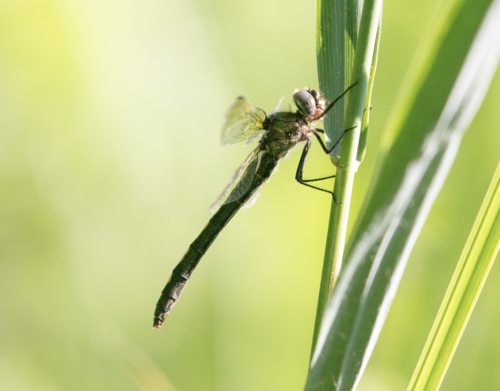
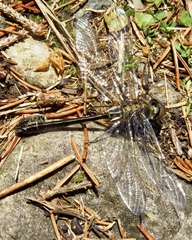
The dragonfly is bronzy-green, has bright green eyes, and a series of yellow-orange spots along its abdomen. Males have the tenth abdominal segment extended into a downward-curving point, a trait used to define the genus.
Source: Wikipedia
Size
Adults measure about 53 mm from head to tip of the abdomen.
Source: Wikipedia
Where it lives
It prefers slow-moving rivers and streams with riparian woodland, especially where flooded tree roots provide larval habitat.
Source: Wikipedia
Lookalikes
It is the only species in the genus Oxygastra.
Source: Wikipedia
More photos
Questions people ask
Where does this dragonfly live?
It inhabits slow-flowing rivers and streams with wooded banks and also breeds in well-oxygenated standing waters like oxbow lakes and abandoned gravel pits.
Source: Wikipedia
Same family (Corduliidae)


Sources
- Wikipedia: https://en.wikipedia.org/wiki/Orange-spotted_emerald
Look it up elsewhere: GBIF · iNaturalist · BugGuide · Wikipedia
Text written 2026-10-23 from the sources above and checked sentence by sentence against them. Data fetched 2026-10-23.