 Bug FAQ
Tau Emerald
Hemicordulia tau · Order: Odonata · Family: Corduliidae
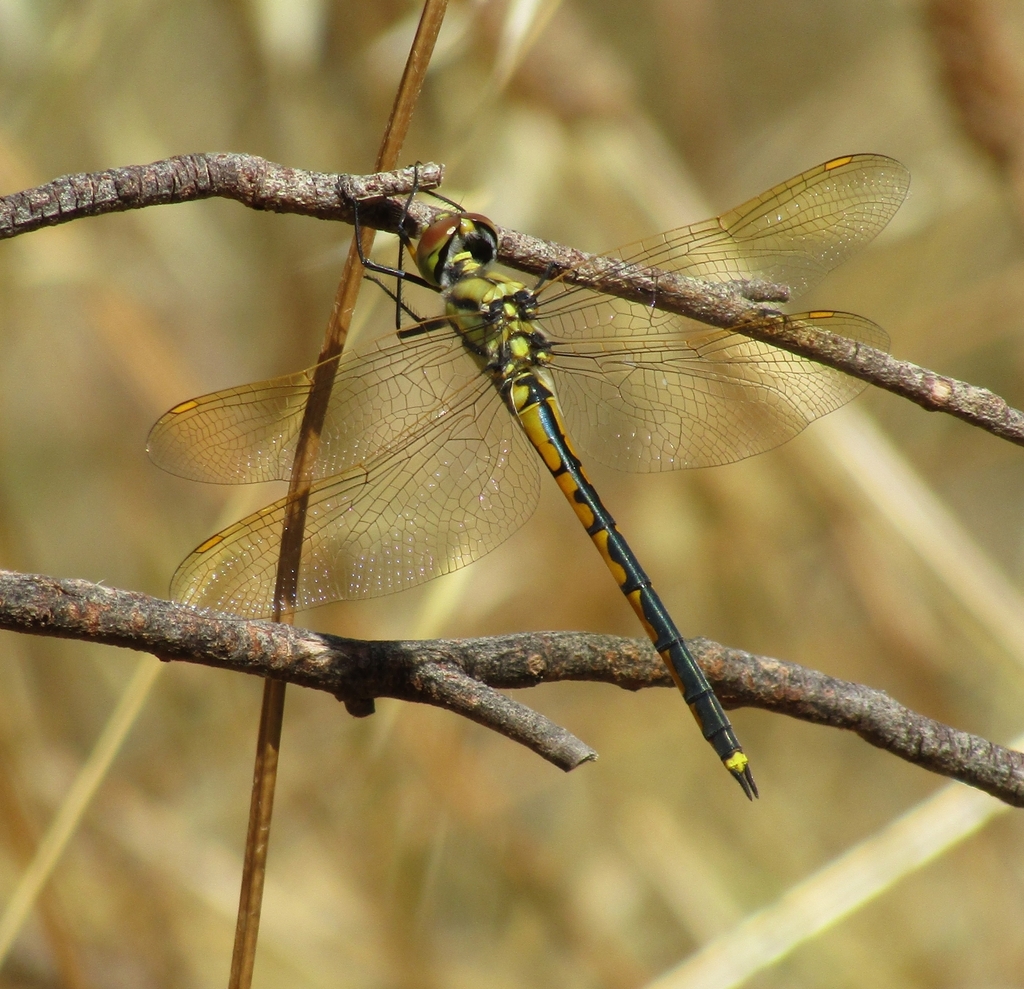
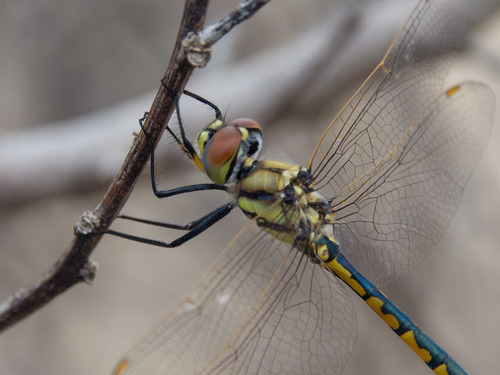
The tau emerald is a medium-sized dragonfly about 50 mm long with black and yellow coloring and long legs. It lives across most of Australia, especially in dry inland areas, and can breed in temporary waters where its larvae live among leaf litter and weeds. Adults develop from egg to adult in under six weeks, have at least nine larval instars, and are opportunistic breeders that move around widely.
Source: Wikipedia
How to recognize it
The seventh abdominal segment is mostly black on top and yellowish on the sides, and the top of the frons is yellow with a dark T-shaped mark. Unlike other Hemicordulia species, it lacks a mid-dorsal abdominal spine, though small humps may appear on segments 4 to 9 and lateral spines are tiny.
Source: Wikipedia
Size
It reaches about 50 mm in body length, classifying it as medium-sized.
Source: Wikipedia
Where it lives
It is common throughout Australia except northern Queensland and north-west Western Australia, favoring dry inland regions. The species can use temporary water bodies for breeding because its larval stage is short. Larvae are typically found in leaf litter and among weeds.
Source: Wikipedia
What it eats
Larvae are associated with clean water and may indicate water-quality changes. Adult and larval predators include fish and birds.
Source: Wikipedia
Life cycle
The whole life cycle can be completed in less than six weeks. Studies suggest there are at least nine larval instars, though the number can vary.
Source: Wikipedia
When you see it
Adults are vagrants and readily use any suitable habitat for breeding.
Source: Wikipedia
Where it comes from
Its range covers all Australian states and territories except northern Queensland and north-west Western Australia.
Source: Wikipedia
Lookalikes
It lacks the typical mid-dorsal abdominal spine of other Hemicordulia species, but may have small humps on segments 4 to 9 and tiny lateral spines.
Source: Wikipedia
More photos
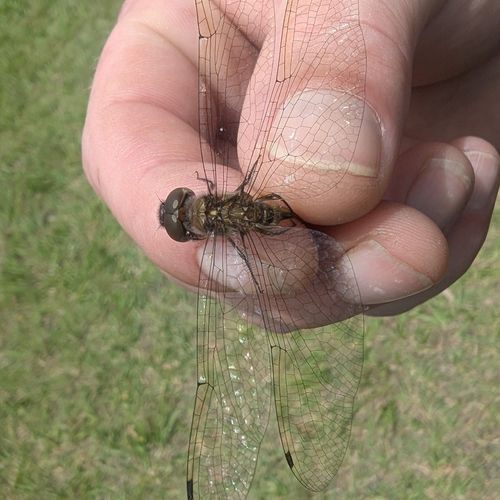
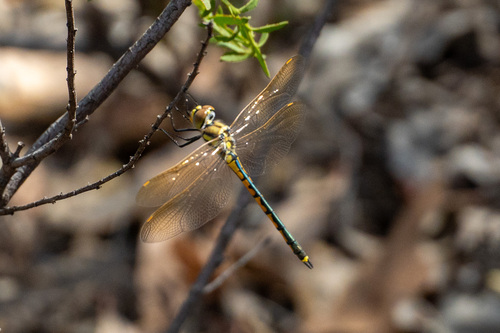
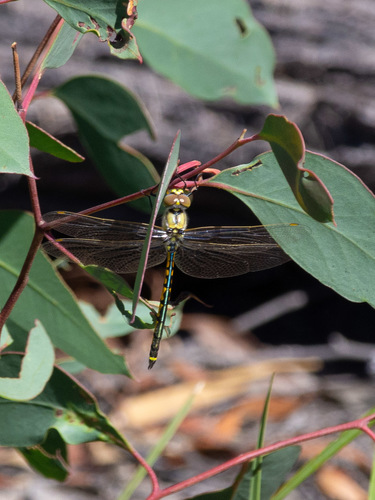
Questions people ask
Where can I find a tau emerald dragonfly?
They are widespread across most of Australia, especially in dry inland areas, but are absent from northern Queensland and north-west Western Australia.
Source: Wikipedia
How big is a tau emerald?
It grows to about 50 mm in body length, making it a medium-sized dragonfly.
Source: Wikipedia
What does the tau emerald look like?
It has black and yellow coloration, long legs, a yellow frons with a dark T-mark, and the seventh abdominal segment is black on top and yellowish on the sides.
Source: Wikipedia
Same family (Corduliidae)



Sources
- Wikipedia: https://en.wikipedia.org/wiki/Tau_emerald
Look it up elsewhere: GBIF · iNaturalist · BugGuide · Wikipedia
Text written 2026-10-22 from the sources above and checked sentence by sentence against them. Data fetched 2026-10-22.