 Bug FAQ
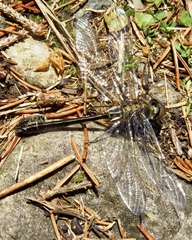
Downy Emerald
Cordulia aenea · Order: Odonata · Family: Corduliidae
Also called: Downy Emerald Dragonfly
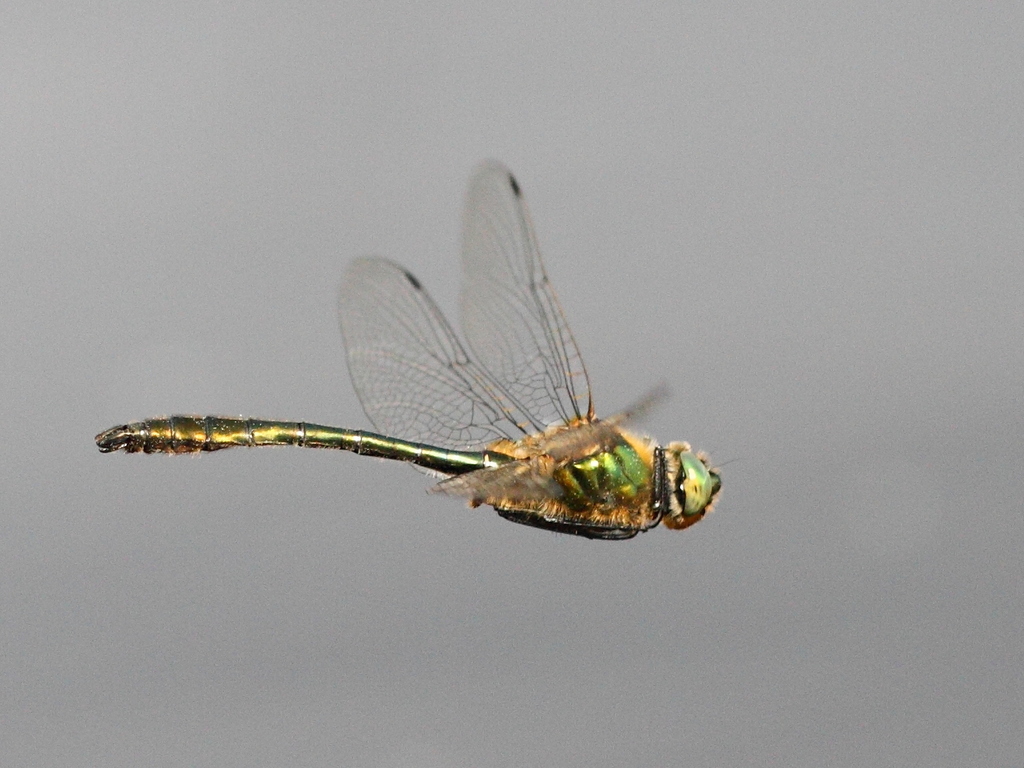
Adult downy emeralds are about 5 cm long and have a metallic green-bronze body with fine hairs on the thorax and bright green eyes. They live in woodland areas near lakes and ponds, lay eggs in water, and their aquatic larvae develop for three years before emerging as adults that live for about two months. The species is found across most of Europe and still occurs in suitable habitats in Great Britain despite some local losses.
Source: Wikipedia
How to recognize it
The body is metallic green-bronze and the thorax is covered with fine hairs. The eyes are a bright, shiny green.
Source: Wikipedia
Size
Adults measure about 5 cm (2 in) in length.
Source: Wikipedia
Where it lives
They inhabit woodlands close to lakes and ponds, where they lay eggs in water and the larvae live underwater.
Source: Wikipedia
Life cycle
After hatching, the larvae develop for three years through several stages. Adults live for about two months, during which they mate and females lay eggs back into the water.
Source: Wikipedia
Where it comes from
The downy emerald is distributed throughout most of Europe. In Great Britain it persists in isolated spots with suitable habitat, though it has disappeared from some historic areas.
Source: Wikipedia
Where it is found in the US
Recorded in 1 of 51 states and DC. Most records: Colorado.
Darker = more records. Counts are museum and citizen-science records, not population size.
Source: GBIF
Same family (Corduliidae)


Sources
- Wikipedia: https://en.wikipedia.org/wiki/Downy_emerald
Look it up elsewhere: GBIF · iNaturalist · BugGuide · Wikipedia
Text written 2026-10-22 from the sources above and checked sentence by sentence against them. Data fetched 2026-10-22.